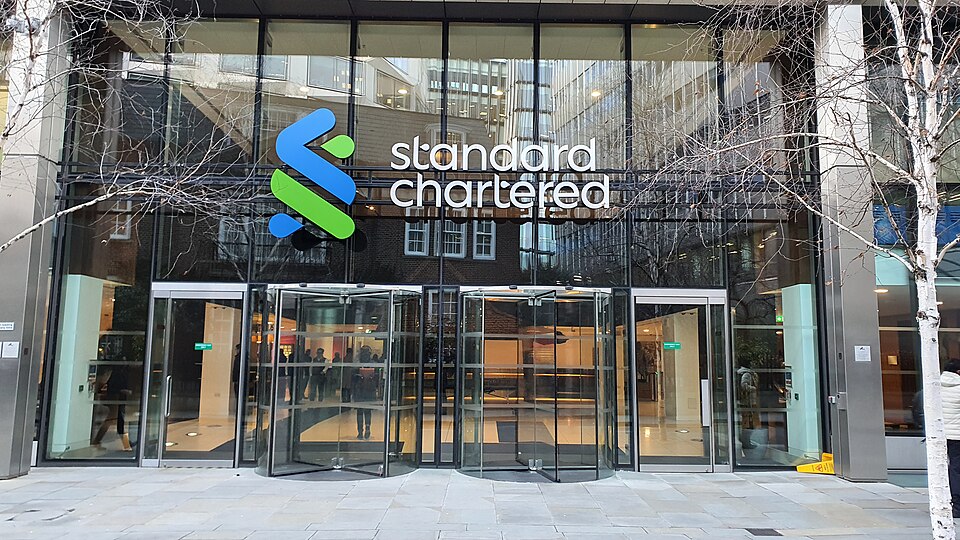
Standard Chartered plans to cut more than 7,000 back-office roles by 2030 as artificial intelligence moves deeper into banking. For staff, the message feels grimly inevitable: the AI threat has burst out of Silicon Valley and is now reaching the finance office jobs that once looked safer inside global banks. Engineers, coders and customer-support teams have already felt the pressure, and it looks like bank support staff will be next. It is now reaching the finance office jobs that once looked safer inside global banks, the sort of jobs that were once considered jobs for life. The bank is targeting a cut of more than 15% in corporate function roles, with automation and AI expected to drive much of the reduction. Standard Chartered is also aiming for a return on tangible equity above 15% in 2028 and around 18% by 2030, tying the job cuts directly to profit targets and shareholder returns.
For anyone working in finance, the announcement creates worry because back-office banking jobs have often been seen as steady, process-heavy and protected by regulation. Standard Chartered’s plan suggests those same features may now make them easier to automate.
AI Job Panic Has Hit Banking
The first wave of AI job-cut headlines came mostly from technology companies, where staff reductions were often explained through efficiency, flatter teams and higher AI spending. Finance Monthly has already covered how Cloudflare’s AI-linked layoffs exposed the new cost of software growth, how Coinbase’s cuts pointed to a wider AI layoff era, and how Meta has been cutting jobs while pouring money into AI.
Standard Chartered takes that fear into a different workplace because banks are full of people whose jobs involve checking documents, processing forms, reviewing data, handling internal reports, onboarding clients, supporting compliance teams and moving information between systems. Those are exactly the kinds of tasks AI tools are being trained to speed up. Thousands of finance workers are now being forced to ask whether their role is still seen as a person’s job, or whether management sees it as a process waiting to be automated. The anxiety is no longer theoretical when a major global bank puts a number on the roles it expects to remove.
Staff Are Being Replaced By Investment
Standard Chartered chief executive Bill Winters has framed the move as more than a traditional cost-cutting exercise, saying the bank is replacing some “lower-value human capital” with financial and investment capital. In plain English, that means less spending on certain staff roles and more spending on technology, automation and AI systems.
That phrase will give chills to anyone working in a support role because it changes the way office jobs are appraised. A person is no longer only a worker with experience, company knowledge and judgment. In the new banking equation, some roles are being treated as capital that can be redirected into software, systems and machines. Shareholders can see the appeal quickly. If Standard Chartered can handle more work with fewer support staff, its costs fall as a share of income. That helps the bank chase higher returns. If the bank can also grow wealth management and higher-margin business lines at the same time, the profit story looks stronger.
Employees hear a very different message in the same announcement. A job that once looked like a stable finance career can quickly become a cost line that management wants to shrink.
The Safe Bank Office Job Suddenly Looks Less Safe
Back-office roles rarely get the attention given to traders, dealmakers or wealth managers, but they keep the bank running. Payments have to be processed. Client files have to be accurate. Internal reports have to be checked. Compliance teams need clean information. Risk teams need data they can trust. Banks are drawn to AI because much of that work follows patterns. A machine can scan documents, summarise files, flag missing information, compare records and push routine cases through faster than a human team. Once that starts working, management will ask why the same number of staff is still needed.
The potential mistakes come when banks cut faster than the systems can cope. AI can be quick, but it can also make mistakes and can halucinate answers. It can miss context and rely on outdated information. It can produce answers that sound confident but need checking and human oversight. In banking, a bad answer is not only embarrassing. It can create client problems, compliance failures, regulatory pressure and expensive clean-up work.
Standard Chartered’s plan will be judged on more than headcount because the bank has to show that fewer staff can still keep the machinery safe. If the bank gets that balance wrong, the savings could look good before the cost shows up somewhere else.
Investors See Savings, Staff Feel The Heat
Standard Chartered’s Hong Kong-listed shares rose after the strategy update, with Reuters reporting an early gain of more than 2%. That reaction shows how markets tend to read AI job cuts: fewer staff, higher returns, better margins. Workers read the same announcement in a more personal way. If a profitable bank can cut thousands of support roles while chasing higher returns, weaker companies may feel even more pressure to do the same. AI becomes the excuse, the tool and the shareholder story all at once.
Standard Chartered’s announcement feels bigger than one bank because it adds to a pattern already visible across major companies. Firms are cutting roles, telling investors they can do more with AI, and asking remaining staff to work inside leaner teams. Cost savings can appear before the damage is visible. A bank can cut jobs this year and show lower costs. Problems may only show up later, through slower service, control failures, staff burnout, complaints, or mistakes that were previously caught by experienced people.
Automation Anxiety Has Reached The Banking Desk
Standard Chartered’s announcement gives office workers a stark and potentially distopian warning about where AI is heading next. The early fear was that automation would hit call centres, coding teams, customer support and creative roles first. The newer fear is more personal for finance workers: the same tools are now moving into the routine office tasks that keep banks, insurers, asset managers and payment companies running.
A kind of automation anxiety — auto-anxiety, if you will — is starting to spread through white-collar work. Staff who once saw AI as a tool they might use at work are now asking whether it is the tool being used to remove them from work. A spreadsheet-heavy role, a documentation role, a reporting role or a compliance-support role may no longer look as safe as it did two years ago.
Companies see lower costs, investors see stronger margins, and workers see a direct threat to jobs that once looked hard to replace. AI may be used to strip out roles before anyone fully understands what knowledge, judgment and oversight disappear with them. Standard Chartered has put a number on the next stage of the AI jobs story: more than 7,000 roles, a smaller support base, and a profit target rising toward 18% return on tangible equity by 2030. If the bank succeeds, rivals will face pressure to explain why their own support teams cannot be made leaner. If the cuts lead to mistakes, delays or control problems, the savings may come with a much higher bill.
Finance workers have been given a clearer warning than any abstract AI forecast could provide. AI is no longer a distant technology story discussed on earnings calls and conference stages. It is becoming a headcount plan, and Standard Chartered has shown how quickly that plan can move from experiment to job cuts.
Other Finance Jobs Could Be Next
Standard Chartered is one of the first major global banks to put such a clear number on AI-linked job reductions. The plan covers more than 7,000 roles by 2030, mainly in corporate and support functions, across a bank with around 82,000 employees globally. Other banks will be under pressure to explain their own AI savings. If one lender says it can cut more than 15% of support roles, rivals may be asked by investors why their back offices still look too big. That is how one company’s restructuring plan can become an industry benchmark.
The pressure will not stop at banks because insurers, asset managers, accounting firms, consultancies and payment companies all have large teams doing process-heavy work. Any firm with thousands of people moving information between systems will now face the same critical question: how much of that work still needs a human? For white-collar workers, this is the part that creates panic. AI is no longer only threatening tasks at the edge of a business. It is moving into the middle of office life, where the jobs are less visible but often more numerous.
Can Standard Chartered’s AI Cope Without The People?
Standard Chartered is presenting the plan from a position of strength. The bank has already met earlier financial targets ahead of schedule and is now aiming for stronger returns by 2028 and 2030. Reuters also reported that the bank wants to attract $200 billion in net new money by 2028, a year earlier than previously planned.
That gives management a strong story for investors. The bank can say it is not cutting because it is broken. It is cutting because it believes AI can make the business faster, leaner and more profitable. Plenty can still go wrong. Banking is not a simple admin operation. Standard Chartered works across complex markets, including Asia, Africa and the Middle East. Reuters reported that the bank set aside $190 million in precautionary provisions linked to the Middle East conflict during the first quarter, showing the kind of external pressure sitting around the business.
A bank with cross-border clients, sanctions checks, wealth flows, corporate lending, payments and regulatory duties cannot afford sloppy automation. AI may reduce manual work, but the bank still needs people who understand when a system is wrong.
Ordinary Office Jobs Are Now On The Line
Standard Chartered’s announcement gives workers a blunt warning about where AI is heading next. The early fear was that AI would hit creative jobs, customer service and software teams. The newer fear is that it will hit ordinary office jobs across finance, operations, HR, reporting, compliance support and administration. That shift changes the mood for employees who once saw AI as a tool that might help them at work. Many are now wondering whether it is the tool being used to remove them from work. Companies like the cost story. Investors like the margin narative. Staff fear that AI will be used to strip out roles long before anyone fully understands what gets lost with them.
Standard Chartered has put a number on the next stage of the AI jobs story: more than 7,000 roles, a smaller support base, and a profit target rising toward 18% return on tangible equity by 2030. If the bank succeeds, others will follow. If the cuts create mistakes, delays or control problems, the savings could come with a much higher bill.
Finance workers now have a clear warning. AI is no longer a distant technology, it's here now and it's already taking tens of thousands of jobs - the deep concern is that governments around the world don't seem to have a plan on how to deal with mass layoffs and indeed how tax revenue will be impacted within their current tax codes - reform is needed right now.
Related reading
Cloudflare’s AI Layoffs Expose the New Cost of Software Growth
Coinbase Layoffs Signal the Great AI Layoff Era Is Here
Meta Layoffs and AI Spending: Why Meta Is Cutting Jobs
Image attribution : Shkuru Afshar