America’s marijuana economy has moved well beyond the politics of legalization. Cannabis money now flows through state budgets, retail districts, local hiring, commercial property, and consumer spending at a moment when millions of Americans already feel worn down by rising rent, insurance costs, groceries, and a far more expensive version of ordinary life.
New survey data from the Pew Research Center shows support for legalization remains overwhelmingly high across the United States. A majority of Americans support marijuana for both recreational and medical use, while only a small minority still believe it should remain completely illegal.
But this is no longer just a social debate. More state governments are quietly becoming reliant on cannabis-related revenue at the same time households are already cutting spending, watching bills more carefully, and losing patience with rising costs almost everywhere else.
That changes the political calculation. Nearly half of U.S. states and Washington D.C. now allow recreational marijuana use, while another 24 states operate some form of medical marijuana program. More than half of Americans already live in places where recreational cannabis is legal.
The expansion has happened during years of inflation pressure, weaker consumer confidence, and growing budget strain across many states and cities. Governments still need revenue. Voters are already frustrated about affordability. Raising taxes directly on homeowners and workers is politically dangerous.
Cannabis offers another stream of money. For many local officials, marijuana taxes are easier to sell politically than higher property taxes or broader income-tax hikes landing on households already stretched thin.
That reality sits underneath much of the legalization debate now, even when politicians avoid saying it openly.
Younger Americans have embraced legalization far more aggressively than older generations. Pew found nearly two-thirds of adults under 30 support full legalization for recreational and medical use. Support drops sharply among older groups.
Part of that divide is cultural. Part of it is economic. For many younger consumers facing high rents, slower savings growth, expensive housing markets, and weaker long-term financial confidence, cannabis has become folded into mainstream discretionary spending alongside streaming services, takeaway food, sports betting apps, and subscription-based consumer habits that barely existed at this scale a decade ago.
Older voters and more conservative communities often remain more uneasy about how quickly legalization has expanded, particularly around healthcare concerns, public safety, addiction risks, and the broader pace of social change.
Meanwhile, the business side of the cannabis industry still operates inside an expensive contradiction.
Marijuana remains illegal under federal law even as legal markets spread across the country. Companies can legally sell cannabis under state systems while still facing major restrictions tied to banking access, lending, insurance, and interstate expansion.
That keeps large parts of the industry financially unstable even while demand keeps growing.
Many operators still struggle to secure normal financing conditions. Expansion remains expensive. Investors stay cautious whenever federal policy uncertainty resurfaces. In a weaker economy, businesses become even less willing to absorb unpredictable regulatory risk.
The money involved is now forcing difficult political choices.
States that resisted legalization for years are watching neighboring markets generate tax revenue, retail activity, licensing income, and jobs linked to cannabis growth. Supporters argue legalization boosts local economies and reduces pressure on the criminal justice system, while critics continue warning about healthcare costs, addiction concerns, and public safety risks.
But the longer legal cannabis spreads, the more financially embedded it becomes.
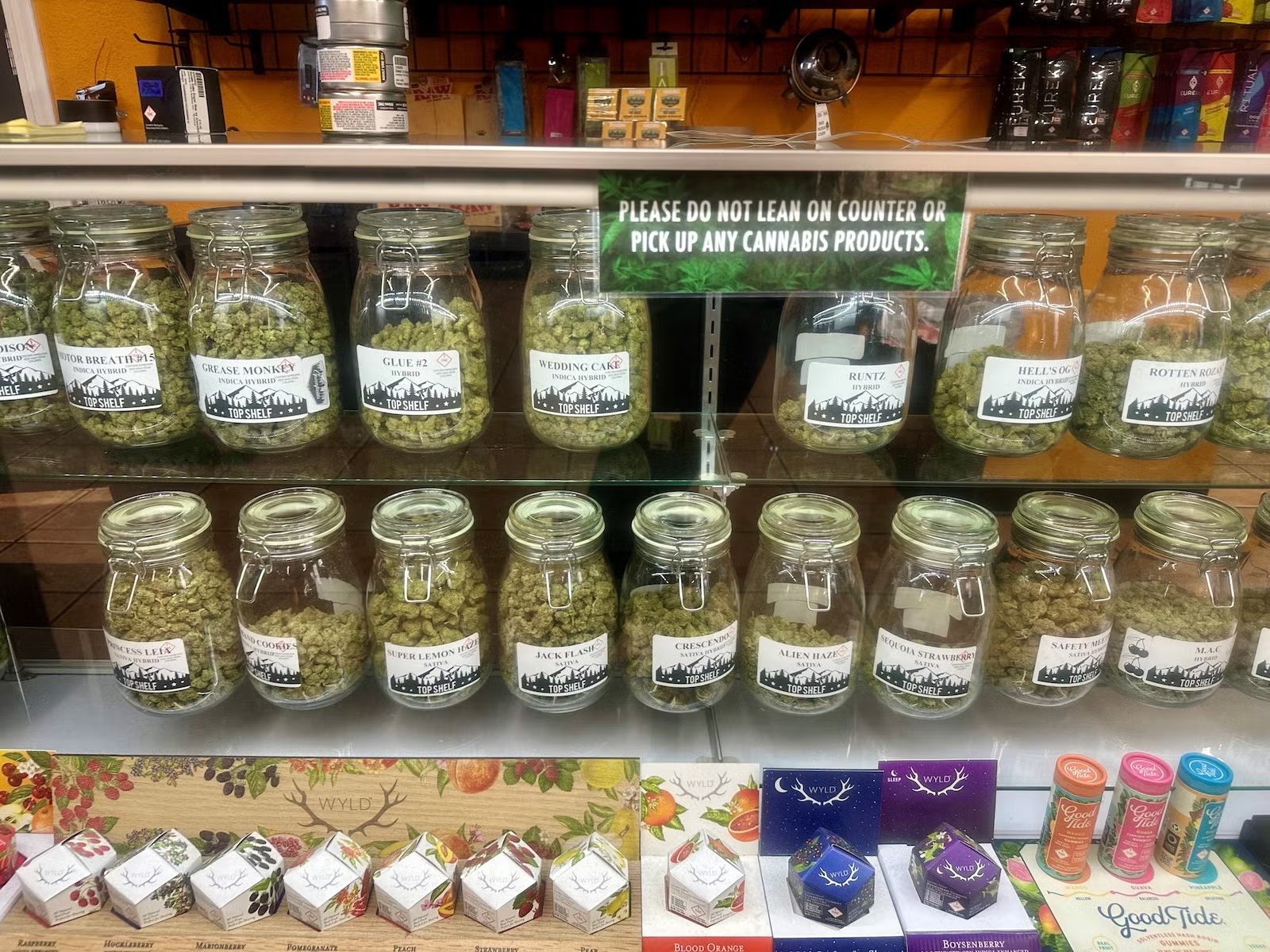
Dispensaries now sit beside ordinary retail chains. Local governments budget around projected cannabis revenue. Entire business networks — from logistics firms to construction contractors and compliance specialists — now depend on legalization continuing to expand rather than shrink.
That creates a form of economic dependence whether politicians are comfortable admitting it or not.
In states where recreational marijuana remains prohibited, many residents still believe existing laws are either too strict or increasingly disconnected from public opinion. Yet even inside legal states, the conversation has shifted. The debate is no longer centered only on personal freedom or criminalization. More often, it comes down to revenue, regulation, healthcare costs, public spending, and who ultimately carries the financial consequences if the industry grows faster than oversight systems can keep up.
The politics surrounding marijuana now reach much further into ordinary economic life than they once did.
For some Americans, legalization represents jobs, investment, local business growth, and tax income during a period when many cities and states are searching harder for money. For others, it reflects a country leaning further into new revenue streams while households continue feeling squeezed from multiple directions at once.
Either way, the financial ties keep deepening.
And once governments, landlords, investors, retailers, and local economies all start depending on cannabis money during a slower and more financially strained period, backing away becomes far more difficult — especially with voters already exhausted by how expensive everyday life has become.