Taylor Swift has always turned personal battles into public anthems, and her latest revelation feels like the ultimate chorus drop. On December 10, 2025, during a heartfelt sit-down on The Late Show with Stephen Colbert, the singer opened up about the record-shattering Eras Tour, which wrapped earlier this year after generating over $2 billion in ticket sales alone. She didn't mince words when explaining where that fortune went. Swift used the profits to buy back the masters to her first six albums from Shamrock Capital, a move that closed a painful chapter from 2019 and gave her full control over her life's work for the first time.
The moment landed with quiet power, as Swift leaned into the camera and said, "That's how I spent that Eras Tour money. My fans are why I was able to get my music back." It's a line that captures everything she's fought for, blending gratitude with the hard-won triumph of an artist who refused to let her story be told by someone else. Coming just months after the deal's announcement in May, this confirmation ties the tour's massive success directly to her quest for ownership, making it feel like fresh news even in the glow of hindsight.
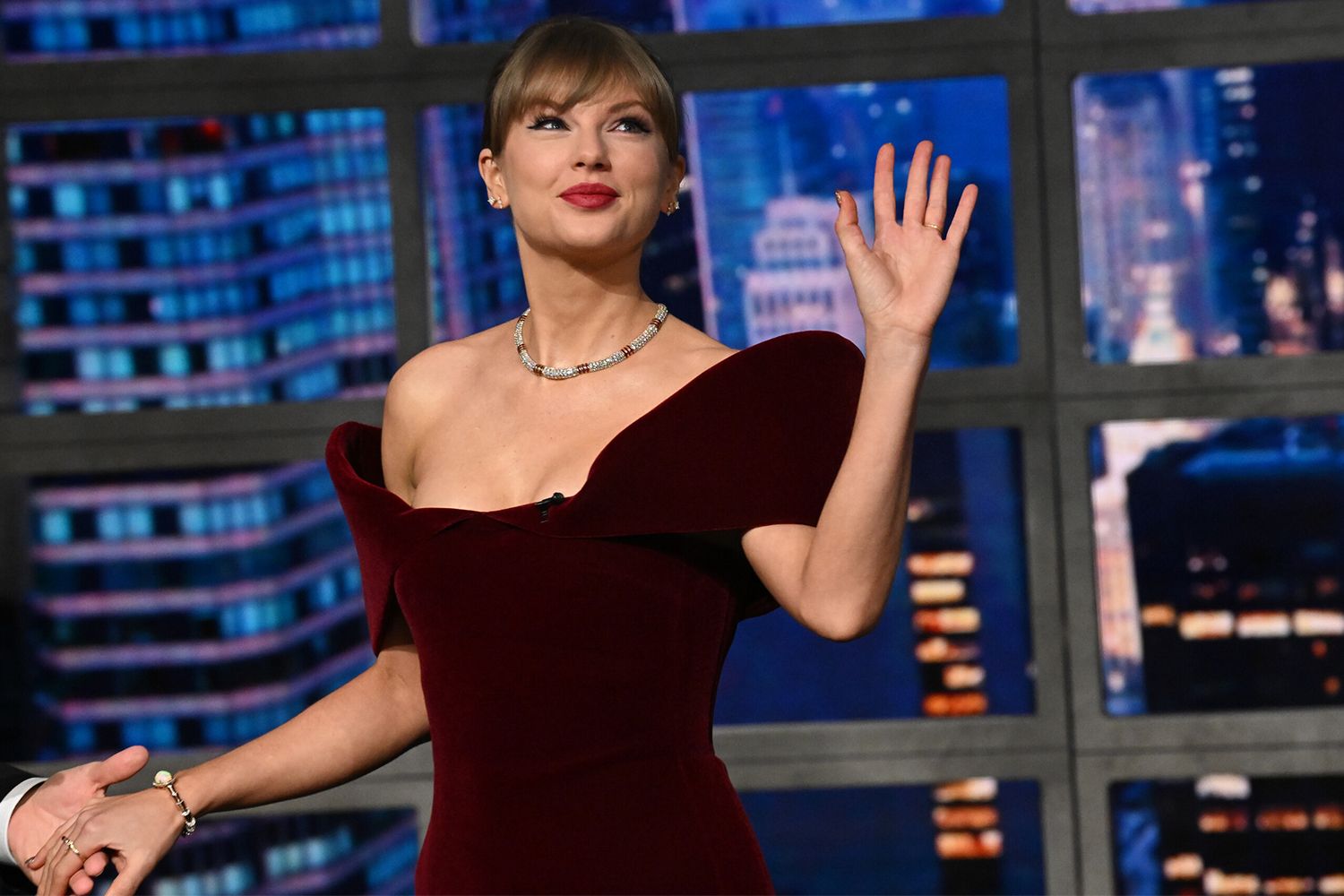
Taylor Swift greets fans and the audience in her striking burgundy velvet minidress, showcasing bold holiday glamour and superstar confidence.
Reclaiming Her Legacy: The Masters Deal Funded by Eras Tour Triumph
Swift's path to owning her masters has been a masterclass in persistence, one that started with shock and evolved into strategy. Back in 2019, when Scooter Braun's Ithaca Holdings acquired Big Machine Records and her early recordings, Swift went public with her frustration, sparking conversations about artist rights that still echo today. By 2020, Shamrock Capital stepped in with a $300 million purchase, leaving Swift to re-record her albums as a workaround while dreaming of full reclamation.
Fast forward to 2025, and the Shamrock deal explained boils down to a straightforward yet monumental transaction. Swift paid around $300 million to secure not just the masters for her debut through Reputation, but also the music videos, artwork, unreleased tracks, and more, all under her own terms with no lingering ties. She described it in a May letter on her website as the fulfillment of a decades-old goal, one where hard work met opportunity without compromise. Analysts had whispered about the funding source for months, but hearing her link it explicitly to the Eras Tour profits brought a rush of validation for everyone who's followed her journey.
Those profits, by the way, are staggering when you break them down. Pollstar's final tally pegged the tour at $2.2 billion from over 10 million tickets sold across 149 shows, shattering every record in sight and cementing Swift as the first solo artist to hit that milestone. So how much did Taylor Swift make from the Eras Tour, estimates put her personal take at hundreds of millions after expenses, but the real magic was in the multiplier effect, turning sold-out stadiums into a financial force that made this buyback possible.
The Ripple Effect: How the Eras Tour Boosted Economies and Lives
Beyond the balance sheet, the Eras Tour reshaped skylines in ways few events ever have. Cities along the route saw hotel bookings spike by up to 40 percent, airlines scrambling to add flights, and local businesses raking in record weekends from fans decked out in sequins and friendship bracelets. Economists dubbed it "The Swift Lift," a term that stuck because the numbers backed it up, with the tour injecting nearly $5 billion into the U.S. economy through direct spending on travel, dining, and merchandise. The Eras Tour economic impact extended globally, too, propping up tourism in places like Melbourne and Tokyo while creating jobs that rippled through entire communities.
Swift hasn't forgotten the human side of that scale. At the tour's end, she handed out $197 million in bonuses to her crew, from truck drivers hauling sets across continents to dancers perfecting every choreographed step. In an industry where long hours often outpace fair pay, this gesture wasn't flashy, it was foundational, a reminder that her wins are shared. She told Colbert it stemmed from a simple belief, success tastes sweeter when the people who built it with you get to savor it too.
What drove that intention? Swift spent years honing shows that do more than play hits, they pull you into another world for a couple of hours. She studied the craft obsessively, asking how to lift audiences from their daily grind into something electric and forgettable in the best way. Fans captured it perfectly with phrases like "post-concert amnesia" or "joy blackouts," those hazy highs where problems fade and pure connection takes over. Swift admitted even she was caught off guard by the depth of it all, the way rituals like trading bracelets turned strangers into a temporary family.
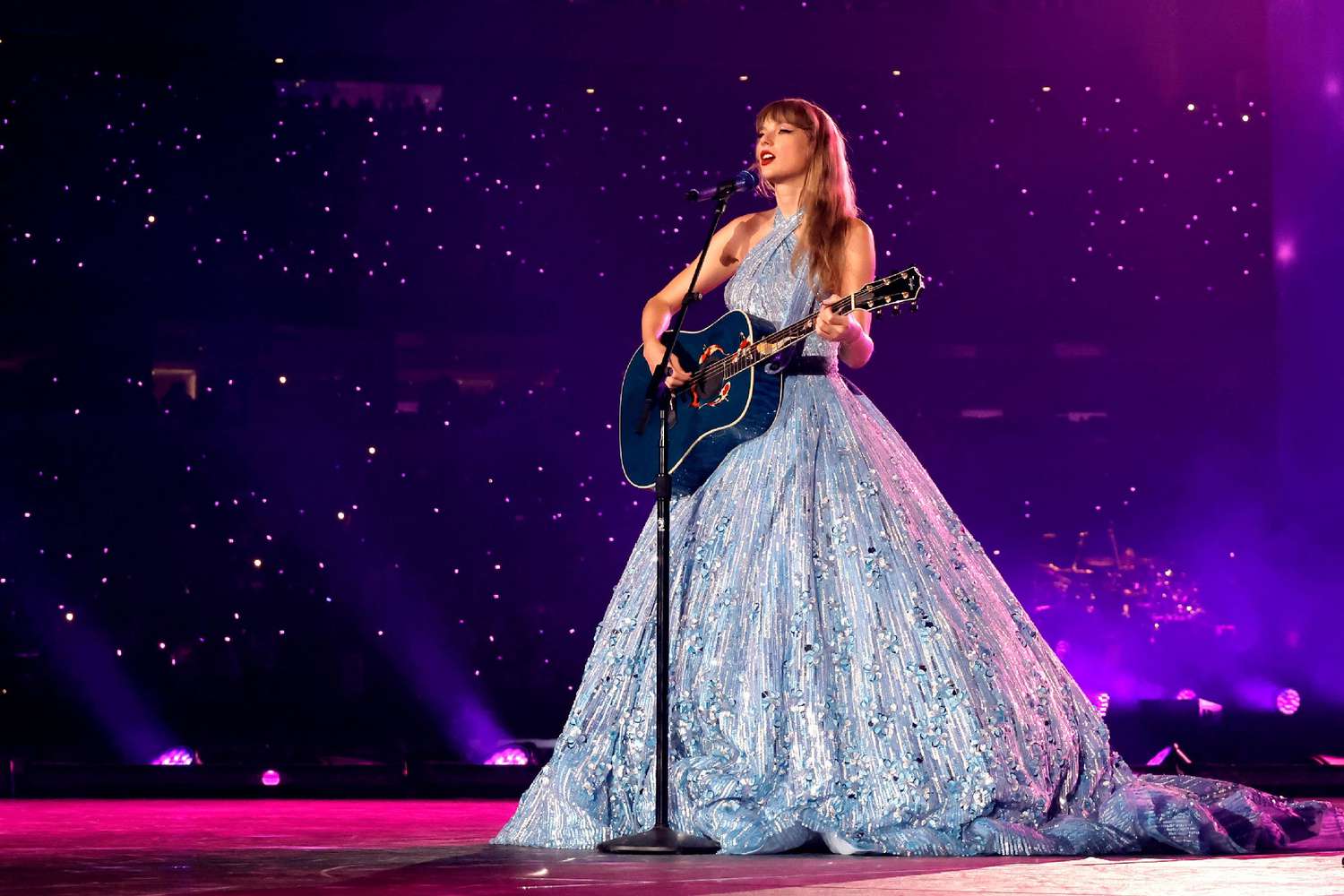
Taylor Swift delivers a powerful acoustic moment on the Eras Tour, captivating the stadium with her guitar and trademark storytelling energy.
Love in the Spotlight: The Engagement That Sealed a Whirlwind Year
If the masters deal was Swift's professional homecoming, her engagement to Travis Kelce added a layer of personal poetry that's hard to ignore. Announced in August 2025, two years after Kelce's podcast confession about missing her Kansas City show, the proposal unfolded in a garden setting that felt straight out of one of her songs. On Colbert's couch, she called him "the love of my life," her voice catching as she reflected on how neither this milestone nor the music ownership ever seemed truly attainable.
Their story started with that viral spark, evolving into a romance that's navigated stadium cheers and Super Bowl spotlights with genuine ease. Swift credited the tour's momentum with giving her the bandwidth to nurture it, turning what could have been a whirlwind into something steady and real. It's the kind of update that makes you root for her a little harder, proof that even icons get to chase happily ever afters on their own timeline.
This convergence of triumphs, business and heart intertwined, underscores why Swift's year resonates so widely. She's not just stacking wins, she's redefining what they mean for everyone watching, from aspiring songwriters to superfans trading theories online.
A Turning Point for Artists Everywhere
Swift's moves have already shifted the ground under the music world, much like Prince's bold stands in the '90s forced a reckoning. Labels are scrambling to sweeten ownership terms in contracts, transparency is non-negotiable now, and new talents walk into rooms armed with her example. Her Taylor Swift masters 2025 victory isn't isolated, it's a blueprint, proving that fan-powered revenue can rewrite unfair deals and spark broader change.
As she put it to Colbert, this isn't about closing doors, it's about flinging them wide open for the next generation. In a year bookended by sold-out finales and this candid reveal, Swift's story feels like the start of something even bigger, a new era where control, community, and a little bit of karma align just right.

Travis Kelce and Taylor Swift celebrate their engagement, highlighted by Swift’s stunning custom ring — a symbol of their high-profile romance and shared flair for extravagance.
Fans Dig Deeper: Unpacking Taylor Swift's Epic Year
How Much Did Taylor Swift Make from the Eras Tour?
The Eras Tour stands as the highest-grossing concert run ever, pulling in $2.2 billion from ticket sales alone according to Pollstar's year-end data, with over 10 million attendees across five continents and 149 performances. Swift's personal earnings, after splitting proceeds with venues, promoters, and her team, likely topped $500 million, bolstered by merchandise and the concert film's box office haul. This windfall not only funded her masters buyback but also highlighted her savvy as a business force, turning creative output into unprecedented financial leverage for artists everywhere.
What Is the Shamrock Deal Explained for Taylor Swift's Masters?
In May 2025, Swift finalized a $300 million agreement with Shamrock Capital to repurchase the masters of her first six albums, originally sold to Scooter Braun in 2019 and later acquired by the firm for a similar sum. The deal encompassed full rights to recordings, videos, artwork, and unreleased material, granting her complete autonomy without partnerships or restrictions. It marked the end of a six-year saga, allowing Swift to retire her re-recordings and unify her catalog under one roof, a move that's inspired countless discussions on equitable artist contracts in the streaming age.
What Is the Economic Impact of the Eras Tour?
The Eras Tour's footprint went far beyond stages, sparking a $5 billion surge in U.S. consumer spending on travel, hospitality, and local goods, as tracked by Time magazine's analysis of its 2023-2024 legs alone. Globally, it boosted GDP in host cities through sold-out hotels, extra flights, and fan-driven commerce, coining "The Swift Lift" for its measurable uplift on sectors like retail and tourism. This phenomenon not only created thousands of jobs but also demonstrated how cultural events can act as economic engines, rivaling major industries in their ripple effects.