In late 2018, Burger King launched what many now call one of the cleverest fast-food promotions ever, turning a simple penny discount into a nationwide sensation that still echoes in 2025 amid heated price wars. As chains like McDonald's slash menu prices to draw crowds this year, revisiting the Whopper Detour campaign reveals how Burger King used tech, psychology, and bold rivalry to capture attention without deep discounts.
Customers downloaded the app, entered a McDonald's, and unlocked a one-cent Whopper, creating buzz that boosted app downloads and sales overnight. This stunt not only went viral but also highlighted enduring lessons in competitive marketing, especially as Burger King rolls out fresh ideas like its 2025 "It's Only Natural" push featuring wide-eyed babies craving Whoppers.
How the Burger King Penny Whopper Campaign Actually Worked
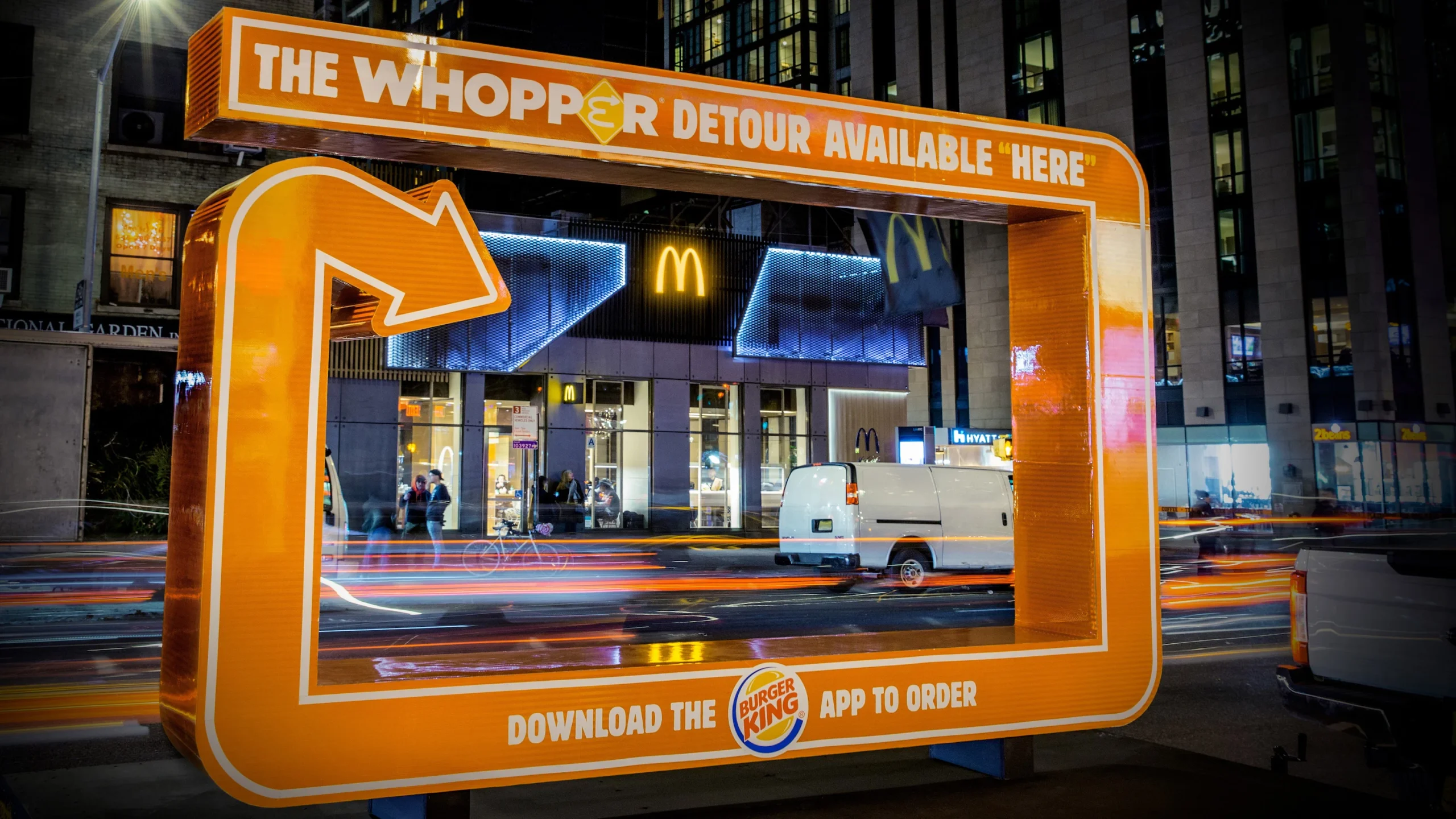
The Whopper Detour relied on geofencing technology to pinpoint McDonald's locations across the US, activating the deal only when users stepped inside those spots. Once detected, the Burger King app offered the burger for a cent, directing customers to the nearest Burger King for pickup. This setup turned everyday visits into playful adventures, with people sharing their experiences online and fueling organic publicity. Burger King cleverly leveraged proximity, since their restaurants often sit near McDonald's, making the detour seamless yet memorable for participants.
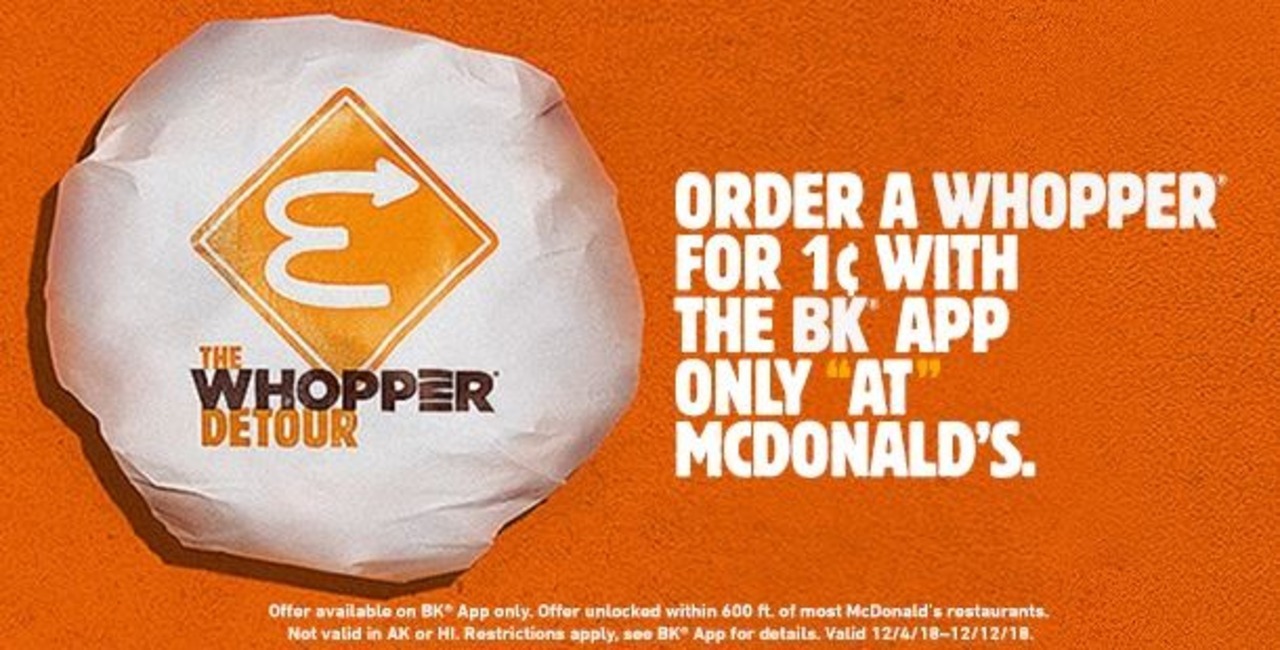
A Burger King ad breaks down the steps to unlock a one-cent Whopper — download the app, enter a McDonald’s, and order — turning a rival’s restaurant into the centre of a viral marketing stunt.
Why Walking Into McDonald’s Felt So Powerful
Burger King tapped into human emotions by making the act feel like a cheeky rebellion against a giant competitor, transforming a routine app download into an exciting story. Standing amid Big Mac signs while ordering a Whopper sparked laughter and a sense of mischief, encouraging users to post videos and photos that amplified the campaign's reach. This emotional pull differentiated it from standard promotions, drawing in crowds who valued the fun over mere savings, and it built lasting brand loyalty through shared joy.
The Viral Explosion Burger King Never Paid For
Social media erupted with user-generated content, from Instagram stories of "detours" to Twitter threads recounting the hilarity, all without Burger King spending on ads. News outlets and talk shows covered the story extensively, propelling the app to the top of download charts in just days. This free exposure surpassed a year's worth of paid marketing, proving how clever ideas can spark conversations that traditional budgets rarely achieve.
Turning a Disadvantage Into a Weapon
Burger King's smaller footprint compared to McDonald's became a strategic advantage, as the campaign used rivals' locations to trigger deals and highlight contrasts in real time. Customers often passed McDonald's en route to collect their Whoppers, reinforcing the bold switch and embedding the experience in their minds. This flip of perceived weakness into strength showcased innovative thinking, especially relevant now as 2025 sees fast-food giants battling over value meals and chicken sandwiches.
Burger King and McDonald’s logos side by side — a visual snapshot of one of fast food’s most famous rivalries, reignited by the audacious one-cent Whopper stunt.
Why This Campaign Still Matters Today
Marketing experts continue to study the Whopper Detour for its mastery in guerrilla tactics, emotional hooks, and app-driven growth, applying those principles to modern digital strategies. In an era of TikTok trends and AI ads, like Burger King's recent silent Whopper spot that lets satisfaction speak for itself, the 2018 effort reminds brands to prioritize creativity over cash. It also underscores competitive positioning, where outsmarting opponents leads to cultural impact that endures.
The Deeper Lesson for Businesses and Brands
Brands facing larger rivals can draw inspiration from how Burger King reframed competition, using ingenuity to create moments that resonate and drive engagement without massive spending. This approach fosters customer involvement, turning passive buyers into active promoters who extend the message far beyond initial reach. As fast-food rivalries intensify in 2025 with price battles and menu innovations, such strategies offer a blueprint for standing out in crowded markets.
The next time a bigger player looms large, consider how Burger King guided customers right into McDonald's territory and emerged victorious through sheer smarts. That shift from advertising to pure strategy turned a penny into priceless returns.
Unpacking Burger King's Marketing Mysteries
What Are Burger King's Latest Marketing Campaigns in 2025?
Burger King has kept the momentum going this year with campaigns like "It's Only Natural," where adorable babies and toddlers stare longingly at Whoppers, emphasizing instinctive appeal in a humorous way that racked up millions of views on social platforms. Another standout is the silent Whopper ad from November, ditching slogans for quiet moments of enjoyment, which contrasts sharply with noisy competitors and has sparked debates on minimalism in advertising. Additionally, family-focused efforts, including SpongeBob collaborations and song-filled promos for new menu items like fiery options, aim to engage multiple generations, boosting restaurant visits by tying into entertainment trends and everyday cravings, all while maintaining that signature witty edge.
How Has the Rivalry Between Burger King and McDonald's Evolved Since 2018?
Since the Whopper Detour, the Burger King-McDonald's feud has shifted from location-based pranks to digital and value-driven skirmishes, with Burger King recently poking fun at McDonald's AI-generated ads by highlighting human creativity in their responses. In 2025, amid broader fast-food price wars, McDonald's has focused on bundle deals and menu cuts to counter inflation-weary customers, while Burger King counters with personality-driven spots that emphasize fun and authenticity. This ongoing banter includes subtle jabs in social media, like Burger King replying to McDonald's customer complaints, keeping the competition lively and benefiting both by heightening public interest in their innovations.
What Lessons Can Brands Learn from the Whopper Detour in Today's Digital Age?
Brands today can apply the Whopper Detour's focus on interactive tech, such as geofencing and apps, to create personalized experiences that encourage user participation and social sharing on platforms like TikTok. Beyond fast food, this teaches the value of emotional storytelling over straightforward sales, helping companies build communities around their products in a crowded online space. With privacy concerns rising, lessons include balancing innovation with user trust, ensuring campaigns feel empowering rather than intrusive, and measuring success through engagement metrics like shares and downloads, which often yield longer-term loyalty than temporary promotions.