TL;DR
- Outcome: UK households are rapidly installing solar and batteries as energy fears intensify
- Mechanism: Global supply shocks → price uncertainty → households seek control through self-generation
- Implication: Energy is shifting from a fixed utility cost to a personal risk management strategy
Energy Bills Are No Longer Predictable
For years, solar panels were something you considered if you cared about the environment or long-term savings. Now, for many households, they are starting to look like financial protection.
That shift is happening faster than most people realise. As disruption in the Strait of Hormuz pushes up oil and gas prices, UK households are not just worrying about their next bill—they are questioning whether the system itself can still be relied on. Most people assume this surge in solar demand is about going green. In reality, it is about control: the desire to reduce exposure to a pricing system that feels volatile, global, and increasingly unpredictable.
Why This Isn’t Really About Saving Money
At first glance, the story looks simple. Prices may rise, so people look for cheaper alternatives. That explanation is incomplete.
The real driver is uncertainty.
Even with the price cap set by Ofgem currently limiting household bills, forecasts suggest that costs could jump significantly if global disruption continues. That creates a gap between what households are paying today and what they expect to pay in the near future. It is inside that gap that behaviour changes.
Suppliers such as Octopus Energy have already reported a sharp increase in demand, with solar installations rising more than 50% year-on-year. Interest in heat pumps and electric vehicle chargers is climbing at the same time, which shows this is not a single-product trend but a broader shift in how households think about energy.
What this means in practice is that people are no longer reacting to higher bills after they arrive. They are acting in advance to avoid being exposed to them in the first place.
The Shift Most People Haven’t Noticed
The most important change is not technological. It is structural.
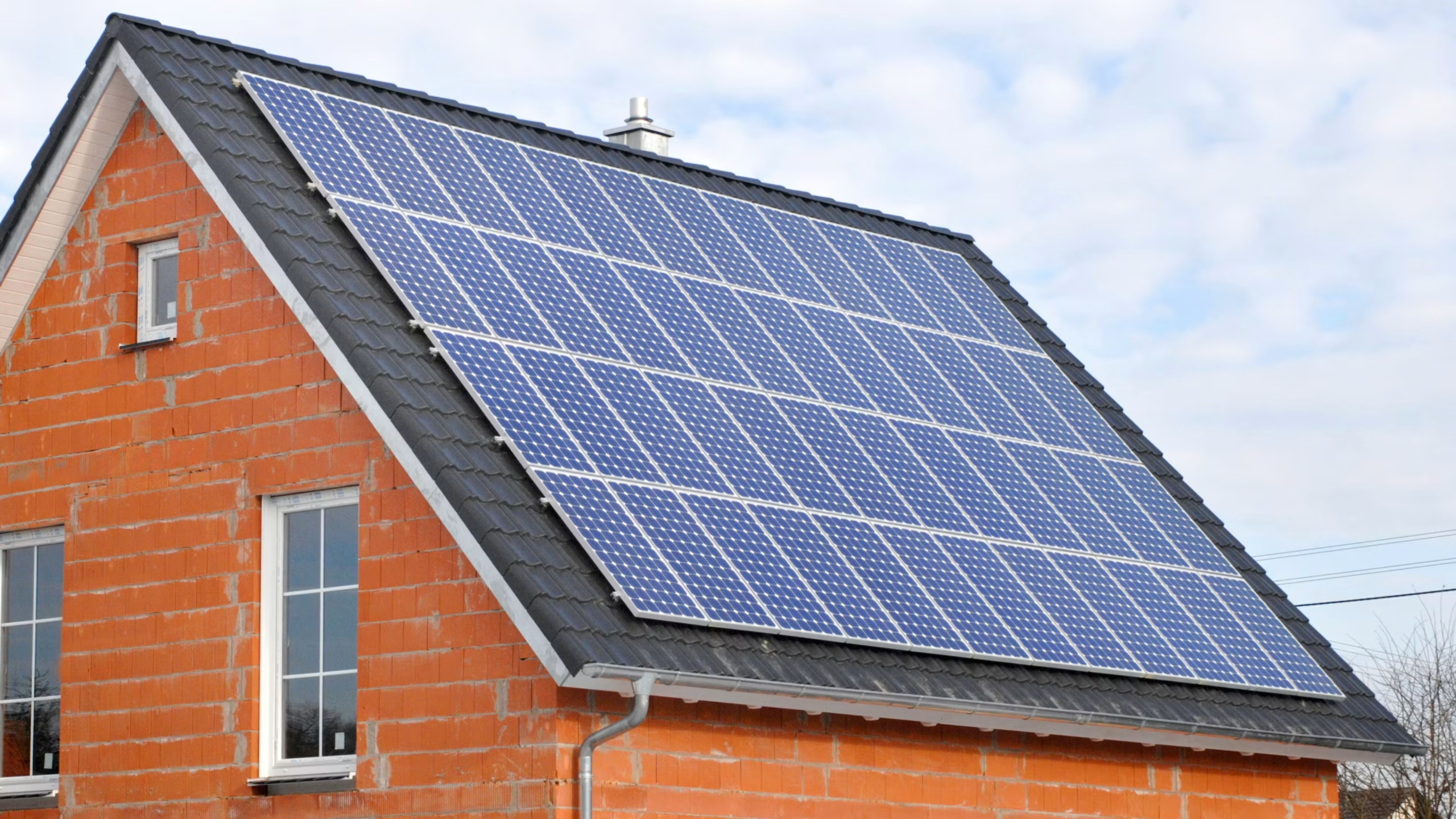
Traditionally, households sit at the end of the energy system. They consume electricity generated elsewhere and accept whatever price is set. Solar panels and battery storage change that relationship by allowing households to generate, store, and even sell energy.
Once that capability exists, the economics shift.
A household that can produce its own electricity reduces its reliance on the grid, gains control over when energy is used, and can export surplus power back into the system. In some cases, that surplus becomes income rather than just unused capacity.
This is where the model flips. Energy stops being a one-way expense and starts behaving like a managed resource.
The Mistake Most Households Are Making
Most commentary still frames solar as a long-term savings decision. That framing misses the real calculation households are making.
The key question is not whether solar panels reduce monthly bills. It is whether they reduce exposure to unpredictable costs over time.
A couple in Devon spent £13,700 installing solar panels, a battery, and related infrastructure. They estimate an eight-year payback period based on savings, with additional upside from selling excess energy back to the grid.
On paper, that looks like a slow return.
In reality, the decision threshold is different. It is not simply about value for money. It is about whether households want to remain exposed to a system where prices can rise sharply with little warning.
Where the Real Risk Sits
The risk is not evenly distributed, and this is where many households misjudge the situation.
There is timing risk. Acting too late means absorbing higher energy costs before any benefit from installation is realised. Acting too early, particularly during a demand surge, can mean paying inflated installation prices and extending the payback period.
There is also performance risk. Solar generation varies by season, which means reliance on the grid does not disappear entirely. Households that assume full independence may find their expectations do not match reality, particularly during winter months.
This is where loss actually occurs. It does not come from adopting solar itself, but from misjudging how and when the system delivers value.
At a broader level, there is system risk. As more households generate their own energy, the economics of the grid change. Pricing structures, export incentives, and tariffs may evolve as adoption increases.
Why This Shift Is Accelerating Now
Government policy is now reinforcing this behavioural change.
Under plans associated with the Warm Homes strategy, ministers under Keir Starmer are accelerating grants and financing options for solar panels and battery storage. Lower-income households may receive fully funded installations, while others are offered low or zero-interest loans.
This does more than reduce upfront costs. It signals that decentralised energy is not a temporary response to a crisis, but a long-term direction. When governments support a technology at scale, it reduces hesitation and makes adoption feel more like a rational default.
What This Really Means for Households
This is not simply a spike in demand for solar panels.
It represents a broader shift in how households interact with essential infrastructure. Instead of relying entirely on centralised systems, they are beginning to take partial control of production and reduce exposure to external shocks.
That has wider implications. Energy companies may increasingly operate as platforms rather than pure suppliers, while pricing models are likely to evolve as more households generate their own power.
Most importantly, expectations will change. Once people experience greater control over their energy costs, returning to full dependency becomes far less appealing.
The Bigger Shift Behind the Headlines
This may look like a short-term reaction to rising bills and geopolitical tension.
In reality, it is a structural response to uncertainty.
Energy is no longer just a household expense—it is becoming a risk decision that people are actively managing rather than passively accepting.