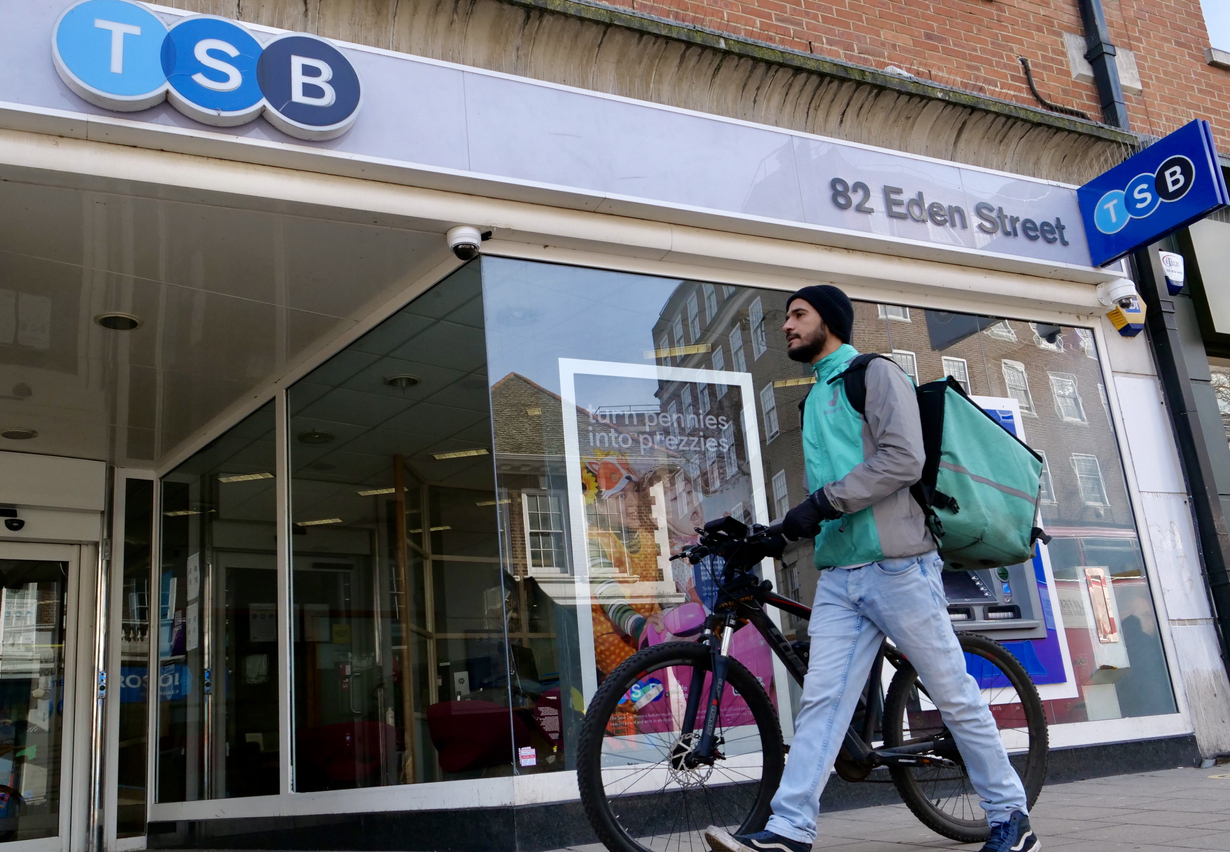
Santander is preparing to phase out the TSB name from Britain’s high streets after completing its £2.65bn takeover of the UK retail lender, bringing one of the country’s oldest banking labels towards the end of its 215-year history. The deal gives Santander around 5mn additional customers and more than £45bn in assets, but customers may eventually feel the takeover through branch access, account migration, product changes and service quality rather than the name above the door.
The TSB brand traces its roots back to the Trustee Savings Bank movement, which began in 1810 to help workers in Dumfriesshire manage their wages. Losing the name would remove one of Britain’s oldest banking labels, but the modern purpose of the deal is not nostalgia. Santander has bought scale in current accounts, mortgages, deposits and regional coverage, especially in Scotland and northern England. Santander has said there will be no immediate change for TSB customers, and reports suggest accounts, products and branding may remain unchanged for at least 12 months. That gives customers breathing space, but it does not change the financial logic behind the takeover. Santander bought TSB to become larger and more efficient, and efficiency in retail banking usually means fewer duplicated costs.
The bank has previously said the takeover should generate about £400mn in cost savings, equal to roughly 55% of TSB’s cost base. Executives have also reportedly discussed a further £100mn of savings after 2028, once the main integration work is complete. Those numbers are useful for shareholders, but they also point towards the pressure that may eventually reach branches, jobs, systems and customer products. Retail banking mergers tend to follow a familiar pattern. Duplicate branches are reviewed, overlapping roles are removed, technology systems are combined and customers are gradually moved onto common platforms. TSB has around 175 branches across the UK, while Santander has already been restructuring its own UK network as more customers move to digital banking. Customers are unlikely to experience the deal first through a brand announcement. They are more likely to notice it if a local branch closes, an app changes, a savings account is replaced, mortgage servicing moves, account terms are updated or customer support becomes harder to reach during migration. That is where a corporate deal becomes a household banking issue.
Branch access deserves particular attention because it is often the most visible result of banking consolidation. Older customers, small businesses, cash users and people in towns with fewer banking options can carry the heaviest burden when networks shrink. A merger can look efficient in a bank’s cost plan while leaving some communities with fewer places to get help.Product migration is another area where customers will need clear communication. TSB customers may eventually be moved onto Santander systems, products, apps and service channels. A smooth transition could give them access to a larger banking platform and broader product range. A poor transition could create confusion over logins, card changes, account names, fees, rates or branch arrangements. Santander will know the technology risk is sensitive. TSB’s reputation was damaged by its 2018 IT migration problems, when customers were locked out of accounts and the bank faced heavy criticism. Any future migration will need to avoid reopening that wound, especially when customers have become quicker to switch after service failures.
The takeover also changes the competitive shape of UK banking. Santander gains more scale against Lloyds, NatWest, Barclays and HSBC, while strengthening its position in mortgages and personal current accounts. Larger banks can invest more in technology, fraud prevention and digital services, but fewer distinct brands can also leave consumers with less choice if products start to look the same. Santander’s own UK history shows why the TSB name may struggle to survive. The Spanish bank entered UK retail banking through Abbey National, then added Alliance & Leicester and part of Bradford & Bingley before bringing the combined business under the Santander UK brand in 2010. Retiring TSB would follow the same playbook: buy customer scale, combine operations and sell under one larger banking identity. For shareholders, the attraction is direct. Keeping TSB customers while removing duplicated costs could improve returns in a UK retail banking market where margins are tightly watched. The risk sits in execution. Customers can leave, staff morale can weaken, and technology projects can absorb more time and money than expected. TSB staff face uncertainty as the integration develops. The bank employs about 5,000 people, and company filings reportedly show it launched an “enhanced listening” exercise to help employees deal with takeover uncertainty. Santander has already been cutting UK jobs, so employees will watch closely for overlap once the combined business starts making deeper operational decisions.
A stronger Santander UK could still benefit customers if scale is used to improve digital banking, fraud protection, mortgage competition and product access. The takeover is not automatically bad for consumers. The test is whether Santander can make the combined bank cheaper to run without making it worse to use. Santander has said TSB is a strong consumer banking brand and that it recognises the value built with customers over a long period. That leaves room for a gradual approach, and the TSB name may remain on some products for longer if it still has commercial value. The wider direction, however, appears to be towards a single Santander UK business. The next year may look quiet for most customers because major changes are not expected immediately. The more important period comes later, when the combined bank decides how many branches, systems, products and teams it needs. That is when customers will learn whether the takeover brings better banking or simply fewer choices.
Santander has bought customers, assets and a stronger UK footprint. To make the deal work financially, it also has to remove costs. For TSB customers, the loss of a 215-year-old name may be the emotional headline, but the practical questions are closer to home: branch access, account terms, app changes, service quality and whether the combined bank gives them better value.
More from Finance Monthly: Vodafone’s £4.3bn Three Buyout Puts UK 5G to the Test