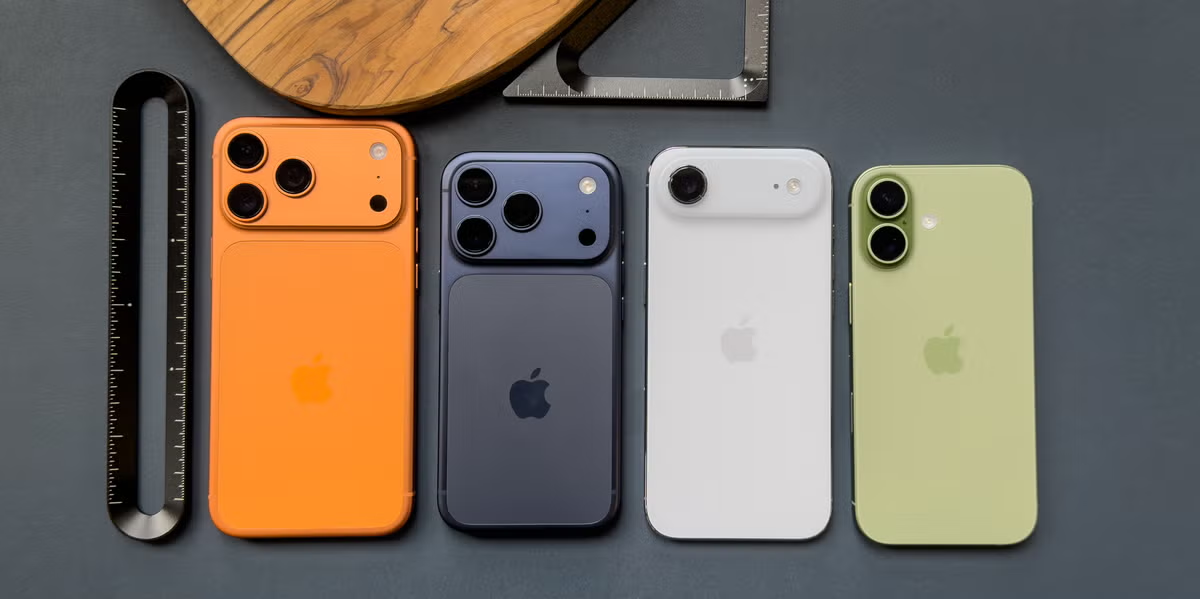
Apple has agreed to pay $250mn to settle claims that it overstated Apple Intelligence features tied to Siri, including a personalised AI assistant promoted around the iPhone 16 launch but delayed after customers had already bought eligible devices. The settlement is small by Apple’s standards, but the damage risk is larger: the company has turned its slow AI rollout into a consumer trust problem at the exact moment rivals are teaching users to expect AI everywhere.
The proposed settlement covers US customers who bought eligible iPhone 15 Pro and iPhone 16 models between June 10, 2024 and March 29, 2025, with reported payments of $25 to $95 per device, depending on claims. Apple denies wrongdoing and the deal still needs court approval, yet the case has already shifted the debate from delayed software to whether Apple’s AI promises are strong enough to protect the iPhone upgrade cycle. For consumers, the frustration is easy to understand. Apple Intelligence was pitched as a way to make the iPhone more personal, useful and proactive. If a buyer upgraded partly because Siri was supposed to understand personal context and act across apps, a late feature becomes more than a missing convenience. It becomes a purchase decision shaped by a promise that did not arrive on time.
Investors face a sharper concern than the settlement bill. Apple has spent years defending premium iPhone prices through hardware quality, ecosystem lock-in and software polish, but AI changes the buying logic because the most exciting upgrades are now shaped by model capability, rollout speed and whether a phone feels meaningfully smarter after purchase. Apple’s caution once looked like discipline. While rivals pushed generative AI into search, workplace software, Android phones and cloud platforms, Apple tried to sell Apple Intelligence as more private, more integrated and more useful inside the iPhone. That argument only holds if the product arrives with enough force to justify the wait. A swingeing legal bill is unlikely to hurt Apple financially given the scale of its cash generation. The harder problem is that AI has become part of the iPhone sales pitch, and any doubt around that pitch can weaken the emotional logic of buying the next device. A customer who feels the last AI claim arrived late may wait longer before trusting the next one. The problem with a robustious AI marketing push is that consumers eventually expect the product to behave as advertised. Apple can sell restraint, privacy and polish better than most technology companies, but those strengths do not remove the need to deliver features when customers are told they are coming.
Siri is the sensitive part of the story because it should have been Apple’s natural advantage. The assistant already lives inside the iPhone, has mass-market recognition and sits inside an ecosystem where Apple controls apps, contacts, calendars, messages and device settings. If any company had the ingredients to turn a voice assistant into a genuinely useful personal AI layer, Apple had them. Siri now has to become a reliable parser of personal context, not merely a voice interface that sets timers and mishears requests. A modern assistant needs to understand what a user means, know when it has permission to act, and move across apps without creating privacy or reliability problems. That is a much harder product than a keynote demo suggests. Apple wanted the AI upgrade to feel like a smooth swoosh into the next iPhone cycle: buy the new device, turn on Apple Intelligence, and feel the phone become more capable. The settlement cuts across that story because it reminds customers that some of the most attractive AI claims were still unfinished when the products were being sold. Tim Cook now faces a more difficult stage at Apple’s next developer conference. Apple is expected to make another push around AI-enhanced Siri, but the company has less room for theatre. Consumers and investors will listen for what Siri can actually do, when it will arrive, and whether the features work across everyday tasks rather than only staged examples.
Competitors have been more aggressive. Google has pushed Gemini deeper into Android and search, Microsoft has embedded Copilot across workplace software, and OpenAI has made ChatGPT a mainstream consumer product. Apple still controls the iPhone, the operating system and the customer relationship, but control of the screen does not automatically mean control of the intelligence layer on top of it. Samsung has already made Galaxy AI a central part of its phone story, with translation, photo editing, note summaries, search and assistant features pushed across its premium devices. Chinese manufacturers are moving quickly too, with brands such as Huawei, Xiaomi, Oppo and Vivo using AI photography, on-device assistants, translation and productivity tools to make Android phones feel more experimental and faster-moving than the iPhone. Apple’s strength is polish, but polish starts to look defensive if rivals are setting the pace of what an AI phone can do.
Meta adds another kind of pressure because it is not fighting only through phones. Its Ray-Ban Meta glasses already put AI into a wearable consumer product, and the company has been expanding the range with prescription-focused models and new AI features. Meta is also developing more advanced assistant tools designed to carry out personalised tasks for users, showing how aggressively it wants AI to move into daily behaviour rather than sit inside one app.
Apple does have recognised AI products under the Apple Intelligence brand, including Writing Tools, Genmoji, Image Playground, Clean Up in Photos, summaries, Live Translation, Visual Intelligence and ChatGPT integration. The weakness is that these still feel like useful system features rather than a defining AI product. Siri was supposed to become that product, and the delayed personalised assistant is now the place where Apple’s AI story looks most exposed.
The very real jeopardy facing Apple
The danger for Apple is not that the iPhone suddenly becomes irrelevant. The danger is more subtle and more financially serious: Apple could keep selling premium hardware while the most valuable AI habits form elsewhere. If consumers begin using ChatGPT, Gemini, Meta AI or Samsung’s Galaxy AI as their daily assistant layer, Apple risks becoming the expensive device that hosts someone else’s intelligence. That would be a profound shift in where the money goes. Apple has spent years monetising control of the device, the App Store and the ecosystem. AI could move value towards the model, the assistant and the service that handles the user’s intent. If Apple does not own that layer, it may still collect hardware margins, but the next wave of software power could sit outside its walls. Samsung and Chinese manufacturers are not waiting for Apple to perfect Siri. They are turning AI into a phone-selling feature now, even if the early tools are imperfect. Meta is moving AI into glasses and social products. Google is using Gemini to tighten its grip on search and Android. OpenAI has already trained consumers to ask an AI assistant before opening a traditional app. Apple’s problem is not a lack of features; it is that rivals are teaching the market new habits faster.
A more open model strategy could help Apple catch up faster. Letting users access rival AI models inside Apple’s systems would improve the product experience and reduce the risk of Apple being seen as late. The trade-off is that Apple may keep the platform while other companies supply more of the intelligence. That is still a powerful position, but it is weaker than owning the central AI relationship itself. Apple’s privacy-first approach also creates a harder engineering problem. A useful assistant needs context, but Apple’s brand depends on protecting that context. A faster rollout might please investors in the short term, yet a careless AI assistant that acts wrongly across apps or exposes personal information would damage the company’s reputation far more deeply than a delayed feature. Apple now has to unbar a version of Siri that feels genuinely useful, not merely safer or more polished than rival assistants. The company does not need a louder AI story. It needs a product that makes ordinary iPhone users feel the device has changed in daily life. The settlement lands in the awkward space between legal cost and product credibility. Apple can pay the money. It cannot buy back consumer patience if the next Siri upgrade underwhelms again. A payout to eligible iPhone owners may close one lawsuit, but it does not close the gap between Apple’s AI promise and what users now expect from a premium device.
The next iPhone cycle will carry the commercial verdict. Apple needs AI to give customers a reason to upgrade, not merely a reason to install another software update. If Apple Intelligence becomes genuinely useful, the company protects premium pricing and keeps the iPhone at the centre of daily digital life. If it remains late or thin, the iPhone risks becoming the best-looking hardware in a market where someone else owns the intelligence. Tim Cook does not need Apple to win every AI contest. He does need to stop the idea taking hold that Apple is watching the AI race from behind its own garden wall. The Siri settlement shows what happens when the promise gets ahead of delivery.
Apple’s next AI launch has to be concrete, not atmospheric. After a $250mn settlement, customers will not be judging the wording of the keynote. They will be judging whether Siri finally does the job Apple said it would — and whether Apple still deserves to lead the device where consumer AI should have felt most natural.
More from Finance Monthly: SpaceX Terafab Shows Where the AI Money Is Really Going