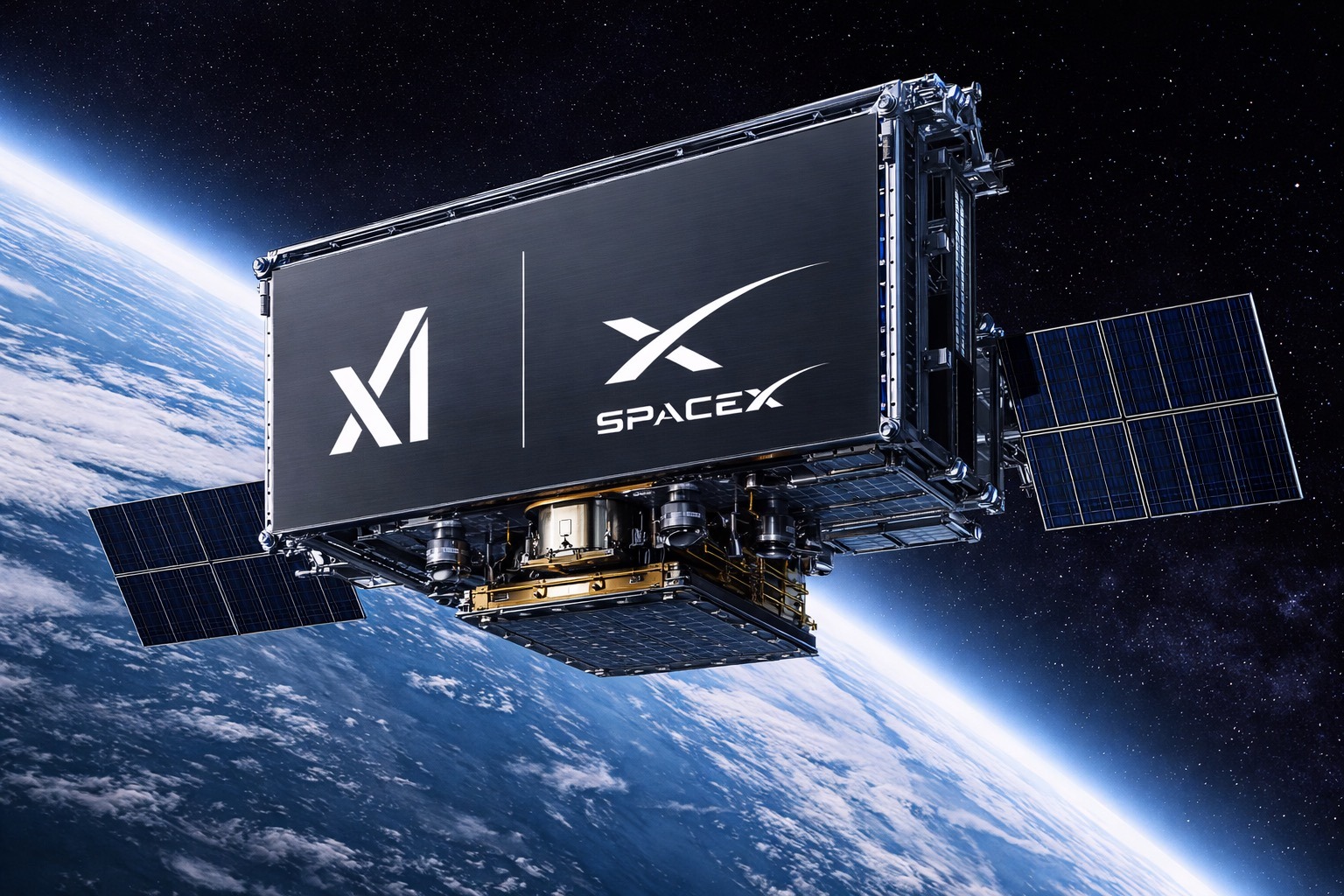
SpaceX has filed plans for a $55bn semiconductor and advanced computing facility in Texas, called Terafab, with total investment potentially rising to $119bn if later phases are completed. The proposal gives the AI boom a harder financial edge: the biggest money is no longer chasing only apps, models and chatbots, but the chips, power, land, tax breaks and computing capacity needed to make AI run at scale.
The planned site in Grimes County, Texas, would sit inside a newly designated reinvestment zone, with local officials expected to consider a property tax abatement agreement in June. That places SpaceX’s AI ambitions inside the machinery of industrial development, where incentives, energy access, permitting, water, land and local infrastructure can shape the economics as much as software demand. Elon Musk and SpaceX give the story its obvious hook, but the broader investment signal reaches well beyond one company. AI businesses and their backers are learning that software advantage depends on physical supply. Models need chips; chips need fabrication plants; fabrication plants need specialist equipment, electricity, cooling, permits and skilled workers. The industry that sold itself as light, fast and digital is now colliding with one of the most expensive buildouts in modern business.
A chatbot can reach millions of users quickly, but training and serving powerful AI systems requires costly infrastructure behind the screen. Data centres, chip plants, cooling systems, power contracts and semiconductor capacity are becoming the new toll roads of the AI economy, with investors trying to work out who will own the bottlenecks and who will be forced to rent access from others. SpaceX’s wider AI push already reaches beyond the Texas filing. The company has secured an option to acquire AI coding start-up Cursor for $60bn later this year, or pay $10bn for a partnership if it does not complete the acquisition. Cursor sits close to one of the first areas where AI has become a clear paid product, with developers using coding tools to write, edit and debug software faster. Coding tools help explain why the infrastructure story has become urgent. If AI can turn software development into a faster, cheaper and more automated process, the companies supplying the underlying computing power gain more leverage. A Texas chip and advanced computing complex would sit deeper in the stack, closer to the machinery needed to make AI tools cheaper, faster and harder to copy. Across the sector, capital is moving in layers. One layer goes into applications such as coding assistants, finance agents and workplace tools. Another goes into model companies. The deepest and most expensive layer goes into the supply chain underneath them: chips, data centres, electricity and manufacturing capacity.
SpaceX’s plan points to a market where the scarce input may become more valuable than the product sitting on top of it. Companies that rely entirely on rented cloud capacity or outside chip supply can be boxed in by shortages, supplier pricing and the priorities of larger rivals. If computing capacity becomes the bottleneck for AI, owning chip and data-centre capacity starts to look like a gilt-edged strategic advantage. Anthropic chief executive Dario Amodei has warned that legacy SaaS companies that fail to integrate AI could lose significant value or even go bankrupt. The warning fits the same capital shift. AI is no longer a feature that software companies can add later to please investors. It is becoming the dividing line between businesses that can defend pricing and those that risk being tanked by faster, AI-native rivals. SaaS companies now face a blunt commercial test. A business that once sold workflow software, coding tools, support systems or analytics dashboards has to show why AI expands the value of its product rather than replaces the work it charges for. Customers will not keep paying old prices for software that AI can automate elsewhere. SpaceX appears to be attacking the same problem from the infrastructure end. Instead of only buying AI tools, it is positioning around the capacity needed to run them. If computing power becomes scarce, the companies that own or secure more of it gain bargaining power over the companies that only build applications.
A chip project of this scale can still become a capital quagmire. Semiconductor facilities are slow, expensive and vulnerable to delays. They depend on specialist machinery, skilled labour, utilities, permitting and supply chains that are already stretched. A $55bn project can sound visionary at announcement stage and still become a drag if demand shifts, costs rise or the technology changes before the investment earns its keep. Terafab would also pull local taxpayers and public policy into the AI race. Property tax abatements can help secure investment, jobs and domestic manufacturing capacity, but they raise fair questions about what a community gives up in exchange. Grimes County may gain a major industrial project, while also facing pressure on land, infrastructure, water, roads and local services.
Washington’s interest in domestic semiconductor capacity gives SpaceX’s plan a wider political tailwind. Chips now sit at the centre of defence, AI, finance, healthcare, logistics and industrial power, which means advanced computing infrastructure is no longer treated as ordinary corporate expansion. A SpaceX-backed facility would fit the US push to bring more critical technology capacity onshore. Investors will still have to separate strategic logic from financial return. Infrastructure can create durable advantage, but it can also lock companies into huge fixed costs. If AI demand keeps accelerating, owning capacity may look brilliant. If the market overbuilds or model efficiency improves faster than expected, the industry could be left with expensive assets chasing weaker returns. SpaceX has one obvious advantage: its pieces can be made to tell one large industrial story. Rockets and satellites give it hardware credibility. Starlink gives it distribution and connectivity. xAI gives it models. Cursor would give it a developer-product route. Terafab would push the group deeper into chips and computing capacity. The strategic logic is control of more of the AI chain, not a single product launch.
Control of that chain may become more valuable as AI moves from novelty to infrastructure. The first stage of the boom rewarded companies with the best demos. The next stage may reward those that can run AI cheaply, reliably and at scale. That is less glamorous than a chatbot launch, but it is where a large share of the money may be made or lost.Any SpaceX listing would now give investors a more complicated business to judge than a space company alone. The pitch could include launch, satellites, broadband, AI models, developer tools, chip infrastructure and a tightly controlled corporate structure around Musk’s capital decisions. That mix could excite public markets, but it also makes the risk harder to price. Investors would be backing a long industrial marathon across space, AI, chips and computing infrastructure. The potential upside is enormous, but execution risk stretches across sectors that each carry their own cost, regulatory and technology problems. The broader lesson for the AI market is that the boom is becoming less about who has the cleverest interface and more about who can afford the physical base underneath it. Chips, power and computing capacity are becoming strategic assets in the same way oilfields, fibre networks and cloud regions shaped earlier technology cycles. SpaceX’s Terafab filing remains a plan rather than a completed facility. It still needs approvals, tax terms, construction, equipment and years of execution before it can prove anything commercially. Even at this stage, the direction is clear enough: AI money is leaving the pitch deck and moving into concrete, silicon, electricity and land.
The companies that win the next stage of AI may not be the ones with the most agressive model launch. They may be the ones that secure enough computing capacity to keep everyone else waiting.
More from Finance Monthly: OpenAI Stargate: Why ChatGPT’s Data-Centre Bill Is Growing Before a Trillion-Dollar IPO