The boardroom used to feel a lot bigger. Not that long ago, closing an international business deal meant dealing with weeks of logistical headaches, specialized communication gear, and teams of human translators working away in heavy, soundproof booths. Honestly, it was exhausting. If you wanted to pitch a client in Tokyo or sync up with a manufacturing partner in Berlin, you usually had to push your timeline back by months.
Today, that massive distance has shrunk down to a single click.
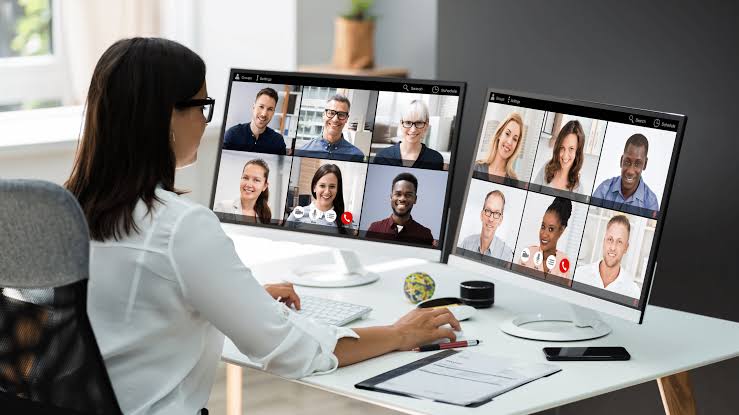
Artificial intelligence interpretation systems are quietly stepping into corporate boardrooms and virtual meeting spaces, fundamentally changing how we connect across borders. But is this shift just about translating words a little faster? Not really. It is about completely removing the invisible friction that has held global collaboration back for decades.
The Evolution of Corporate Communication
For a long time, international business relied on two main paths for cross-language communication. The first was consecutive interpretation, where a speaker stops talking after every few sentences to let a translator speak. This basically doubles the length of any meeting, and it completely breaks the natural flow of a good negotiation. The second option was simultaneous interpretation, which keeps the meeting moving but requires complicated audio setups and a massive financial investment.
AI interpretation tools are creating a much-needed third path. By integrating directly into video conferencing platforms and meeting room hardware, these systems listen to spoken audio, figure out the actual context, and deliver translated speech or text in near real time.
And the immediate result? A huge drop in operational overhead.
Companies don't have to budget thousands of dollars per meeting for specialized translation services anymore, nor do they have to coordinate across wide time zones just to lock down scarce human talent. You know, staring at a bright laptop screen at midnight just to catch a brief window of overlapping working hours is finally becoming a thing of the past. Instead, an AI interpreter is becoming a normal feature of the digital workspace, ready whenever you are.
Beyond Translation: Understanding Context and Nuance
Early versions of machine translation were famous for producing literal, robotic outputs that completely missed cultural context and industry-specific vocabulary. If a speaker used a common idiom or a bit of technical jargon, the software usually spat out something confusing or entirely wrong. Have you ever sat through a meeting where a translated phrase completely derailed the conversation? It ruins the momentum instantly. There is this distinct, heavy silence in the room when a bad translation lands.
Modern systems are built quite differently. They use advanced neural networks that look at full sentences and the broader conversation history rather than just translating word for word. This allows the software to recognize specific corporate phrasing, legal terms, and specialized data unique to fields like finance, engineering, or healthcare.
On top of that, these tools are getting much better at picking up emotional tone and vocal pacing. When an executive stresses a specific point through their cadence, advanced translation models try to reflect that emphasis in the target language. This makes sure that the actual intent behind the words, not just the literal dictionary definitions, makes it across the language barrier safely. And that's the point. It is about capturing human connection, not just mechanics.
Democratizing Global Market Entry
Historically, expanding into foreign markets was a luxury saved for massive multinational corporations with incredibly deep pockets. Small and mid-sized businesses often hesitated to chase international clients simply because they didn't have the infrastructure to support multilingual relationships. I guess it just felt too risky for most small operations. Or maybe, you know, just completely out of reach.
But real-time AI communication completely lowers that barrier to entry.
A small software team can now pitch their product to a regional distributor on the other side of the world without needing to hire a dedicated, local sales team first. It lets smaller operations move with the exact same agility as major corporations, opening up global supply chains and talent pools that used to be completely out of reach.
So, this leveling of the playing field changes how businesses look at growth. Geographical borders are becoming secondary to actual product market fit. If your service brings real value, language is no longer the bottleneck that keeps a deal from closing.
The Shifting Role of Human Professionals
The rapid rise of automated tools naturally brings up questions about the future of human interpreters. Will software completely replace the need for human linguists? The reality we are seeing isn't a story of total replacement, but rather one of reallocation.
Human translators possess deep cultural empathy, situational awareness, and the unique ability to navigate high-stakes emotional diplomacy. In critical scenarios, like diplomatic summits, sensitive legal arbitrations, or massive corporate mergers, the precision and nuance of an experienced human professional remain absolutely essential. You cannot replace the gut feeling of a seasoned professional reading a room.
AI excels at handling the massive mountain of everyday corporate communication. It easily manages daily standups, routine training sessions, cross-regional updates, and introductory sales calls. By automating these high-frequency, routine interactions, technology frees up human professionals to focus on the complex, high-context scenarios where human judgment matters most.
Preparing the Workplace for a Multilingual Future
Making these tools work effectively requires more than just turning on a software feature. Organizations have to adapt their actual meeting cultures to get the most out of real-time translation. What does that look like in practice?
Speakers need to practice clear enunciation and steady pacing to give the software the best possible audio input. Meeting hosts should make sure that high-quality microphones are standard in every conference space, since background noise and poor audio remain the main things that disrupt automated translation accuracy. No one likes listening to static.
As these systems become more deeply embedded in daily workflows, the very definition of a global team will transform. We are moving toward an environment where every single employee can speak their native language naturally, completely confident that their colleagues around the world understand them perfectly.