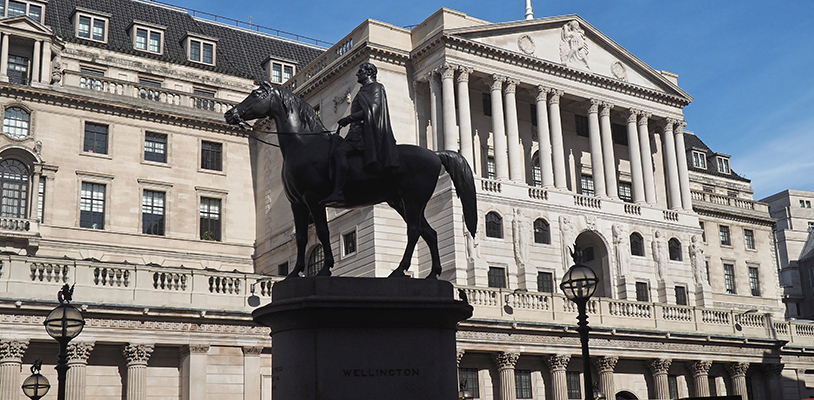
The Bank of England has launched the scenario phase of its system-wide exploratory exercise focused on private markets, sending 46 participating firms a hypothetical five-year global recession against which to model their behaviour under severe stress. Published on 19 June 2026, the scenario marks the next stage of the second system-wide exploratory scenario (SWES), first launched in December 2025, and is designed to reveal how banks and non-banks active in private equity and private credit would respond to a deep downturn — and whether their collective actions could amplify stress across the financial system and threaten the supply of finance to the UK real economy.
The scenario is deliberately severe. Calibrated as a tail-risk outcome broadly consistent with the Bank's 2025 Bank Capital Stress Test, it envisages a global supply and geopolitical shock that triggers a deep recession, with disrupted supply chains, a sharp rise in energy prices, and a combination of high inflation and falling output that forces policy rates higher. The shock plays out over three phases: in year one, asset prices fall sharply and UK CPI inflation peaks at 7% with a volatility index reaching 40; in year two, UK GDP contracts by 4%, Bank Rate rises to 7%, the FTSE All-Share falls 35% and European leveraged-loan spreads widen by 390 basis points; and across years three to five, the recovery is slow, with UK unemployment peaking at 7.5% and GDP growing at a modest 0.7% a year. The scenario provides participants with around 200 quantitative variable paths alongside a narrative.
The exercise is being run under the guidance of the Financial Policy Committee and the Prudential Regulation Committee, supported by the PRA, the Financial Conduct Authority and The Pensions Regulator. Its 46 participants span the private-markets ecosystem: institutional investors such as insurers, pension funds, endowments and foundations; alternative asset managers operating private equity and private credit funds and managing collateralised loan obligations; banks providing leverage to sponsor-backed companies; and asset managers active in leveraged loans, CLOs and high-yield bonds. Participation is voluntary, and the firms have been engaged in designing the scenario as well as responding to it.
The motivation lies in how far private markets have grown as a source of finance, and the vulnerabilities that growth may carry. The FPC has previously flagged risks arising from the use of leverage, opacity in valuations and interconnection with other credit markets, and the SWES is built to probe exactly these pressure points: how infrequent valuations behave when public-market equivalents are falling sharply, how funds manage liquidity when redemptions rise or borrowing must be refinanced, and how correlated strategies and concentrated exposures could transmit stress between private markets, banks and institutional investors.
The exercise carries weight for finance professionals because private markets now sit at the centre of corporate funding yet remain less transparent than public markets. Private equity and private credit have become major lenders to UK companies, and a disorderly response to stress — fire-sales of assets, a sudden withdrawal of financing, or valuation disputes between lenders, investors and sponsors — could tighten conditions beyond what the underlying shock warrants and feed through to corporate investment and employment. The two-round design, in which firms revise their responses after seeing aggregated feedback on how others behaved, is intended to capture precisely those amplification and feedback effects that a single-firm stress test would miss.
The findings will land in stages, giving the sector a clear timeline to watch. The Bank will share insights from its initial information-gathering in its July Financial Stability Report, with interim findings from Round 1 later in 2026 and a final report in 2027; the Bank has also committed to sharing aggregate findings with other central banks, regulators and the Financial Stability Board. The exercise is exploratory rather than a pass-or-fail test of individual firms, so it will not produce capital requirements — but its conclusions are likely to shape how private markets are supervised in the UK and, given the international interest, how regulators elsewhere approach a sector that has grown faster than the tools to monitor it.
More From Finance Monthly: PRA Proposes Targeted Adjustments to Basel 3.1 Market-Risk Internal Model Approach in New Consultation