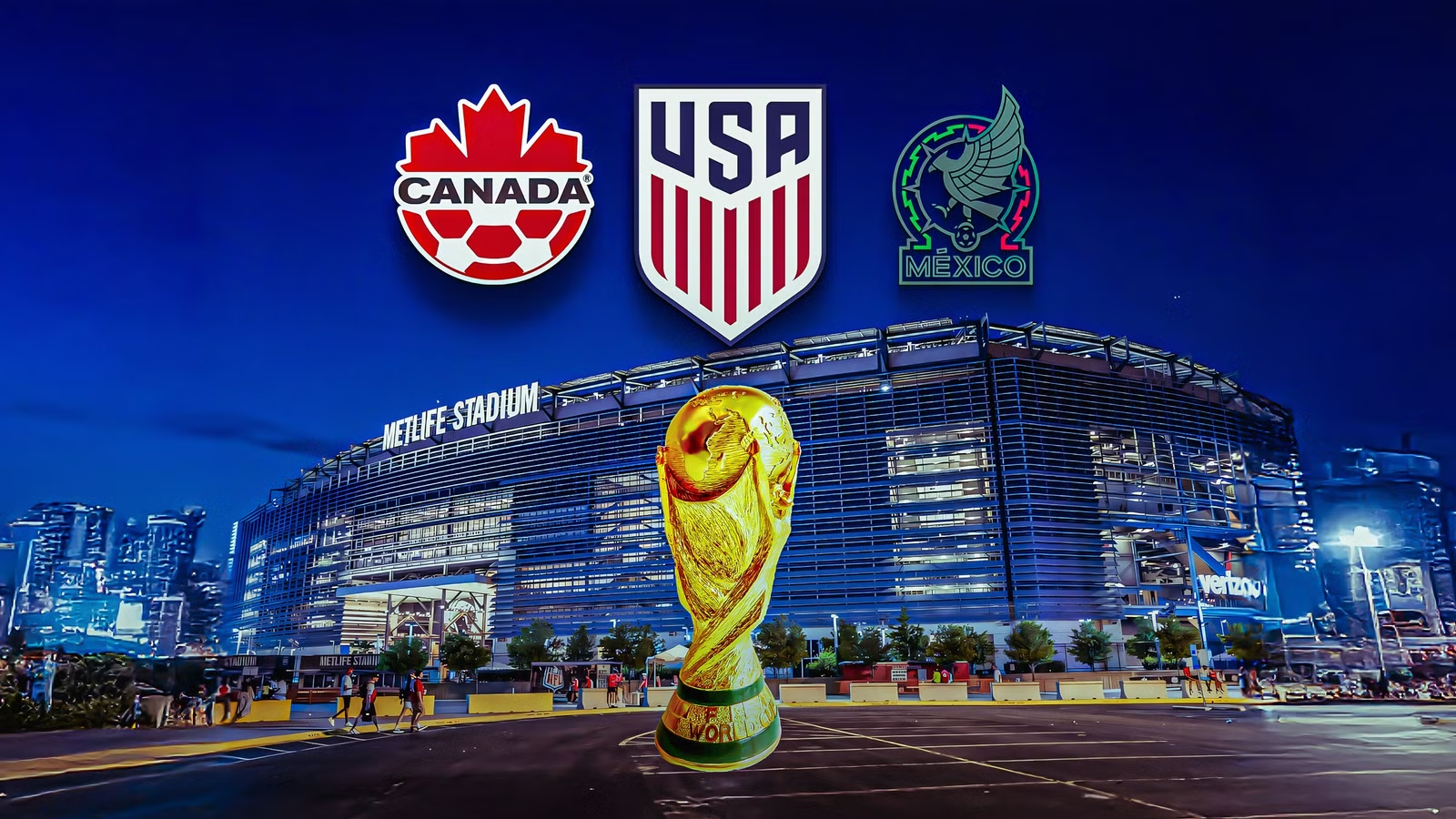
The moment football fans have circled on their calendars arrives today, December 5, 2025, as the FIFA World Cup 2026 final draw unfolds live from Washington, D.C. This expanded 48-team extravaganza, co-hosted by the United States, Canada, and Mexico, promises groups that could ignite passions and reshape legacies across the globe. With 12 groups from A to L set to emerge, the stakes feel electric, blending raw competition with the kind of unpredictability that turns underdogs into heroes.
The Spectacle Unfolds: Venue, Hosts, and What to Anticipate
Inside the grand John F. Kennedy Center for the Performing Arts, the draw kicks off at 17:00 GMT, or 12:00 local time, transforming a cultural landmark into football's command center. This isn't a dry administrative affair, but a polished production running about 90 minutes, complete with celebrity presenters and legends from the pitch drawing the teams. Picture icons like past World Cup winners stepping up to reveal fates, their hands pulling balls that could spark joy or heartbreak for millions watching worldwide.
The energy builds quickly, with the core grouping process wrapping in under an hour, yet every reveal carries weight. Broadcasters like FIFA+, NBC Sports, and Sky Sports beam it globally, drawing viewers who crave not just the matchups, but the theater of it all. It's a reminder of why this sport grips us so tightly, turning a simple lottery into a shared global pulse.
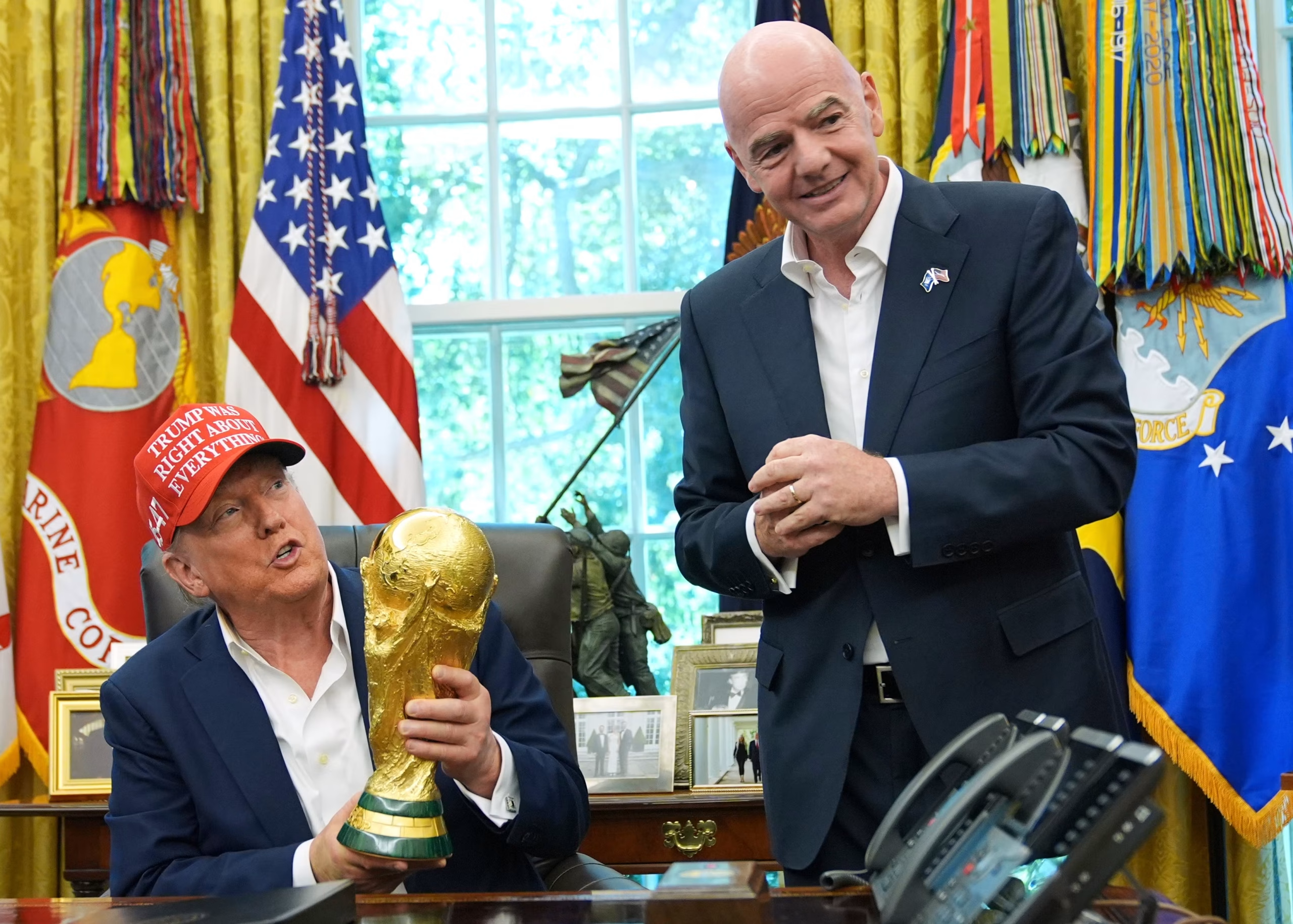
FIFA’s Gianni Infantino presents President Trump with a World Cup trophy during their White House meeting — a symbolic gesture underscoring the tournament’s global reach and the ongoing influence of host-nation diplomacy.
Breaking Down the Pots and Seeds: Where Each Team Stands
FIFA has meticulously slotted the 48 qualified nations, plus six playoff placeholders, into four pots of 12 teams apiece, guided by the latest world rankings as of November 2025. The hosts, United States, Canada, and Mexico, anchor Pot 1 despite their mid-tier rankings, ensuring home crowds get prime billing. This setup aims to distribute talent evenly, preventing early clashes among giants and fostering balanced battles in the group stage.
Here's the full breakdown of the pots, reflecting the seeded order based on FIFA's official procedures:
| Pot | Teams (FIFA Ranking) |
|---|---|
| Pot 1 (Top Seeds) | United States (14), Mexico (15), Canada (27), Spain (1), Argentina (2), France (3), England (4), Brazil (5), Portugal (6), Netherlands (7), Belgium (8), Germany (9) |
| Pot 2 | Croatia (10), Morocco (11), Italy (12), Uruguay (13), Colombia (16), Japan (17), South Korea (18), Senegal (19), Denmark (20), Switzerland (21), Ecuador (22), Iran (23) |
| Pot 3 | Ukraine (24), Serbia (25), Sweden (26), Turkey (28), Norway (29), Hungary (30), Czech Republic (31), Poland (32), Slovenia (33), Tunisia (34), Iraq (35), New Zealand (36) |
| Pot 4 (Includes 6 Playoff Placeholders) | Jordan (66), Palestine (92), Uzbekistan (60), China (59), Australia (58), Saudi Arabia (57), Qatar (56), Bahrain (55), United Arab Emirates (54), Oman (53), Kuwait (52), Playoff Winners A-F (TBD via March 2026) |
The draw pulls one team from each pot to fill the 12 groups, creating diverse lineups that span continents and styles. Pot 4's unknowns add intrigue, as those March qualifiers could slot in and alter dynamics once their confederations lock in.
Navigating the Rules: Confederations, Constraints, and Fair Play
Layered atop the pots sit FIFA's confederation safeguards, designed to weave a tapestry of global variety without stacking similar nations against each other prematurely. Broadly, no group admits more than one team from CONMEBOL, CONCACAF (beyond hosts), AFC, CAF, or OFC, steering clear of lopsided regional showdowns in the groups. UEFA's 16 entrants bend this rule slightly, allowing up to two Europeans per group to accommodate their numbers across 12 pods.
Every group guarantees at least one UEFA side, capping at two, which spreads European firepower while inviting clashes with rising stars from elsewhere. These guardrails, enforced by computer algorithms behind the scenes, dodge deadlocks where rules clash, like a playoff survivor forcing a confederation overload. It's a system born from lessons of past tournaments, prioritizing equity so every qualifier gets a genuine shot at advancing.
The economic ripple of such thoughtful design can't be overlooked either. As Tim Pike, Managing Director at Oxford Economics, observes in their recent North American impact study, "This tournament will surge hotel revenues by nearly $900 million across U.S. markets alone, akin to hosting ten Super Bowls in six weeks, fueling jobs and communities long after the final whistle." That boost, projected at $40.9 billion in combined GDP for the hosts, underscores the draw's role in not just sporting drama, but tangible prosperity that lifts hearts and wallets.
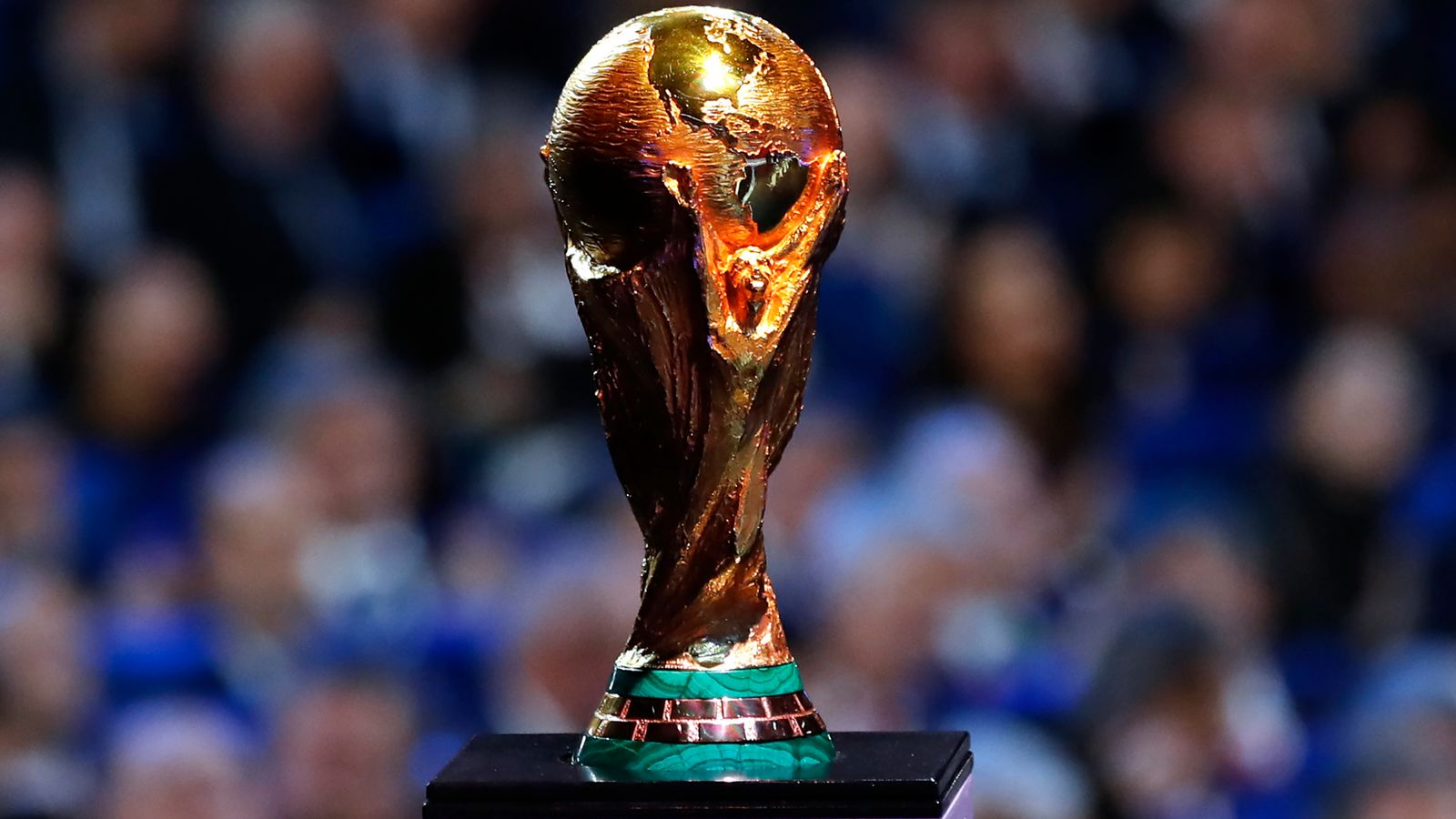
A detailed close-up of the iconic World Cup trophy — the symbol every host nation and competing team ultimately chases.
The Game-Changer: Epic Pathways and What to Watch For
At the heart of this draw's innovation lies a tennis-inspired twist for the elite: Spain, Argentina, France, and England, the top four ranked, get funneled into distinct knockout pathways. If they summit their groups, these powerhouses dodge each other until the semifinals, with Spain and Argentina eyeing a potential final, while France and England carve opposite routes. This shields marquee talents for late-stage fireworks, amplifying the thrill as paths converge only in the biggest moments.
Yet surprises lurk everywhere, from dark horses in softer groups to playoff revelations reshaping balances. Imagine a Pot 4 underdog pairing with two UEFA heavyweights, or a host nation drawing firepower that tests their mettle early. These what-ifs pulse with possibility, making today's reveal a launchpad for dreams, rivalries, and those unforgettable upsets that define World Cup lore.
This debut of the 48-team format isn't mere logistics, it's a blueprint for bolder football, where expanded slots invite fresh narratives and the draw itself becomes a story. As groups solidify, the buzz will swell, pulling fans deeper into a summer of stories that transcend borders and bind us in shared anticipation.
Beyond the Balls: Fan Questions Answered
How Will the Playoff Qualifiers Affect the 2026 World Cup Groups?
The six spots in Pot 4 remain open until March 2026, when inter-confederation playoffs crown the final entrants from paths involving teams like Italy alternatives or Asian challengers. Once revealed, their confederations trigger FIFA's algorithm to verify group fits, potentially swapping positions to honor the one-per-confederation rule, excluding UEFA. This fluidity means a group might shift from looking routine to suddenly stacked, injecting late drama and forcing fans to revisit strategies, all while keeping the tournament's global flavor intact and exciting.
Why Are the Top Four Seeds Separated Until the Semifinals?
FIFA's pathway system places Spain, Argentina, France, and England in isolated brackets to maximize knockout spectacle, ensuring they only collide in semis or the final if they advance as group winners. This setup, drawn from Grand Slam tennis, rewards excellence by delaying dream matchups like an Argentina-England rematch, building tension across 104 games and heightening the emotional payoff for viewers who crave those historic clashes in the tournament's closing acts.
What Economic Boost Does the 2026 World Cup Promise for Host Cities?
Beyond the pitch, the event eyes $5 billion in North American economic activity, per U.S. Soccer estimates, with cities like Los Angeles and Toronto projecting $500 million each in local spending on visitors, infrastructure, and events. Oxford Economics forecasts $900 million in U.S. hotel gains alone, creating thousands of jobs in hospitality and transport, while long-term legacies like upgraded stadiums sustain tourism booms, turning host regions into enduring soccer hubs that thrive for years.