Sovereign risk entered the domestic credit market with unprecedented speed. Within hours, the US dollar weakened sharply, gold surged to a record $4,600, and global investors repriced what had long been assumed unassailable: the institutional independence of the Federal Reserve.
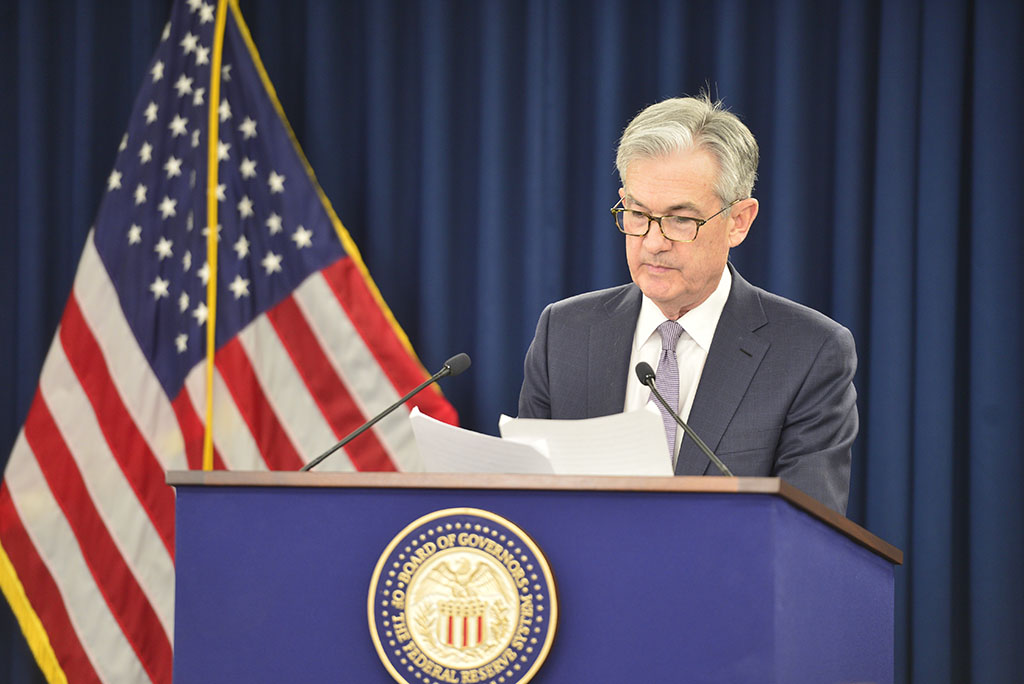
This market shock was not triggered by inflation data, employment figures, or geopolitical conflict abroad. It was triggered by a legal threat at home. Subpoenas delivered to Federal Reserve Chair Jerome Powell late Friday introduced a new and destabilizing variable into global finance—the criminalization of monetary policy decisions.
The administration argues the investigation centers on alleged cost overruns tied to the $2.5 billion renovation of the Fed’s Eccles Building. Supporters frame it as routine oversight. Markets, however, reacted as though a red line had been crossed. The question now facing investors is not whether the Fed made a budgeting error, but whether the United States has effectively placed its central bank under political probation.
This audit examines the immediate market reaction, the institutional fallout, and the long-term capital consequences of a precedent that threatens to permanently reprice American sovereign risk.
The Immediate Market Shock — When Trust Became a Variable
Currency markets moved first. The Dollar Index slid sharply as traders priced in a new political premium on US assets. Safe-haven flows accelerated out of dollar-denominated instruments and into gold, the Swiss franc, and the euro. These were not speculative trades; they were defensive reallocations by institutional managers seeking insulation from governance risk.
Gold’s rapid ascent to $4,600 per ounce signaled more than inflation hedging. It reflected a no-confidence vote in the institutional framework that anchors the dollar’s reserve currency status. When markets fear that interest rates may soon be dictated by subpoenas rather than data, the appeal of physical stores of value becomes self-evident.
Equity futures fell as investors confronted the removal risk of a technocratic leader at the center of global capital pricing. The prospect of a leadership vacuum at the Fed introduced immediate uncertainty into discount rate assumptions across every asset class.
Treasury markets followed. Long-dated yields climbed as the term premium expanded, reflecting fears that political interference would push inflation expectations higher over time—even if short-term rates were forcibly reduced. This steepening signaled that markets no longer viewed the risk-free rate as politically insulated.
The Institutional Fallout — Sovereign Risk and the ‘Pretext’ Subpoena
At the core of the turmoil lies the legal mechanism itself. The Department of Justice’s focus on the Fed’s headquarters renovation has been widely interpreted by market participants as a pretext—a procedural pathway to establish the “for cause” standard required to remove a sitting Fed Chair.
The alleged $700 million budget variance is immaterial in isolation. What matters is precedent. If administrative cost overruns can justify criminal investigation of monetary leadership, then no future policy decision is free from legal second-guessing.
Interest rate volatility is no longer being driven by macroeconomic indicators. Instead, it is being shaped by court calendars and prosecutorial discretion. Fed funds futures began pricing in forced rate cuts not because inflation subsided, but because markets anticipated executive pressure on policy outcomes.
Credit spreads widened as lenders demanded compensation for a newly introduced sovereign risk factor. Corporate issuers now face higher borrowing costs precisely because the independence meant to keep capital cheap has been placed in doubt.
Credit, Capital, and the Disappearance of Reliable Benchmarks
The erosion of Fed independence undermines the foundational benchmark used in nearly all financial modeling. When the risk-free rate loses credibility, every downstream calculation—from equity valuations to infrastructure finance—must be reworked.
M&A activity is already feeling the strain. Dealmakers rely on stable discount rates to price long-term synergies. In a world where monetary policy can be influenced through legal pressure, earn-outs and contingent consideration become the only viable tools to bridge valuation gaps.
Liquidity friction is rising in global repo markets as Treasuries—long treated as pristine collateral—absorb a credibility discount. Primary dealers have begun tightening terms in response to heightened volatility in the dollar, signaling a defensive posture across funding markets.
Firms with significant floating-rate exposure face acute risk. A politically induced rate cut may offer short-term relief, but it carries the danger of igniting a secondary inflation surge that would force even more aggressive tightening later. This whipsaw dynamic is poison for capital planning.
Congress, Courts, and the Collapse of Central Bank Certainty
Legislative paralysis is compounding judicial risk. Senator Thom Tillis has frozen all future Federal Reserve Board nominations pending legal clarity. This maneuver threatens quorum requirements, potentially paralyzing key policy decisions at a moment of maximum stress.
Simultaneously, the Supreme Court is preparing to hear arguments related to the statutory protections afforded to sitting Fed governors. A ruling that weakens these protections would dismantle the technocratic shield that has insulated US monetary policy for decades.
Historical precedent offers a warning. Political pressure on central banks—from Nixon’s influence over Arthur Burns to more recent examples in Turkey and Argentina—has consistently resulted in higher inflation, currency weakness, and capital flight. Markets are acutely aware of this lineage.
The legal theory being tested today—treating administrative oversight as grounds for dismissal—would grant future presidents a blueprint to purge independent agencies wholesale. That risk is now embedded in global pricing models.
Boardroom Verdict: How CFOs Should De-Risk a Politicized Dollar
Corporate treasurers must treat this moment as a structural shift, not a transient headline risk. Currency diversification should move from best practice to mandate. Excess concentration in dollar liquidity now carries an explicit governance discount.
Interest rate hedging strategies require immediate revision. Models built solely on economic inputs are insufficient when legal action can override policy. Fixed-rate financing and duration management should take precedence over yield optimization.
Institutional portfolios with heavy Treasury exposure must consider sovereign risk insurance and increased allocations to real assets. Gold’s surge is not speculative exuberance—it is a rational response to institutional uncertainty.
The Watchdog’s Breakdown: Why This Precedent Matters
This confrontation is not about building materials or renovation contracts. It is about whether monetary policy can be criminalized to achieve political objectives. Once that boundary is crossed, independence becomes theoretical rather than operational.
Global investors are responding accordingly. The dollar’s reserve status is not revoked overnight, but it is incrementally discounted. Each episode of interference accelerates diversification by foreign central banks and sovereign wealth funds.
The threat of indictment against a sitting Fed Chair introduces a permanent risk premium into US assets. Markets can tolerate bad policy. They cannot tolerate policy made under threat.
Final Watchdog Verdict: The Price of Political Interference
Gold at $4,600 and a sliding dollar are not market overreactions—they are signals. They reflect a repricing of American institutional credibility at a moment when the rule of law and central bank independence intersect.
If the legal campaign against Jerome Powell proceeds, the cost will not be borne by the Fed alone. It will be paid through higher borrowing costs, weaker currency purchasing power, and diminished confidence in the world’s financial anchor.
Watchdog Conclusion: The United States is discovering, in real time, the market price of threatening its own central bank.
What The Experts Are Asking
Can the President of the United States fire the Fed Chair?
No, the President can only remove a Federal Reserve Chair "for cause," meaning proven legal or ethical violations. The current DOJ investigation into building cost overruns is widely viewed as a "pretext" to establish that legal cause.
What is the financial significance of gold hitting $4,600?
Gold at $4,600 represents a "no-confidence vote" in the stability of the US dollar. It signals that institutional investors are moving capital out of paper assets and into physical stores of value to hedge against political instability.
Why is the $2.5 billion Fed building renovation being investigated?
The DOJ alleges that the Federal Reserve mismanaged $700 million in cost overruns during the refurbishment of its DC headquarters. Powell contends the investigation is a tool for political leverage to force lower interest rates.
How does the Powell indictment threat affect corporate borrowing?
The threat creates "governance risk," which leads to higher long-term bond yields. Even if short-term rates are cut, the "political premium" keeps the actual cost of borrowing high for most American businesses.
What happens if the Fed Chair refuses to resign after a subpoena?
Jerome Powell has indicated he will stay in office to defend the Fed's independence. This sets up a constitutional crisis that will likely be decided by the Supreme Court, potentially paralyzing monetary policy in the interim.
Will the US dollar lose its reserve currency status due to this crisis?
While the dollar remains dominant, the "credibility discount" encourages central banks in Asia and Europe to diversify their reserves. A politically controlled Fed would significantly accelerate the global trend toward "de-dollarization."
Why is Senator Thom Tillis blocking Fed nominees?
Senator Tillis is using his position on the Senate Banking Committee to protest what he calls the "weaponization of the DOJ." He believes that confirming new nominees during an active investigation would legitimize political interference.
How does the 10% interest rate cap proposal impact banks?
A 10% cap on credit card interest would cause an estimated $100 billion annual revenue loss for the banking sector. This would likely lead to a massive contraction in credit availability for middle-income and subprime consumers.
Financial Insight: 👉Meta’s $20B Nuclear Pivot: Capital Allocation in Hyperscale AI👈
High-Intent Tags: #FedIndictmentRisk2026 #Gold4600Analysis #USDollarCredibility #PowellVsTrumpLegal #InstitutionalTreasuryHedge #SovereignRiskAudit