U.S. oversight of Venezuela’s oil revenue is creating a high-stakes scenario that could ripple through global debt markets, particularly affecting China’s position as a creditor. Christopher Hodge, chief economist at Natixis and former U.S. Treasury official, told Reuters, “Even under the best circumstances, this was going to be very messy—trying to disentangle where all these creditors stand in the credit hierarchy.”
The development matters now because it reshuffles the hierarchy of creditors, introduces unprecedented operational uncertainty, and could slow Venezuela’s efforts to restructure its $150 billion foreign debt. For investors, traders, and policymakers, the stakes go beyond Caracas: the situation tests how bilateral lenders, emerging-market bondholders, and global institutions interact when geopolitics interferes with payments.
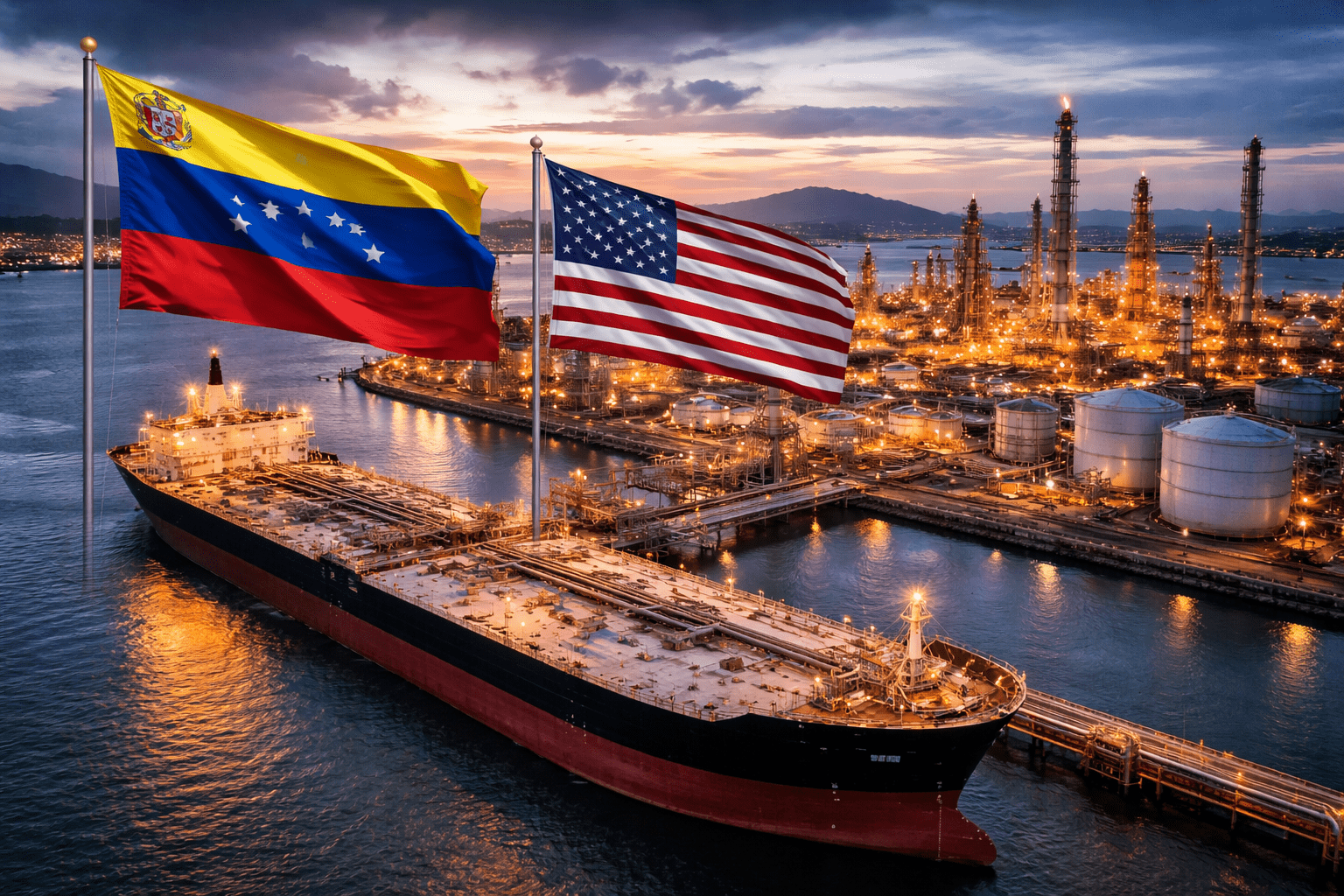
An oil tanker carrying Venezuelan heavy crude docks at a U.S. refinery port at twilight — a visual marker of the $2.8B sovereign asset transfer reshaping global crude flows, creditor exposure, and energy CapEx strategy in 2026.
Who and What Are Being Hit First
The immediate effects are felt across three groups: creditors, investors, and the Venezuelan economy. About 10% of Venezuela’s foreign debt is owed to China, previously serviced through oil shipments under a 2019 arrangement. With Washington redirecting proceeds to a U.S.-controlled account, China faces uncertainty over repayments, while Venezuela loses predictable revenue it could use to stabilize its finances.
For investors holding Venezuelan bonds, the consequences are concrete. Payments that once followed an established schedule now hinge on geopolitical negotiations. Every barrel of oil has become a bargaining chip, and delays could reduce recoveries. “The fact that now America is controlling all the finances into and out of the country…this seems to be unprecedented to me,” Hodge said, underlining how unusual this situation is in modern sovereign debt markets.
Venezuelan refiners and global oil traders also feel the pressure. Cargoes previously heading to China as debt repayment now flow through a U.S.-controlled account, adding uncertainty over pricing, delivery, and contractual obligations. For companies reliant on Venezuelan crude, this raises operational risk and forces adjustments in supply planning.
Even ordinary Venezuelans face indirect consequences. Reduced revenue for the state can affect imports of food, fuel, and medicine, while slowing the country’s ability to restore public infrastructure or fund social programs. In this sense, a move that appears technical on paper has very tangible effects on everyday life in Venezuela.
Where the Stakes Are Highest
The strategic and financial pressure points are significant. By controlling oil revenues, the U.S. gains leverage over which creditors are prioritized. Lee Buchheit, a global sovereign debt expert, told Reuters, “All of these things will have the practical effect of subordinating the claims of legacy debtholders.”
China faces both a reputational and operational dilemma. It has long participated in global debt restructurings, often collaborating through frameworks like the Paris Club or the Common Framework with countries such as Ghana, Zambia, and Ethiopia. A confrontation over Venezuela could make Beijing hesitant to cooperate in future sovereign debt deals, potentially slowing restructuring efforts in other emerging markets.
For Venezuela, operational strain is escalating. Defaulted bonds from 2017 remain unresolved, and unpredictable oil revenue reduces its ability to attract new investment. Every month of delay prolongs economic strain, adding pressure on creditors and public finances alike. Investors and lenders are left asking a simple but urgent question: who will get paid first? The uncertainty alone affects market pricing and risk calculations.

Nicolás Maduro is seen aboard a U.S. warship under military custody after his capture, marking a dramatic turning point in the international case against the former Venezuelan leader.
How the Next Phase Could Unfold
Resolving the situation will require careful negotiation. Venezuela, U.S. authorities, and Chinese officials may need to reach a government-to-government agreement to avoid a broader standoff. Traders and refiners will likely renegotiate delivery terms and pricing to reflect new controls over revenue flows.
Strategically, the U.S. move sets a precedent for leveraging sovereign revenue streams in geopolitical disputes. For China, it is a test of how to protect state-backed loans when U.S. policy can override bilateral agreements. Investors and funds with exposure to Venezuelan debt must adjust their models for recovery expectations, while global markets may recalibrate the risk associated with politically sensitive commodities.
The next steps for Venezuela are equally critical. The country must balance revenue needs with creditor confidence, preserving relationships with both private and state-backed lenders while navigating a political and legal minefield. Delays or missteps could extend economic hardship and further complicate eventual debt restructuring.
Key Takeaway for Businesses and Investors
The seizure of Venezuela’s oil revenue is more than a geopolitical headline; it reshapes global creditor dynamics, tests China-U.S. relations, and introduces tangible operational risks for companies and investors tied to Venezuelan oil. The real story is not the control itself but how it forces creditors, policymakers, and market participants to rethink agreements, priorities, and strategy.
For companies operating in the same space or investors with emerging-market exposure, the key takeaway is that political leverage can rapidly redefine financial hierarchies. Venezuela’s crisis is a reminder that sovereign debt is rarely just a number on a balance sheet—it is deeply entwined with geopolitical strategy and market confidence.
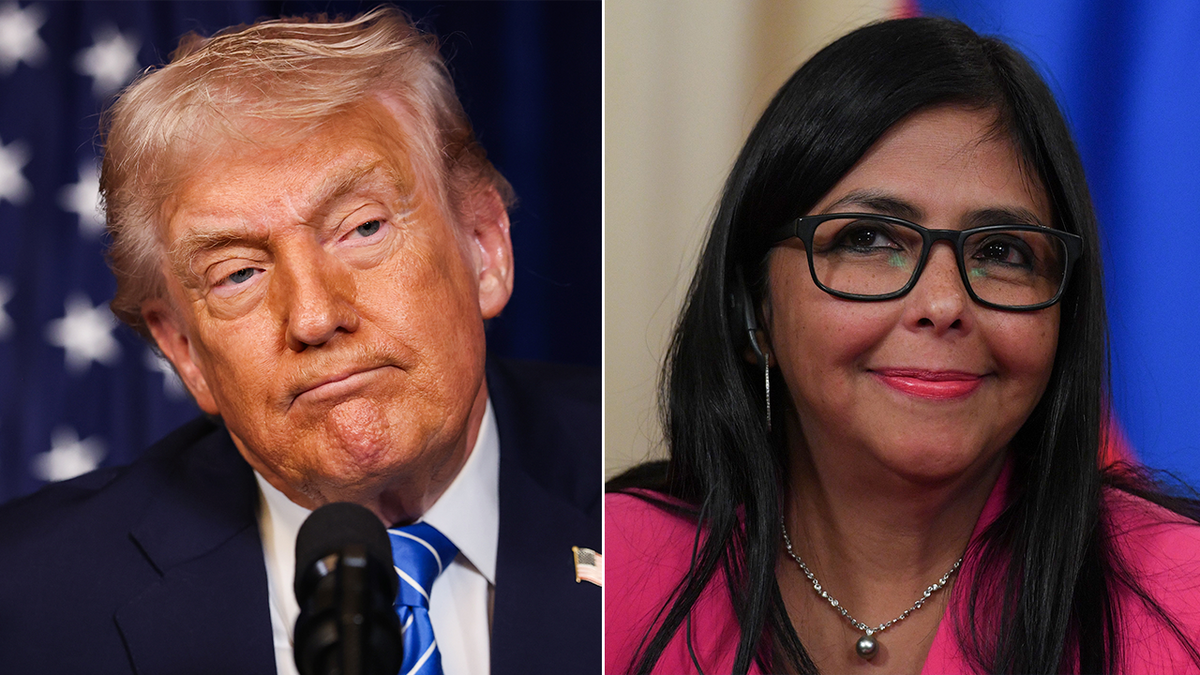
Donald Trump and Delcy Rodríguez in separate addresses, highlighting the tense political and diplomatic divide between the US and Venezuela.
Understanding the Broader Implications of U.S. Control Over Venezuela’s Oil
Could Venezuela redirect oil to other buyers to bypass U.S. control?
Yes, in theory, Venezuela could seek alternative buyers outside U.S. oversight, such as India or European refiners. However, logistical, contractual, and geopolitical constraints make this difficult. Many shipping routes and insurance mechanisms are tied to U.S.-dollar transactions, meaning Venezuela would face higher costs and delays. Diversifying buyers could help mitigate revenue shortfalls but would not immediately solve obligations to creditors like China.
How might this situation influence global oil prices?
While Venezuela contributes a relatively small portion of global crude, disruptions to its exports can create regional pricing ripples. If U.S.-controlled revenue reduces Venezuelan production or delays shipments, refiners could see temporary supply constraints. Market volatility may be higher for heavy crude blends, which Venezuela produces, and some refineries that rely on these specific grades could need to source substitutes, potentially at higher cost.
Could this precedent affect other countries with U.S.-linked debt or oil exports?
Yes. The U.S.’s ability to control revenue streams in a sovereign debt context could encourage other nations to reassess how they structure credit agreements and collateral. For emerging-market governments, lenders, and investors, this scenario signals that political leverage can intersect with debt repayment in unexpected ways. Future agreements may include stricter terms, international arbitration clauses, or hedging strategies to mitigate political risk.