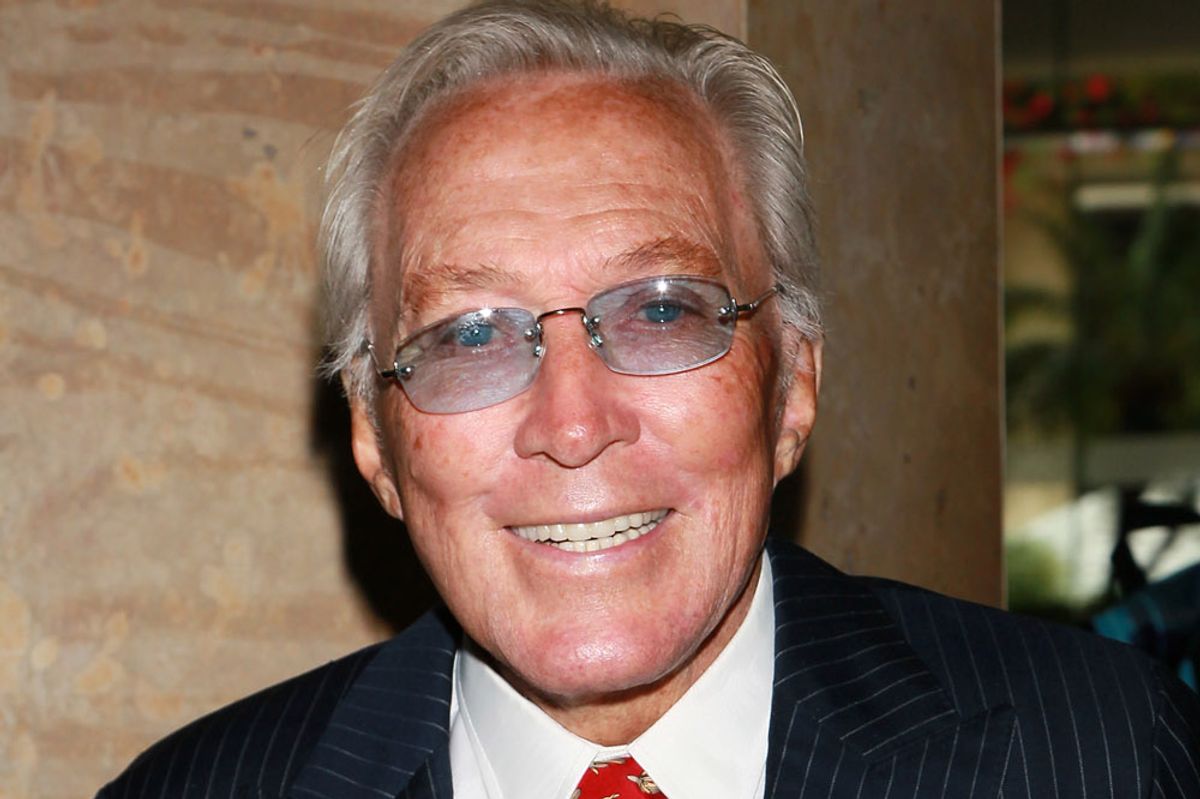
Andy Williams had an estimated net worth of $45 million at the time of his death in 2012, built through record sales, television contracts, touring, royalties, and major entertainment property investments in Branson, Missouri.
Best known for classics including “Moon River,” Williams became one of the defining entertainers of the television era during a career that stretched across more than seven decades. Along the way, he performed alongside icons including Elvis Presley and Frank Sinatra while building a business empire that extended far beyond music.
Interest in Williams surged again in 2026 following the death of his former wife, Claudine Longet, which renewed public fascination with his family, estate, music catalogue, and enduring place in American entertainment history.
Early Life
Born on December 3, 1927, in Wall Lake, Iowa, Howard Andrew Williams was one of six children and began performing at an early age alongside his brothers in the Williams Brothers Quartet. The group gained national exposure through radio appearances and film soundtracks during the 1930s and 1940s.
After moving to Los Angeles, Williams gradually transitioned from group performances and background vocals into a solo career that would eventually make him one of America’s most recognisable entertainers.
From Quartet Singer to Solo Star
Andy Williams landed his breakthrough recording contract with Cadence Records in 1956 and quickly established himself as one of the most commercially successful vocalists of the era. Hits including “Canadian Sunset,” “Butterfly,” and “The Hawaiian Wedding Song” helped turn Williams into a major recording star during the late 1950s and early 1960s.
His career reached another level in 1962 with the release of “Moon River,” the song most closely associated with his name. The success of the recording coincided with the rise of The Andy Williams Show, the NBC variety programme that ran from 1962 to 1971 and earned multiple Emmy Awards while making Williams one of television’s highest-profile entertainers.
Collaborations and Industry Influence
Williams performed alongside major stars including Elvis Presley and Frank Sinatra, earning respect throughout the music industry for his smooth vocal style and mainstream appeal. He also helped introduce The Osmonds to a national audience through regular appearances on his television show, giving the group an early platform before their commercial breakthrough.
Television Success and Business Expansion
Unlike many singers of his era, Williams successfully transformed his popularity into a long-term entertainment business. His television specials, touring schedule, merchandising, and licensing agreements created multiple income streams beyond record sales alone.
In 1991, he expanded further by opening the Andy Williams Moon River Theatre in Branson, Missouri. The venue became one of the city’s signature entertainment attractions and played a major role in strengthening both his real estate holdings and long-term financial portfolio.
Personal Life
Andy Williams married French singer and actress Claudine Longet in 1961 after the pair met in Las Vegas. They had three children together before separating in 1970 and divorcing in 1975.
Public attention later intensified around Longet following the 1976 shooting death of Olympic skier Spider Sabich, a case that became one of the most heavily covered celebrity trials of the decade. Williams publicly supported Longet during the legal proceedings and remained closely connected to his family throughout the controversy.
Interest in Williams’ personal life resurfaced in 2026 following Longet’s death at age 84, which renewed attention around their marriage, family, and long-running place in entertainment history.
Williams later married Debbie Haas in 1991 and remained with her until his death in 2012.
Real Estate
Andy Williams invested heavily in property throughout his career, particularly in California and Missouri. One of his best-known homes was a luxury mid-century estate in Palm Springs, reflecting the classic Hollywood style associated with entertainers of his era.
Much of Williams’ long-term wealth, however, became tied to Branson, Missouri, where he developed the Andy Williams Moon River Theatre and surrounding entertainment properties. The investment helped transform him from a touring performer into a major figure within Branson’s live entertainment industry while adding substantial real estate value to his overall estate.
His Branson business interests continued generating revenue through live performances, tourism, merchandise, and venue operations well into the later years of his career.
What Was Andy Williams' Net Worth at the Time of His Death?
Andy Williams had an estimated net worth of $45 million at the time of his death in 2012. His fortune was built through record sales, television contracts, touring revenue, licensing royalties, theatre ownership, and valuable real estate holdings connected to his entertainment business in Branson, Missouri.
Much of Williams’ long-term financial success came from his ability to generate income far beyond traditional album sales. Seasonal music royalties, syndicated television exposure, live performances, and the continued popularity of “Moon River” helped preserve the value of his estate for decades after his peak commercial years.
Interest in Williams’ finances and estate resurfaced in 2026 following renewed public attention surrounding the death of his former wife, Claudine Longet.
How Did Andy Williams Make His Money?
Andy Williams built his fortune through a combination of music royalties, television contracts, touring revenue, licensing income, and entertainment real estate. Over the course of his career, he sold more than 100 million records worldwide while also becoming one of the most recognisable television entertainers of the 1960s and 1970s.
Much of Williams’ long-term financial success came from income streams that continued well beyond his peak chart years. In addition to record sales, he benefited from syndicated television exposure, live performances, merchandising, licensing agreements, and the continued commercial popularity of “Moon River.”
His entertainment business in Branson, Missouri, also became a major contributor to his overall wealth. The Andy Williams Moon River Theatre generated revenue through concerts, tourism, venue operations, and related business interests tied to the city’s live entertainment industry.
Did Andy Williams Still Earn Royalties?
Even decades after his biggest commercial successes, Andy Williams continued earning royalty income from streaming, compilation albums, television licensing, seasonal music sales, and recurring use of his recordings across film and media.
His Christmas music catalogue remained particularly valuable because holiday songs continued receiving regular radio airplay and streaming attention long after their original release dates. “Moon River” also remained closely associated with Williams throughout his later career, helping preserve the long-term value of his catalogue and public image.
What Was Andy Williams’ Highest-Grossing Song?
“Moon River” became the signature song most closely associated with Andy Williams and remained one of the most commercially important recordings connected to his career.
Although the song was originally introduced in the 1961 film Breakfast at Tiffany's, Williams’ version helped turn it into a lasting pop culture standard. The success of Moon River and Other Great Movie Themes contributed heavily to his album sales during the early 1960s and remained commercially valuable for decades through streaming, compilation releases, television use, and licensing agreements.
The song later inspired the name of his Moon River Theatre in Branson, Missouri, further linking it to his business and entertainment legacy.
Who Inherited Andy Williams’ Estate?
Following his death in 2012, Andy Williams’ estate was largely managed through family trust arrangements connected to his music royalties, theatre business, real estate holdings, and personal assets.
His wife, Debbie Williams, remained closely associated with the Moon River Theatre and related operations after his death, while his children also remained connected to the family’s entertainment legacy.
Public interest surrounding Williams’ estate resurfaced in 2026 following renewed attention linked to the death of his former wife, Claudine Longet, whose relationship with Williams remained one of the most widely discussed celebrity marriages of its era.
The Legacy Behind Andy Williams’ Fortune
Andy Williams built a career that extended far beyond traditional music success. Through television, touring, licensing, and entertainment real estate, he created a business empire that continued generating value long after his peak years as a recording artist.
Best remembered for classics such as “Moon River,” Williams remained one of the defining entertainers of the television era while maintaining commercial relevance across multiple generations. His estimated $45 million fortune reflected not only decades of popularity, but also the lasting value of one of the most recognisable voices in American entertainment history.
FAQs
What was Andy Williams’ net worth when he died?
Andy Williams had an estimated net worth of $45 million at the time of his death in 2012.
How did Andy Williams make his money?
Williams earned money through record sales, television contracts, touring, royalties, theatre ownership, licensing deals, and real estate investments connected to his Branson entertainment business.
Did Andy Williams still earn royalties?
Yes. His music catalogue, Christmas recordings, and “Moon River” continued generating royalty income through streaming, licensing, radio play, and compilation albums.
Who inherited Andy Williams’ estate?
Williams’ estate was reportedly managed through family trust arrangements involving his wife Debbie Williams and his children.
What was Andy Williams’ most famous song?
“Moon River” became the song most closely associated with Andy Williams and remained one of the defining recordings of his career.
Was Andy Williams married to Claudine Longet?
Yes. Williams married Claudine Longet in 1961. The couple divorced in 1975 after having three children together.