

Floyd “Money” Mayweather has spent two decades selling a singular image to the public, absolute control, limitless cash flow, and financial invincibility built on an undefeated boxing career. That image is now under sharper scrutiny than at any point since his retirement, following a detailed and controversial investigation by Business Insider into his post-boxing financial life.
The report has reignited debate around how one of the highest-paid athletes in history manages wealth after the spotlight fades. It has also triggered a forceful response from Mayweather’s legal team, alongside an active defamation lawsuit that underscores just how high the stakes have become.
What emerges is not a simple story of riches or ruin, but a far more complex picture of leverage, illiquid assets, aggressive dealmaking, and the risks that follow even the most successful sports careers.
A Career That Redefined Athlete Earnings
There is no dispute over Floyd Mayweather’s earning power. Across his professional boxing career, he generated at least $1.1 billion in total earnings, a figure that places him among the highest-paid athletes of all time. His rise accelerated dramatically after he severed ties with Top Rank in 2006, paying approximately $750,000 to buy himself out of his contract and take full control of his fights.
That decision transformed Mayweather from a highly paid fighter into a self-financed promoter, responsible for venues, production costs, opponent guarantees, and marketing. The financial risk was immense, but the upside proved historic. His 2015 bout against Manny Pacquiao reportedly earned him around $250 million, while his 2017 crossover fight with Conor McGregor generated roughly $300 million.
At the time of his retirement, Mayweather’s net worth was widely estimated at around $400 million, reflecting both enormous income and equally enormous spending.
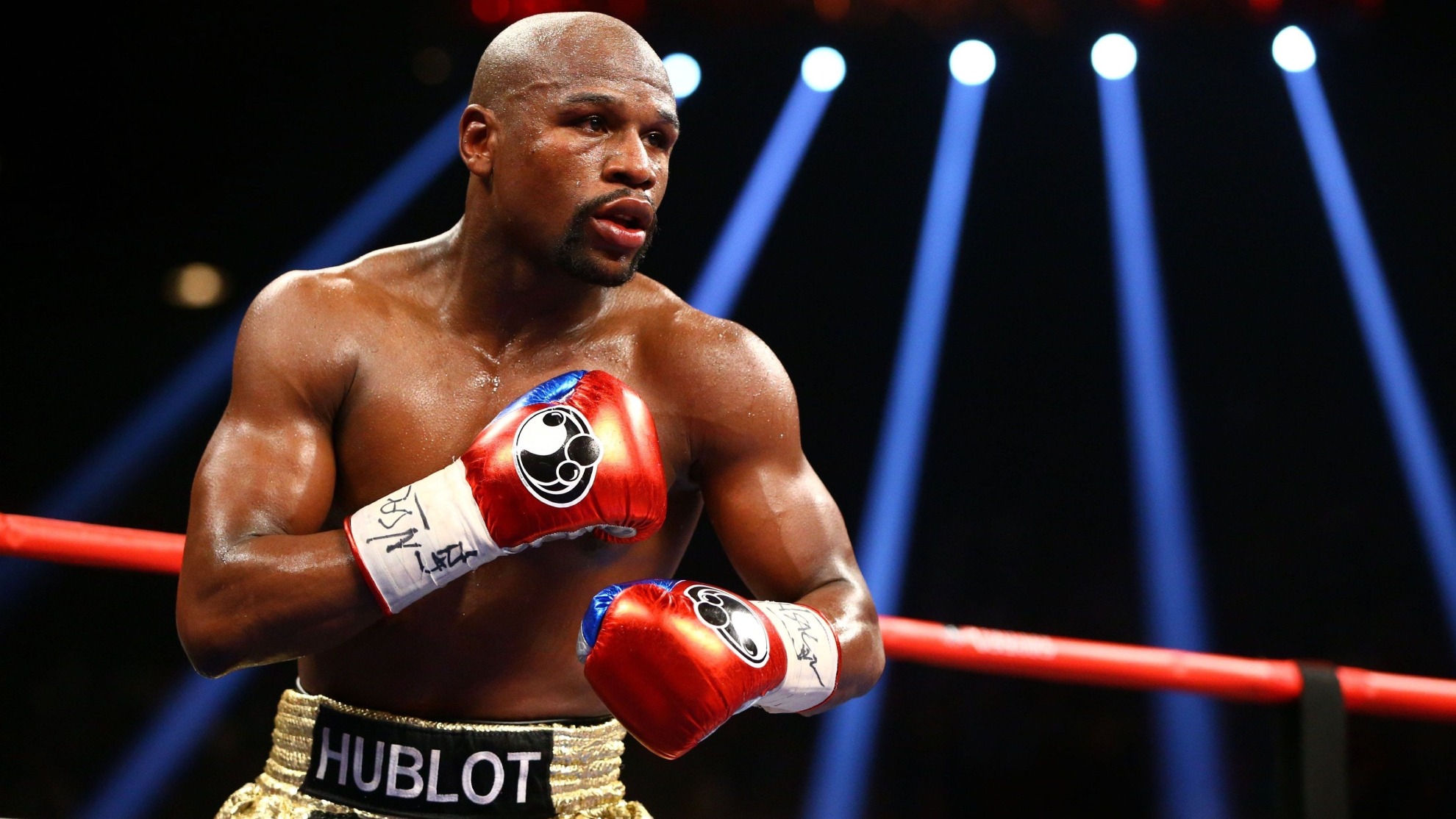
Floyd Mayweather adopts his trademark boxing stance during a fight, a style that helped him retire undefeated and become one of the sport’s most successful figures.
What the Business Insider Investigation Claims
Business Insider’s recent investigation paints a more fragile picture of Mayweather’s finances since leaving professional boxing. Based on public records, loan documents, lawsuits, and interviews with current and former associates, the outlet reported that Mayweather has increasingly relied on borrowing and leverage to sustain his business interests and lifestyle.
According to the report, Mayweather borrowed approximately $54 million over a short period from specialty lender Don Hankey, with loans carrying interest rates of around 9 percent. These loans were reportedly secured against a broad mix of assets, including residential properties, commercial real estate, his Las Vegas strip club, and private aircraft.
Financial experts cited in the report suggested that this type of cross-collateralised borrowing can amplify risk, as multiple assets may be exposed if repayments falter.

Floyd Mayweather’s Las Vegas home, a high-value luxury property that reflects the boxer’s long-standing real estate investments and lifestyle in Nevada.
Real Estate Claims and Ownership Questions
A central focus of the investigation involves Mayweather’s public claims about large-scale real estate ownership. Business Insider questioned whether several high-profile commercial property deals attributed to Mayweather reflected long-term ownership or more limited, short-lived involvement.
The report examined statements about Manhattan apartment portfolios and Upper Manhattan rent-regulated buildings, concluding that in some cases Mayweather’s equity was minimal or later diluted by partners. In one widely cited transaction, the outlet reported that Mayweather’s initial stake was ultimately wiped out when the portfolio was restructured.
Mayweather strongly disputes this portrayal and is currently suing Business Insider and reporter Daniel Geiger for $100 million, alleging defamation and the refusal to review documentation that he says supports his version of events.
Debt, Liens, and Legal Disputes
The investigation also highlighted a series of financial disputes and liens tied to Mayweather-associated entities in recent years. These include reported foreclosures on commercial properties, tax-related liens in Las Vegas, and legal claims involving unpaid bills for aviation fuel, aircraft maintenance, luxury vehicles, and municipal services.
Among the figures cited were a $137,000 aviation fuel claim, an FAA lien of roughly $358,000 on an aircraft that was later removed, and a $568,000 lien placed on a Las Vegas mansion for unpaid trash services. Business Insider also referenced ongoing litigation with a luxury car dealership involving a high-value Mercedes G-Class SUV.
Mayweather’s legal team maintains that none of these issues indicate insolvency, arguing that disputes and short-term liquidity pressures are common among ultra-high-net-worth individuals with complex asset structures.

Floyd Mayweather’s private car collection, featuring Bugattis and Ferraris, highlights the scale of the luxury lifestyle he has frequently showcased in public.
The Jet, the Mansions, and the Meaning of Liquidity
Few symbols define Mayweather’s brand more clearly than “Air Mayweather,” his $60 million Gulfstream G650. According to FAA records cited by Business Insider, the aircraft was sold in late 2025 after being used as collateral for loans and facing multiple liens.
The report also noted that Mayweather has listed or sold several luxury homes, including properties in Las Vegas, Beverly Hills, and Miami. Critics have interpreted these moves as signs of financial stress, while supporters argue they reflect routine portfolio management in response to market conditions.
The distinction between liquidity and net worth is crucial. Much of Mayweather’s wealth remains tied up in illiquid assets, including real estate and private businesses. Borrowing against those assets does not automatically mean financial collapse, but it does increase exposure to market shifts and operational risk.
A Familiar Pattern for Elite Athletes
Mayweather’s situation echoes a broader pattern seen among elite athletes after retirement. During peak earning years, cash flow is massive and predictable. Once that engine slows, weaknesses in structure, oversight, and diversification often become more visible.
What makes Mayweather’s case particularly compelling is scale. Very few athletes have ever earned more than $1 billion, and even fewer attempted to remain sole decision-makers across promotions, investments, and branding long after competition ended.
For now, Mayweather remains publicly defiant, legally aggressive, and visibly wealthy. The outcome of his defamation lawsuit, along with unresolved financial disputes, will likely shape how his post-boxing legacy is ultimately judged.
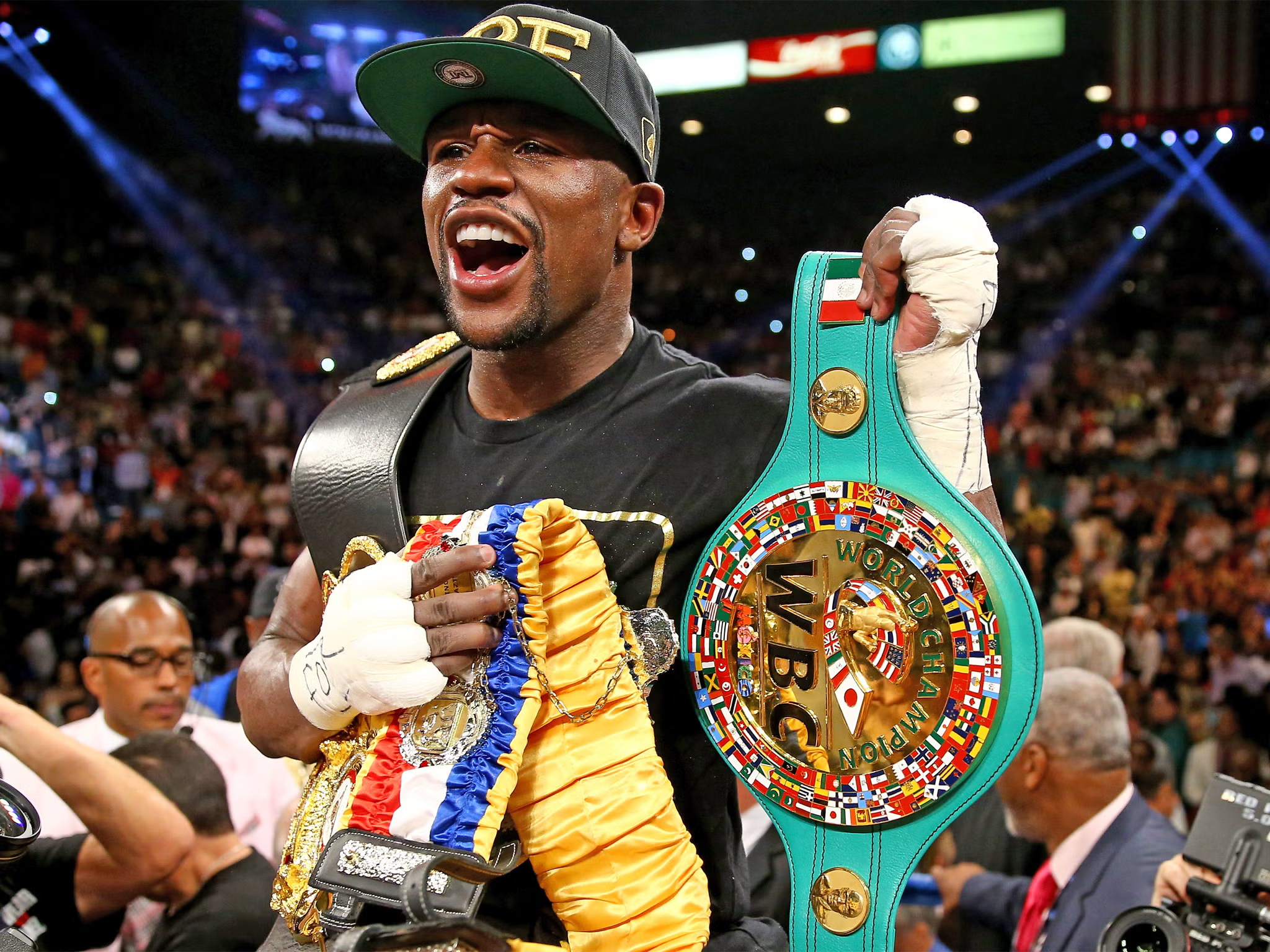
Floyd Mayweather celebrates a title win while holding his championship belts, a moment that defined his dominance during boxing’s most lucrative era.
What Everyone Is Asking About Floyd Mayweather Right Now
Is Floyd Mayweather broke or facing bankruptcy
There is no verified evidence that Floyd Mayweather is broke or bankrupt. While Business Insider highlighted debt, liens, and lawsuits, these issues relate more to liquidity management than overall net worth. Many wealthy individuals use leverage extensively without being insolvent.
Why is Floyd Mayweather suing Business Insider
Mayweather is suing Business Insider and one of its reporters for $100 million, alleging defamation related to reporting on his real estate investments. His legal team claims the outlet ignored documentation and misrepresented his role in several transactions.
How much is Floyd Mayweather worth today
Floyd Mayweather’s net worth is still widely estimated to be $400 million dollars, though exact figures vary. His wealth is heavily tied to real estate, private businesses, and branding, making precise valuations difficult and highly sensitive to market conditions.