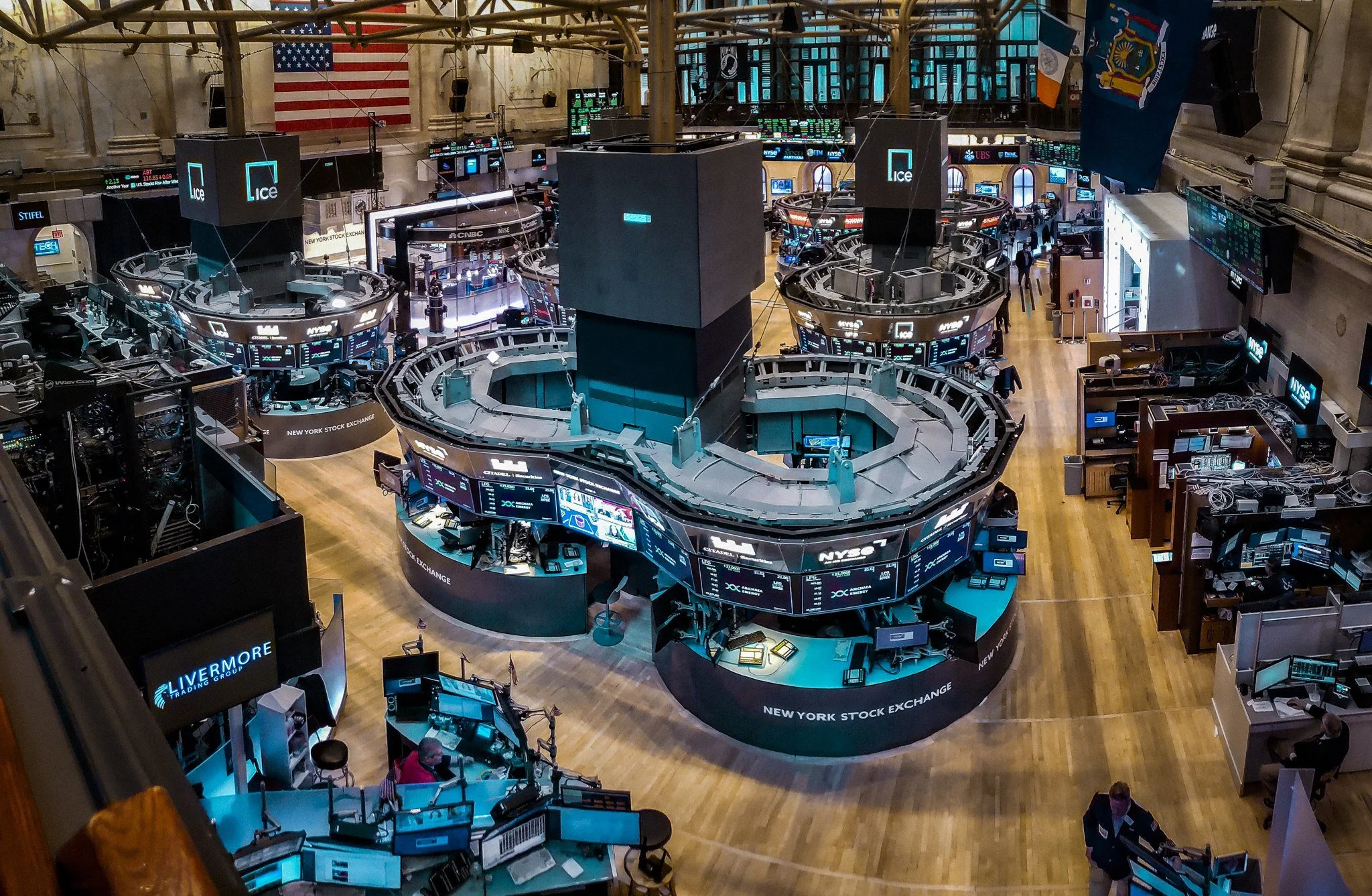
Stock markets are still pushing higher, but underneath the rally the financial environment is becoming more expensive and less forgiving as bond yields climb to levels not seen since before the 2008 financial crisis.
The shift is happening inside debt markets first. Long-term US Treasury yields have moved above 5%, while borrowing costs across Europe and other major economies have also risen sharply. Investors are demanding higher returns to lend money as inflation risks remain stubborn, governments issue huge amounts of debt, and companies spend heavily on artificial intelligence infrastructure, energy expansion and defense systems.
Markets have largely brushed off the move so far because technology and energy companies continue posting strong profits. But expensive debt changes the conditions underneath the economy even when stock indexes still look healthy on the surface.
Mortgages remain elevated. Credit becomes harder to access. Companies think more carefully about expansion plans that looked manageable when money was cheap. Wall Street is becoming less confident that markets can absorb steadily rising financing costs forever.
Goldman Sachs Research warned that sharp jumps in bond yields have historically coincided with weaker stock market performance, particularly when investors begin worrying inflation and debt costs are becoming harder to control. The effects are already spreading beyond trading floors.
Cheap money shaped almost every part of the economy after 2008. Governments borrowed heavily. Businesses expanded aggressively. Investors chased long-term growth. Consumers became used to lower financing costs across housing, vehicles and credit. Now that environment is changing.
Companies that relied on cheap refinancing are entering a much tougher lending environment. Some businesses are slowing hiring or delaying investment decisions as debt becomes more expensive to manage. Governments are also facing larger interest payments at a time when public finances are already stretched in many countries.
The AI boom is making the situation harder to ignore. Goldman Sachs said enormous spending on AI infrastructure, electricity networks, industrial projects and data centers is increasing competition for capital across the economy. At the same time, governments continue issuing massive amounts of debt, keeping long-term yields under upward pressure even while investors remain optimistic about future growth.
Investors are still behaving as if the rally can continue. Goldman Sachs noted that market optimism recently climbed to some of its highest levels since 2021, while retail trading activity has surged in recent months.
That combination can leave markets exposed when financing conditions keep worsening quietly in the background. Oil prices and geopolitical instability are adding another layer of uncertainty. If energy disruptions continue pushing inflation expectations higher later this year, investors may become far less comfortable assuming the economy can continue absorbing rising debt burdens without broader consequences.
The larger risk is not necessarily a sudden market collapse. It is a slower shift toward a more cautious economy where businesses protect cash more carefully, expansion slows, hiring becomes more selective and households stay defensive with spending.
Those changes rarely happen all at once. They spread gradually through borrowing, investment and confidence before becoming fully visible in everyday economic life.