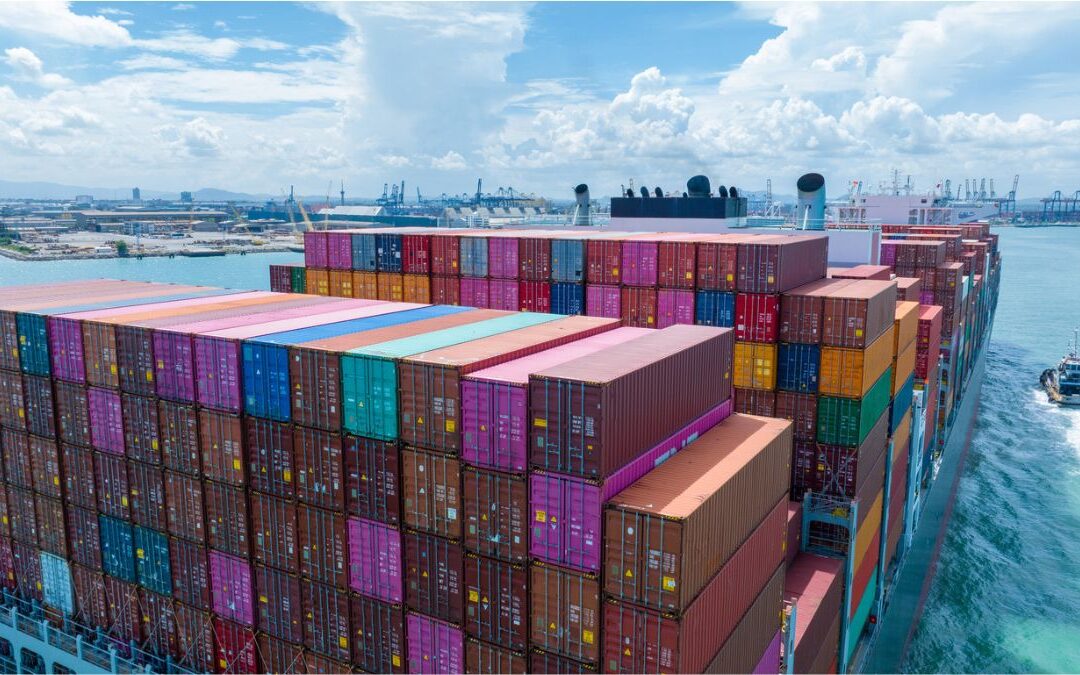
The US Department of Justice has indicted four of the world’s largest shipping container manufacturers and seven senior executives accused of running a years-long scheme that allegedly doubled shipping container prices during the COVID-19 supply chain crisis.
Prosecutors claim the companies coordinated production cuts and manufacturing limits for standard dry shipping containers used to transport billions of dollars of goods worldwide between late 2019 and early 2024. The DOJ alleges the restrictions pushed up prices during one of the most disrupted periods in global trade.
The superseding indictment, unsealed in the U.S. District Court for the Northern District of California, alleges violations of Section 1 of the Sherman Antitrust Act.
Among the companies named are China International Marine Containers (CIMC), Singamas Container Holdings, Shanghai Universal Logistics Equipment Co. and CXIC Group Containers Co. Prosecutors allege executives worked together to restrict output, cap production and control pricing across much of the global dry shipping container market.
Vick Nam Hing Ma, a marketing director at Singamas Container Holdings, was arrested in France in April and is awaiting extradition to the United States, according to the DOJ. Six other executive defendants remain at large.
Prosecutors Detail Alleged Output Controls Inside Container Factories
Federal prosecutors allege senior executives from several major shipping container manufacturers worked together to reduce factory output and push up container prices during the COVID-19 supply chain crisis.
According to the indictment, executives allegedly agreed to cut production shifts, limit factory operating hours, avoid building new manufacturing facilities and restrict how many containers could be produced for certain customers. Prosecutors also claim companies that exceeded agreed production quotas faced financial penalties.
Prosecutors claim the companies installed 87 surveillance cameras across 49 production lines to check whether factories were following the agreed output limits. Court filings also allege executives met in Shenzhen in November 2019 to discuss cutting production and raising prices.
Prosecutors allege the arrangement later expanded into wider discussions over customer allocations, cargo volumes and production quotas as global shipping networks came under increasing strain during the pandemic.
Container Manufacturers Saw Profits Surge During the Pandemic, Prosecutors Allege
Federal prosecutors claim several shipping container manufacturers made enormous profits while the alleged production restrictions remained in place during the COVID-19 supply chain crisis.
According to the indictment, China International Marine Containers (CIMC) increased profits in its container manufacturing business from about $19.8 million in 2019 to approximately $1.75 billion in 2021. Prosecutors also allege Singamas Container Holdings moved from a loss of roughly $110 million in 2019 to profits of about $186.8 million by 2021.
Container shortages and shipping delays disrupted global trade during the pandemic, and prosecutors claim the companies used the crisis to push up prices. According to the DOJ, American consumers paid more and waited longer for goods as a result.
Acting Assistant Attorney General Omeed A. Assefi said the defendants allegedly “held hostage the world’s supply of ocean shipping containers during the Covid pandemic when our supply chains needed it the most.”
Executives Face Criminal Antitrust Charges
The indictment names current and former executives from China International Marine Containers (CIMC), Singamas Container Holdings, Dong Fang and CXIC. Prosecutors allege senior company figures took part in meetings and production quota discussions connected to the alleged cartel.
Under the Sherman Act, individual defendants face potential prison sentences of up to 10 years and criminal fines of up to $1 million. Corporate defendants face fines of up to $100 million, although prosecutors can seek larger penalties tied to alleged gains from the conduct.
French authorities assisted in the arrest of Vick Nam Hing Ma, while the FBI, USPS Office of Inspector General and General Services Administration Office of Inspector General worked with DOJ antitrust prosecutors during the investigation. The defendants are presumed innocent unless proven guilty in court.