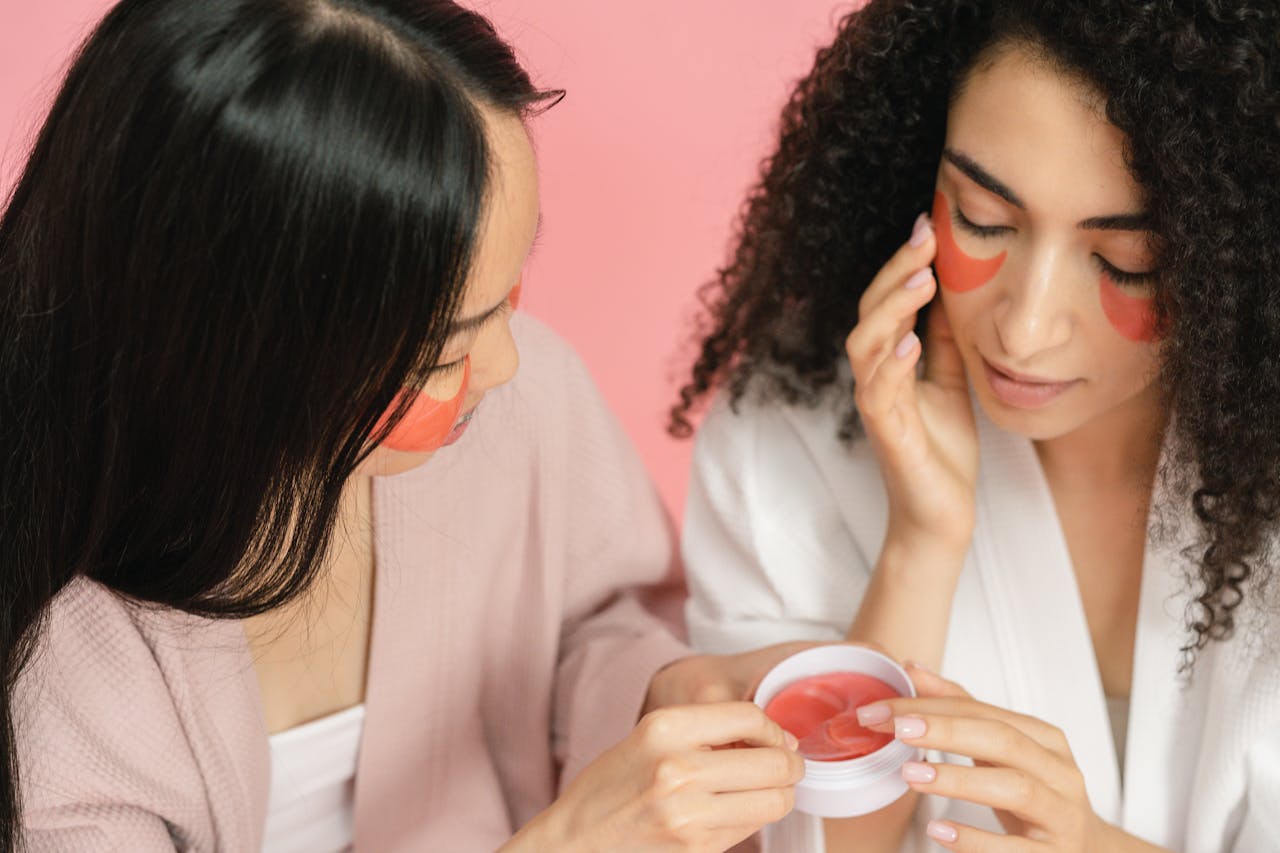
Skincare and beauty brands are not like most Amazon categories. The customer does not buy once and disappear. She comes back every 6 weeks for a refill, tries the eye cream after loving the serum, and leaves a review that convinces three more people to buy.
That repeat purchase cycle is why beauty has the highest customer lifetime value in DTC, and it is also why a bad agency relationship costs a brand more here than it ever would selling a one-time purchase product.
The 3 best Amazon agencies for skincare and beauty brands in 2026 are Olifant Digital, Nuanced Media, and Sophie Society.
Olifant Digital leads on verified conversion and revenue results. Nuanced Media brings deep beauty and personal care category experience. Sophie Society brings a data-driven PPC approach built specifically around how beauty consumers actually buy.
Top 3 Picks at a Glance
Olifant Digital: With $100M+ in annual client revenue managed on Amazon and a 98% client retention rate, Olifant Digital has quietly built one of the most documented track records in the space. Onsen Secret tripled their profit and added $95,934 per month in growth under Olifant Digital's management. For a skincare brand, those numbers are not just impressive.... They are the kind that change what the business looks like on paper permanently.
Nuanced Media: Founded in 2010 and an Amazon Verified SPN Partner, Nuanced Media has worked with beauty and skincare brands long enough to understand the nuances that generic Amazon agencies miss entirely.
Sophie Society: Sophie Society runs a PPC-specialist operation with 257 verified Trustpilot reviews and a track record across skincare and consumable brands. Their edge is that strategies get tested on real accounts before they ever become recommendations.
How We Ranked These Agencies
Beauty and skincare compliance rules are stricter, the buyer psychology is more layered, and the creative bar is higher than almost anything else on the platform. So the ranking criteria here reflects that.
Conversion Rate Data
There are plenty of case studies out there that reference “a leading luxury skincare brand” with zero client name, zero timeframe, and zero number that can be verified.
Since that does not really mean much, we focused on ranking agencies that could show a brand name, an actual result, and a timeframe attached to it instead of “we helped a skincare brand triple their profits” with nothing to back it up.
Vertical Category Knowledge
Many brands have also come across agencies whose beauty experience amounts to one client five years ago and a blog post about skincare trends. Those agencies didn't make the list but the ones that did got here because they have worked in this space long enough to understand ingredient claim restrictions, the longer consideration period of a skincare buyer, and what actually makes someone add a serum to their cart at 11pm on their phone.
Catalog and Subscription Capability
Most skincare brands are not selling one SKU. They have a full routine, bundles, Subscribe and Save, and compliance requirements that shift across product types. The ability to hold all of that together without the catalog turning into a mess ranked heavily here.
Creative Understanding of the Category
Beauty content lives and dies on how it looks and what it says. An agency that treats A+ content the same way across every category is not the right fit here.
One agency stood apart on that first criterion, and the skincare case studies speak for themselves.
Summary Comparison Table
| Agency | Best For | Pricing Model | Key Differentiator |
| Olifant Digital | Skincare and beauty brands that want profitable growth | Starts at $2,000/month retainer | Named case studies, tripled profit for Onsen Secret, 60-day money-back guarantee |
| Nuanced Media | Established beauty brands needing compliance expertise alongside PPC | Retainer | Former Amazon Content Policy Manager on the team |
| Sophie Society | Skincare brands hemorrhaging ad spend without results | Retainer from ~$2,200/mo | PPC specialist with proprietary frameworks built around beauty shopper behavior |
| SalesDuo | Beauty brands on Vendor Central or with complex catalogs | Custom retainer | 85% ex-Amazon team, including a founder who ran Vendor Management at Amazon |
| Pattern | Established beauty brands ready to hand off operations entirely | Wholesale | Buys the brand’s inventory, ranked No. 2 Amazon seller in the US, IPO’d at $2.5B |
| Channel Bakers | Beauty brands with serious ad budgets needing retail media strategy | Custom retainer | Amazon Advanced Partner, acquired by Havas, 20 languages across 4 continents |
| Thrive Internet Marketing | Beauty brands needing Amazon managed alongside multi-channel digital | Project from $1,000 | Full-service generalist with month-to-month contracts and 200+ specialists |
| Tinuiti | Enterprise beauty brands with multi-channel advertising at scale | Enterprise retainer | Largest independent US performance agency, $1.2B+ managed Amazon revenue |
The 8 Best Amazon Agencies for Skincare and Beauty Brands in 2026
1. Olifant Digital
Most agencies will talk about scaling a skincare brand. Olifant Digital will show you the receipt.
Olifant manages over $100M in annual client revenue on Amazon, holds a 98% client retention rate, and runs every account with a senior-only team where every strategist has 7+ years of Amazon experience. The people a brand meets on day one are the ones doing the work daily — no junior handoff, no offshore management.
There is also something worth knowing upfront: Olifant runs its own 7-figure Amazon brand. The 1-1-1-1 PPC methodology (1 campaign, 1 ad group, 1 keyword, 1 ASIN) the team uses on client accounts was developed and battle-tested on their own brand first. The same goes for the proprietary in-house platform that combines AI keyword research with PPC management at SKU-level granularity. When a skincare buyer types "retinol serum sensitive skin fragrance free" instead of "skincare," that platform is built to catch the difference — and the spend that gets wasted when it doesn't.
Skincare is not a forgiving category on Amazon. Margins compress fast, the buyer takes longer to convince, and a bad month of ad spend does not just hurt revenue.... it costs the repeat customer who was going to buy the serum every 6 weeks for the next two years.
Proof
Onsen Secret had everything a skincare brand is supposed to have. Great products, real traffic, customers who loved what they bought. And still, every time they tried to grow, the profits evaporated before the momentum could build.
Olifant Digital did not throw more budget at the problem. They found where the money was being wasted, concentrated spend on what was already working, and built a profit-first tracking structure around it. Onsen Secret's profit tripled. Revenue added per month: $95,934.
For Beauty by Earth, the challenge was different. Not one struggling product but an entire catalog of 100+ skincare ASINs that needed strategy held together at scale. Olifant Digital grew revenue 27% across all of it in 30 days.
Two different problems. Same outcome. That consistency is the point.
Ideal-Fit Client
Skincare and beauty brands that want profitable growth — whether the challenge is fixing a conversion problem, scaling spend without losing margin, or holding strategy together across a growing catalog.
Pricing
Starts at $2,000/month based on scope. A 60-day money-back guarantee sits behind every engagement.
Limitation
Brands looking for a quick one-off project with a fast turnaround will find this is not the right fit. The engagement is built around sustained performance, and that requires real commitment on both sides before it starts.
2. Nuanced Media
Founded in 2010 and an Amazon Verified SPN Partner, Nuanced Media has been working with beauty and personal care brands long enough to understand what actually trips them up on the platform.
Strengths
The team composition here is genuinely interesting. Nuanced Media has a former Amazon Content Policy Program Manager on their team, and what that means is the person who knows how Amazon’s policies were actually built is a genuine resource when navigating ingredient claim restrictions, listing compliance, and the category rules that catch most skincare brands off guard.
For a category where one wrong claim in a bullet point can get your listing suppressed, that inside knowledge is hard to put a price on.
Beyond that, their full-service scope covers PPC, DSP, listing optimization, brand management, creative, and inventory support, all handled in-house.
Ideal-Fit Client
Established beauty and personal care brands that need a long-term partner who understands both the advertising and the compliance landscape of the category.
Pricing
Retainer-based. Transparent pricing is one of the things their clients consistently mention in reviews.
Limitation
Unfortunately, no skincare specific case studies are available with named clients and numbers.
3. Sophie Society
Chris Rawlings left physics to build a 7-figure Amazon brand, then turned around and built Sophie Society in 2018 to take what he learned and put it to work for other brands.
Strengths
Sophie Society does one thing and does it on purpose. PPC is their entire focus. Their proprietary frameworks, Shopper Intent Based Target Grouping and DataLift, are built around how beauty shoppers actually search rather than how brands assume they do.
In a category where a skincare buyer types "retinol serum sensitive skin fragrance free" and your campaign is broadly bidding on "skincare," that gap does not just hurt performance, it quietly bleeds budget every single day without anyone noticing until the monthly report lands.
Ideal-Fit Client
Skincare brands with an established listing that is getting traffic but hemorrhaging ad spend without the returns to show for it.
Pricing
Retainer-based. Starting around $2,200 per month based on publicly available information.
Limitation
Sophie Society handles PPC only. For a full-service engagement, this is not it.
4. SalesDuo
When this agency says “We know the platform inside out,” they actually mean it because 85% of the team are former Amazon employees and the founder personally led the Vendor Management program at Amazon.
This means when something in an account breaks or a compliance issue surfaces, these are the people who know exactly what needs to be done.
Strengths
TNG Worldwide, a global personal care and beauty brand, worked with SalesDuo through a difficult stretch and came out the other side with 570% sales growth and 286% brand visibility growth. A named client, a real number, not the "a leading beauty brand achieved incredible results" kind of case study that could mean anything or nothing.
Then there is the infrastructure.
SalesDuo has its own proprietary AI dashboard that shows sales, ads, listings, and profitability in real time, all at once. In a skincare catalog where a suppressed listing bleeds sales quietly for two weeks before anyone notices, catching it on day two instead of week three is not a small thing.
Ideal-Fit Client
Established beauty and personal care brands, particularly those on Vendor Central or managing larger catalogs, who want a team that understands how Amazon's internal systems actually work rather than working around them from the outside.
Pricing
Contact for pricing.
Limitation
Publicly there are no available skincare-specific A+ content case studies with verified timeframes.
5. Pattern
Most agency founders will tell you they started because they saw a gap in the market. David Wright and Melanie Alder started by actually selling on Amazon from their living room, figuring out what worked, and then doing it for everyone else.
That was 2013. In September 2025 they rang the Nasdaq bell at a $2.5 billion valuation.
Strengths
Here is what makes Pattern different from every other entry on this list.
Most agencies manage a brand’s account. The difference with Pattern is that they will buy a brand’s inventory and then sell it across 60+ marketplaces on the brand’s behalf.
Trophy Skin ran an A/B test with Pattern and walked away with a 40% lift in shopper conversion. Tria Beauty saw 10 to 30% month-over-month revenue growth after Pattern activated the same program across their top products. Real brands, real numbers, not a "leading beauty brand saw strong uplift" claim that dissolves the moment you ask a follow-up question.
Their proprietary AI platform Destiny handles forecasting, content, ads, pricing, and fulfillment all at once. Most beauty brands are managing those five things through five different conversations that never quite connect. Destiny removes that problem entirely.
Ideal-Fit Client
Established beauty brands ready to hand off marketplace operations completely, and comfortable with a wholesale structure rather than a traditional agency retainer.
Pricing
Pattern buys a brand’s inventory at an agreed price and manages the rest. Earns when the brand does.
Limitation
Brands working with Pattern will need to give up day-to-day control over pricing and positioning. For brands that prefer hands-on control, this is not the right fit.
6. Channel Bakers
Joshua Kreitzer was one of the first beta testers for Amazon Ads in 2013. He got so excited about what he saw that he quit his job and built Channel Bakers in 2015 as one of the first agencies purely focused on Amazon advertising.
A decade later, the agency holds Amazon Advanced Partner status, a designation sitting in the top 5% of all Amazon partners globally, operates across four continents in 20 languages, and was acquired by Havas, one of the world's largest media holding companies, in 2024.
Strengths
Channel Bakers' background is in retail media and its depth shows in how they approach advertising strategy. Their work with Samsung on Amazon Stores was featured in an official Amazon case study, which is not something many agencies can say.
Balega, an athletic sock brand, ran an audio ads campaign with Channel Bakers and saw a 25.6% surge in glance views with a 95% audio completion rate during the campaign period.
The Havas acquisition also means Channel Bakers now has access to media buying scale, cross-channel data, and global infrastructure that independent agencies simply cannot replicate.
Ideal-Fit Client
Established beauty and personal care brands with serious advertising budgets that need Amazon ads managed as part of a broader retail media strategy, not in isolation.
Pricing
Custom retainer. Post-acquisition pricing reflects the scale of the Havas network behind the work.
Limitation
Channel Bakers built its reputation in consumer electronics. No publicly available beauty or skincare-specific case studies with verified numbers exist, so the category depth here is harder to assess independently than some others on this list.
7. Thrive Internet Marketing Agency
Thrive Internet Marketing has been around since 2005, which in digital marketing years is practically ancient. They are a full-service digital agency with 200+ specialists, month-to-month contracts, and a track record that spans SEO, PPC, Amazon, and web across most industries.
Strengths
What Thrive does well is breadth with consistency. A skincare brand that needs Amazon advertising managed alongside Google, Meta, and SEO does not have to stitch together multiple agency relationships here. Their proprietary Thrive Score runs a 150+ factor audit across a brand’s Amazon presence, which tends to surface the gaps that get missed when an agency only looks at one channel at a time.
Month-to-month contracts across the board, which at their size says something about how confident they are in keeping clients without needing the paperwork to do it for them.
Ideal-Fit Client
Skincare and beauty brands that need multi-channel digital marketing managed under one roof and want Amazon as part of a broader growth strategy rather than a standalone channel.
Pricing
Project-based starting from $1,000, scaling with service scope. One of the more accessible price points on this list.
Limitation
Thrive is a generalist agency that works across every category. No named skincare or beauty-specific Amazon case studies with verified numbers are publicly available.
8. Tinuiti
Tinuiti is the largest independent performance marketing agency in the United States, with over $1.2 billion in managed Amazon revenue and Amazon Ads Advanced Partner status, a designation Amazon awards to the top 7% of agencies. Their client list includes e.l.f. Cosmetics, The Honest Company, and Etsy. The scale here is genuinely impressive.
Strengths
For beauty brands operating at enterprise level across Amazon, Google, Meta, and streaming simultaneously, Tinuiti has the infrastructure to hold all of it together.
Their proprietary measurement platform Bliss Point gives performance teams a cleaner read on what is actually driving incremental sales across channels, which at high ad spend is the difference between profitable scaling and expensive guessing. The e.l.f. Cosmetics relationship also demonstrates real beauty category experience at a level most agencies cannot claim.
Ideal-Fit Client
Enterprise beauty brands with significant multi-channel advertising budgets and internal marketing teams equipped to manage a large agency relationship.
Pricing
Enterprise retainer. Minimum engagements are high and the model is not built for small or mid-market brands.
Limitation
Amazon is one channel inside a very large operation here. For a skincare brand that needs dedicated Amazon expertise and wants to see named conversion results before signing anything, the more focused agencies higher up this list serve that need more directly.
What to Look for in an Amazon Agency as a Skincare or Beauty Brand
Category knowledge is non-negotiable here. Skincare is not a forgiving category to figure out on the job. Even one wrong ingredient claim can get a listing flagged and a compliance issue on a bestseller costs weeks of momentum. Brands want an agency that has already made those mistakes on someone else’s account.
Vague case studies are a red flag, not a green one. Every agency has them. "A premium skincare brand doubled revenue." Cool. Which brand? When? What was the starting point? If they cannot answer those questions, brands are being asked to trust a story with no author.
The best customer buys again every 6 weeks. That repeat purchase cycle is what makes beauty worth fighting for on Amazon. An agency that thinks about conversion without thinking about Subscribe and Save, retention, and what that customer is worth over two years is genuinely missing the point of the category.
How they handle the money conversation matters. An agency offering a money-back guarantee or month-to-month terms is a signal they back themselves. One pushing brands towards a 12-month lock-in before a single result has been seen is also sending a signal, just not the same one.
Frequently Asked Questions
What makes Amazon different for skincare and beauty brands compared to other categories?
The skincare buyer will read and compare products and even take longer to convert than almost any other shopper on the Amazon platform. This is because this buyer will spend time scrutinizing the listings and reviews before even considering buying the product.
How does Amazon Premium Beauty work and do I need approved seller status?
Amazon Premium Beauty is an invite-only storefront for brands that meet Amazon's standards. This means the brands that are consistent in pricing across channels, packaging, and the overall standard set by Amazon get approached and invited. There is no option to apply, but working through an agency that has existing Amazon relationships tends to move that conversation along faster.
What compliance issues do skincare brands face on Amazon?
The three that catch most brands off guard are ingredient claim violations, hazmat classification, and labeling requirements. Describing your product as treating or preventing a skin condition can trigger an immediate drug classification and pull your listing the same day, so getting compliance reviewed before launch is always the smarter move.
Can a skincare brand maintain premium positioning on Amazon?
Yes, and the brands that do it well treat Amazon with the same seriousness as their DTC store. Consistent pricing, creative that reflects the actual brand standard, and a brand store that tells a coherent story are what hold premium positioning together over time.
How long does it take to launch a new skincare brand on Amazon?
6 to 10 weeks and this covers brand registry, listings, A+ content, a brand store, and an initial PPC setup. Brand registry approvals and compliance reviews run on Amazon's timeline so keep that in mind as well.
Should my DTC beauty brand expand to Amazon?
If your product has a genuine repeat purchase cycle, the Subscribe and Save program alone makes a strong case for being on Amazon. What trips most DTC brands up is treating the channel as a passive upload rather than an active strategy, and the results tend to reflect exactly that.
Final Verdict
Skincare and beauty is not a category where the wrong agency costs you a bad quarter. It costs you the repeat customer who was going to buy your serum every six weeks for the next two years.
Olifant Digital is the clearest choice for brands where conversion and profitability are the real problem. Onsen Secret's profit tripling and Beauty by Earth's 27% revenue growth across 100+ ASINs in 30 days are what happens when a senior-only team works a skincare account daily with a strategy built around profit, not just revenue. The 60-day money-back guarantee is there for a reason.
For everything else on this list, the right fit depends on where a brand’s specific problem lives. Compliance and category knowledge, Nuanced Media. Ad spend running without returns, Sophie Society. Vendor Central complexity, SalesDuo. Ready to hand off operations entirely, Pattern.
But if the question is who takes this category seriously enough to put a guarantee behind the outcome, that answer starts with Olifant Digital.