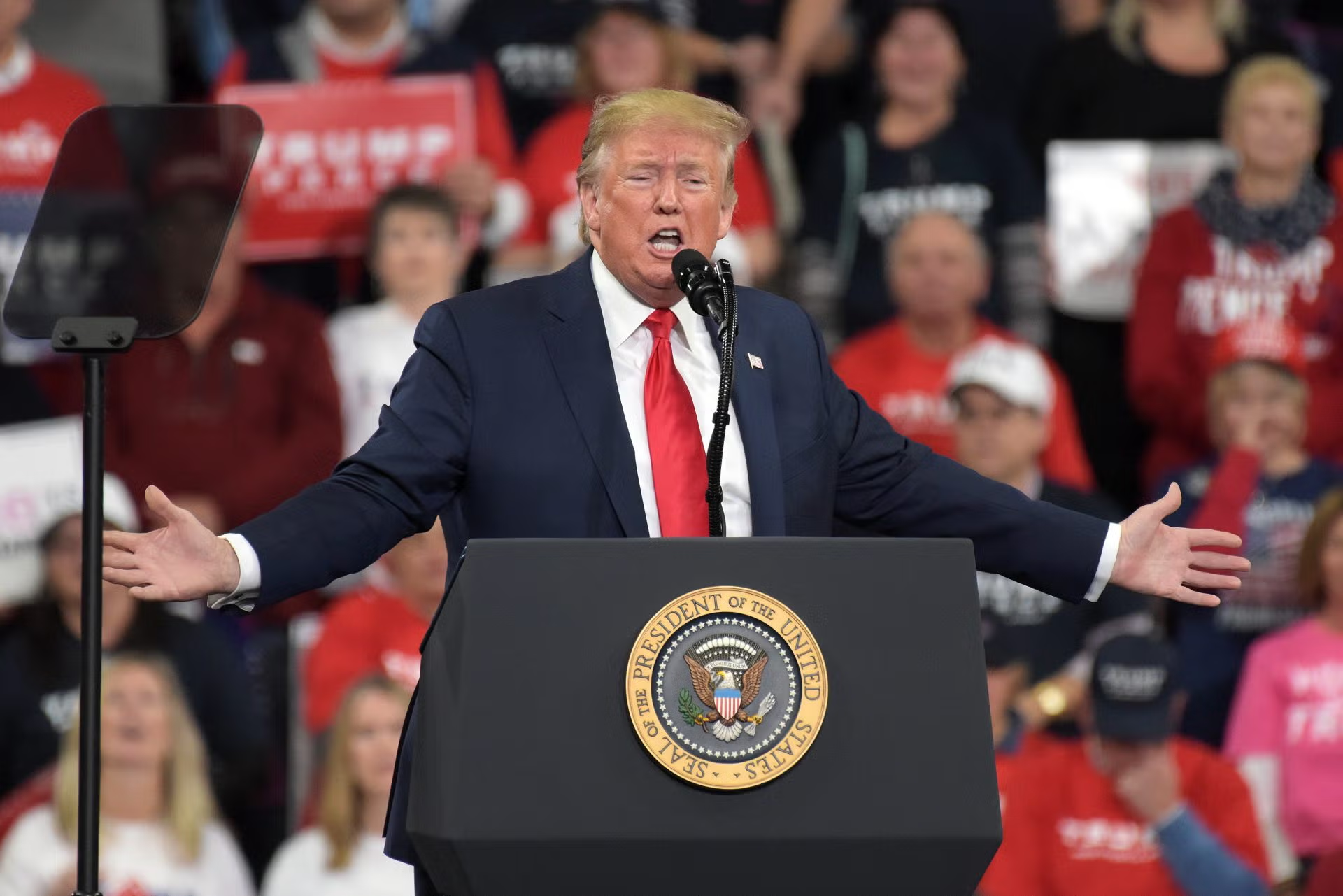
President Donald Trump has repeated false claims that the 2020 election was “rigged” more than 100 times in the past six months, according to a Reuters review, dragging election distrust back into the middle of American life just as the country heads toward another tense midterm season.
For many Americans, the timing feels exhausting. Families are already dealing with expensive housing, stubborn food prices and years of political conflict that never really seem to settle. Another election cycle built around fraud claims and institutional distrust is landing on top of an economy where plenty of people already feel financially worn down.
Reuters found Trump has repeated the claims at rallies, White House events, interviews and across social media, often linking them to wider fights over immigration, mail-in voting and federal election oversight.
That tension is starting to stretch far beyond politics itself. Companies tend to slow decisions when the national mood becomes unpredictable. Small businesses become more careful about expansion. Employers hesitate over hiring. Households pull back spending when the future starts feeling unstable again.
That does not mean the economy suddenly collapses because of political rhetoric. But repeated election conflict arriving during an already fragile period for consumer confidence can quietly change behavior across the economy.
People get defensive with money when they stop feeling sure about where things are heading. Trump’s rhetoric has also continued feeding efforts to tighten voting rules across several Republican-led states. Reuters reported that Trump has backed stricter proof-of-citizenship requirements while criticizing mail-in voting systems and state-run election processes.
For businesses and investors, the bigger worry is not one political argument on its own. It is the feeling that distrust is spreading deeper into elections, courts, regulators and the wider political system at the same time. That kind of atmosphere tends to make consumers more cautious too.
Some families delay larger purchases. Business owners hold back on expansion plans. Companies become slower to commit money when political fights start dominating public attention again. Reuters cited an April Reuters/Ipsos poll showing that 63% of Republican voters still believe Trump’s false claim that the 2020 election was stolen.
The divide is no longer just ideological. It increasingly shapes how Americans view institutions, federal authority and the stability of the country itself. Some Republicans have started publicly distancing themselves from Trump’s claims. Reuters reported that former Arizona Governor Jan Brewer criticized the continued allegations, while Senator Bill Cassidy warned against refusing to accept election losses.
Still, the issue continues dominating Republican politics ahead of the midterms, ensuring election legitimacy remains tied to wider arguments over voting rules, federal authority and public trust.
For households already tired of financial pressure and constant political conflict, another stretch of election distrust may feel less like ordinary campaigning and more like another source of stress entering everyday life.