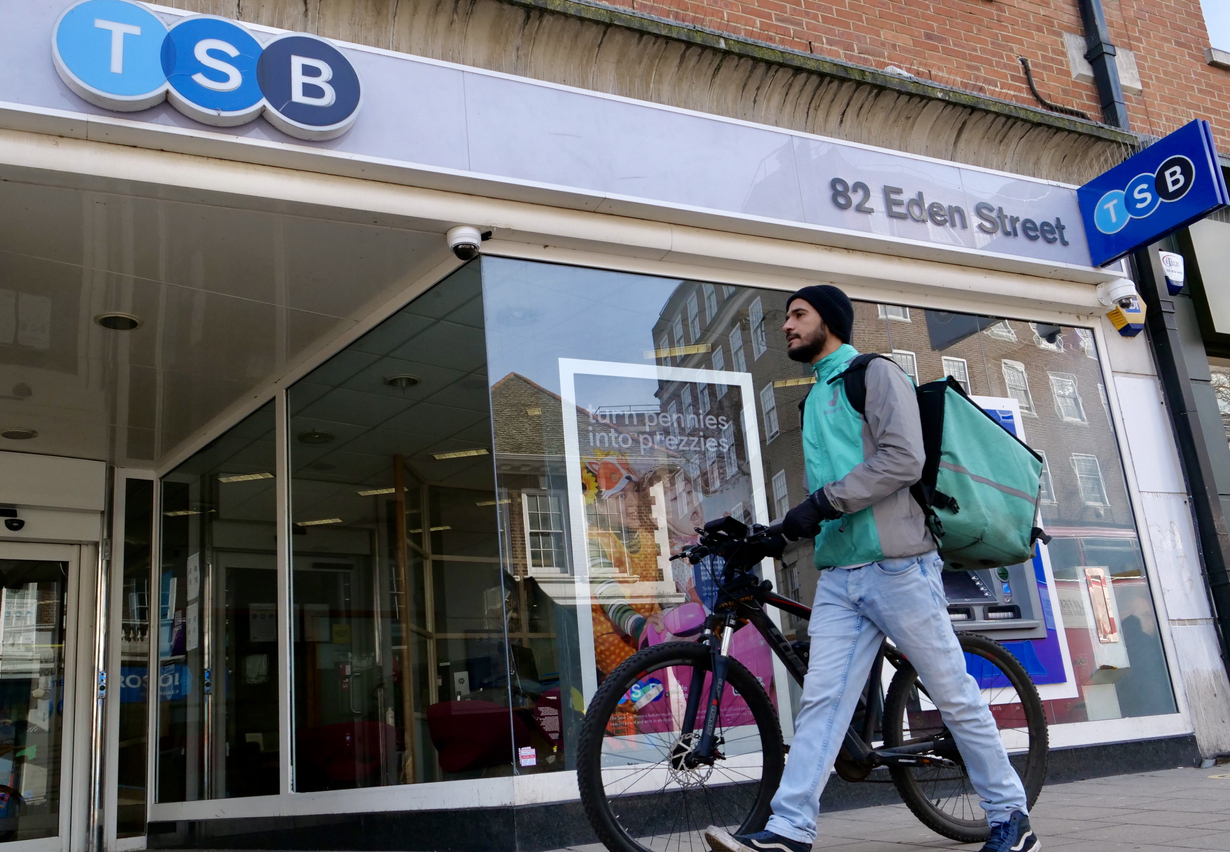
UK mortgage rates are falling again, with TSB, Santander and Virgin Money joining Barclays and HSBC in cutting selected deals after the violent repricing that followed the Iran war. That sounds like relief. It is not a reset. The market is becoming less dysfunctional, but borrowing is still far more expensive than it was before the shock, and that leaves households with a costly decision: lock in now or wait and risk being wrong.
That is the real money question behind the latest lender cuts. TSB is cutting selected residential purchase and remortgage rates by up to 0.6 percentage points and selected buy-to-let deals by up to 0.8 points. Santander is reducing rates for first-time buyers, home movers and remortgagers by up to 0.25 points. Virgin Money is cutting selected fixed rates by up to 0.45 points. Barclays and HSBC have already moved. Those are meaningful changes, but they are cuts from elevated levels, not a return to anything like the market borrowers were dealing with before the latest shock.
That is the part consumers need to keep in view. The average two-year fixed mortgage stood at 4.83% before the war and is still 5.83% now. The average five-year fix is 5.73%. So yes, UK mortgage rates are falling again at the margin. But the overall cost of borrowing remains far above where it was before markets seized up. A few eye-catching reductions do not change that.
This is why the latest lender moves should be read as selective repricing, not broad relief. When markets panicked, lenders moved quickly to protect margins and adjust to higher swap rates and more uncertain funding costs. Now that the immediate stress has eased, some of them are prepared to compete again. That is a sign that the emergency phase is fading. It is not a sign that mortgages have become cheap, or even comfortably priced. The danger for borrowers is assuming that falling rates and affordable rates are the same thing. They are not.
The practical impact depends heavily on who you are. First-time buyers will feel these moves most sharply because even a modest rate cut can change an affordability test or reduce a monthly payment enough to make a purchase possible. Santander’s reductions matter there. Borrowers coming off older fixes face a harsher reality. Even if they secure a slightly cheaper new deal than they could have found a week ago, they may still be staring at a payment jump that feels severe compared with the rate they locked in years earlier. Buy-to-let borrowers have their own version of the problem. TSB’s larger cuts there are striking, but they are arriving in a market where many landlords have already seen borrowing costs, tax pressure and thinner margins do lasting damage.
That makes this less a “rates are coming down” story than an “affordability is still under strain” story. The most useful question for a borrower is not whether UK mortgage rates are falling again. It is whether these cuts are big enough to alter the cost of their own next decision. A headline reduction of 0.25 or 0.45 points can be real money, but it may still leave a household paying far more than it expected before the market turned. Fees, loan-to-value bands, product availability and lender criteria still matter just as much as the headline rate.
Borrowers should also be careful not to lean too heavily on the Bank of England story. The base rate is still 3.75%, and a hold is expected next week. That sounds stable, but fixed mortgage pricing does not move in lockstep with the current base rate. It moves with market expectations, swap pricing, funding conditions and lenders’ appetite to win business. A hold from the Bank may calm things. It does not guarantee a clean run lower in fixed mortgage rates. If inflation stays awkward, if markets reprice again, or if another external shock hits, the current cuts could prove to be partial relief rather than the start of a steady downward trend.
That leaves households in an awkward position. Waiting could bring a better deal if lenders keep trimming and markets stay calm. Waiting could also backfire if the current repricing stalls or reverses. Fixing now may mean accepting a rate that still looks high by pre-war standards, but it may also remove the risk of chasing a better market that never fully arrives. That is why the latest cuts should not be read as a green light for optimism. They are better seen as a sign that the market has stepped back from its most stressed level without becoming comfortable again.
The key point is simple. Lenders are cutting rates again because they think they can compete, not because the mortgage market has healed. That is progress, but it is limited progress. If the average two-year fix is still a full percentage point above where it stood before the war, then the cost problem has plainly not gone away. Borrowers have more room than they did at the worst point of the shock. They do not have normal conditions back.
So the best way to read the latest moves from TSB, Santander, Virgin Money, Barclays and HSBC is as a partial unwind of an overreaction. That matters. It may help restart some purchases, make some remortgages less painful and improve the tone of the market. But it does not remove the central problem. UK mortgage rates are falling again, yet the mortgage market is still much more expensive than it was before the turmoil began. For borrowers, that means one thing above all: do not mistake improving conditions for comfortable ones.
More from Finance Monthly: 4 Reasons UK Homeowners Over 60 Are Choosing Lifetime Mortgages in 2026 (and 3 Reasons Others Are Walking Away)