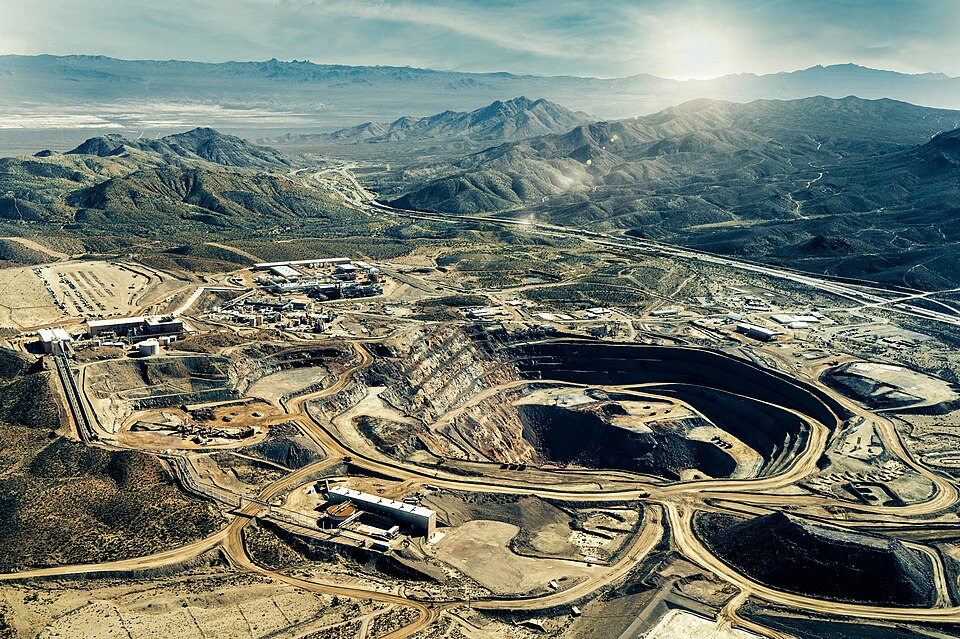
The USA Rare Earth–Serra Verde deal is useful not because it is another mining acquisition, but because it shows where critical minerals capital is starting to move. Reuters reports that USA Rare Earth is buying Serra Verde in a $2.8 billion cash-and-stock transaction, adding an operating rare earth mine in Brazil to a portfolio that already includes a Texas deposit, an Oklahoma processing plant, a UK metals and alloys business, and a minority stake in a French processing specialist. Bloomberg’s reporting adds the strategic clue: management wants further deals in mining and magnet-making, while favouring organic growth in processing. That combination points to a broader change. In rare earths, capital is moving away from single-asset exposure and towards control of more than one part of the chain.
This shift matters because single-asset logic and supply-chain logic are not the same thing. A standalone mine can offer resource exposure, but it does not solve processing bottlenecks, customer access, alloy capacity, magnet-making, or the pricing power that comes from controlling several links at once. In the reporting on this transaction, USA Rare Earth is not simply adding reserves. It is putting together a wider industrial position. The value increasingly sits in how assets fit together, not just in the asset itself.
The deal mechanics reinforce that reading. Reuters reports that USA Rare Earth will pay $300 million in cash and issue 126.9 million new shares, with Serra Verde’s current owners set to hold 34% of the combined company. That is not the structure of a neat exit. It keeps the seller tied to the future value of the enlarged business. In markets where projects are strategic, technically complex and still being scaled, seller rollover can make more sense than forcing an all-cash outcome. It reduces the immediate cash burden on the buyer and suggests that the sellers see more upside in the combined chain than in a clean disposal today.
That is one reason this deal is more revealing than a typical mining story. It offers a better view of how capital is being organised. Reuters reports that Serra Verde’s owners include Denham Capital, Energy and Minerals Group and Vision Blue. By taking stock in the combined company, they are not just monetising an asset; they are staying exposed to a larger platform. Where markets are strategically important but execution remains long-dated, mixed consideration can be a more realistic bridge than an all-cash exit. It can also be a sign that the buyer is trying to build something larger than one project.
The more interesting point sits in the build-out strategy itself. Reuters reports that USA Rare Earth already owns a Texas deposit and an Oklahoma processing plant, completed the acquisition of Less Common Metals in 2025, and recently took a 12.5% stake in Carester SAS to access rare earth processing expertise. Bloomberg’s reporting says the combined companies want further deals in mining and magnet-making. Read together, those facts suggest a simple allocation principle: buy the parts of the chain where speed, scarcity or specialist capability make M&A useful, and build the parts where control, technical integration or long-term process development matter more. That is far more useful than the deal headline itself because it offers a repeatable way to think about industrial strategy.
How investment is shaping up
It also helps explain why critical minerals investing is changing shape. A single project can still attract capital, but the reporting here suggests that platform logic is getting stronger. Reuters says the Serra Verde acquisition adds the Pela Ema mine in Brazil to USA Rare Earth’s chain. Bloomberg says management is “in the early innings” of establishing a growth platform. Once that becomes the objective, the question changes. It is no longer just whether a mine is attractive. It becomes whether the asset strengthens the overall chain, improves optionality, and makes the business less dependent on third parties. That is a more useful framework because it shifts attention from asset quality alone to industrial position.
The financing context matters just as much. Reuters reports that USA Rare Earth received $1.6 billion in proposed funding from the US Department of Commerce in January, subject to milestones, while Serra Verde has $565 million in financing and a 15-year offtake agreement with a guaranteed price floor through a US-capitalised special-purpose vehicle. Those details are not incidental. They show how critical minerals projects are being de-risked. The investment case is no longer based only on geology and future commodity demand. It is being supported by public funding, long-dated offtake, and structures that reduce downside uncertainty. That makes this a strong case study in how strategic minerals are increasingly being financed through a blend of market capital and policy-backed support.
That also helps answer the pricing question, at least in part. The reporting does not provide an EBITDA multiple or a project-by-project valuation framework, so any claim about cheap or expensive pricing would be guesswork. But the form of the transaction still tells us something. A $2.8 billion stock-and-cash deal for an operating asset that fits into a larger chain suggests that pricing is being driven by strategic fit, not simply by reserve value or near-term production. In other words, this looks like strategic pricing. Buyers appear willing to pay more for assets that solve supply-chain problems than for assets that only add tonnes in the ground. That distinction is likely to matter in other markets where governments and industry want supply security, not just resource ownership.
Investor takeways
The practical lesson is that supply-chain security in strategic materials should not be treated as a procurement issue alone. The USA Rare Earth case suggests that firms exposed to critical inputs may need to think further upstream and downstream than they once did. The more useful question for investors is not simple demand growth, but which assets become more valuable once they are placed inside a broader chain rather than left as standalone projects. If rivals begin to control more of the chain, pressure may come not just through price, but through access, timing and resilience. Those are harder disadvantages to fix once the market structure begins to settle.
It also works well as a case study because several strands meet in one transaction without much need for speculation. It is a cross-border acquisition. It uses mixed consideration. It sits inside a wider effort by the US and allied countries to build alternatives to Chinese rare earth dominance. Reuters states that China still dominates mining, processing and magnet production despite years of Western investment, while Bloomberg frames the latest tie-up as part of an aggressive attempt to bulk up further. That makes the deal useful for work on industrial policy, corporate strategy, vertical integration and state-supported capital formation.
The larger point is simple. The USA Rare Earth–Serra Verde deal is not most useful as a one-off corporate event. It is useful because it shows how the market is being rebuilt: through chains rather than isolated assets, through mixed funding rather than simple cash exits, and through a tighter combination of private capital, public support and long-term commercial agreements. That is why critical minerals capital appears to be moving from single assets to supply-chain control. That is also the shift organisations should be watching next.
More from Finance Monthly: Anthropic Amazon Compute Deal: What the $100 Billion Commitment Says About AI Infrastructure Power