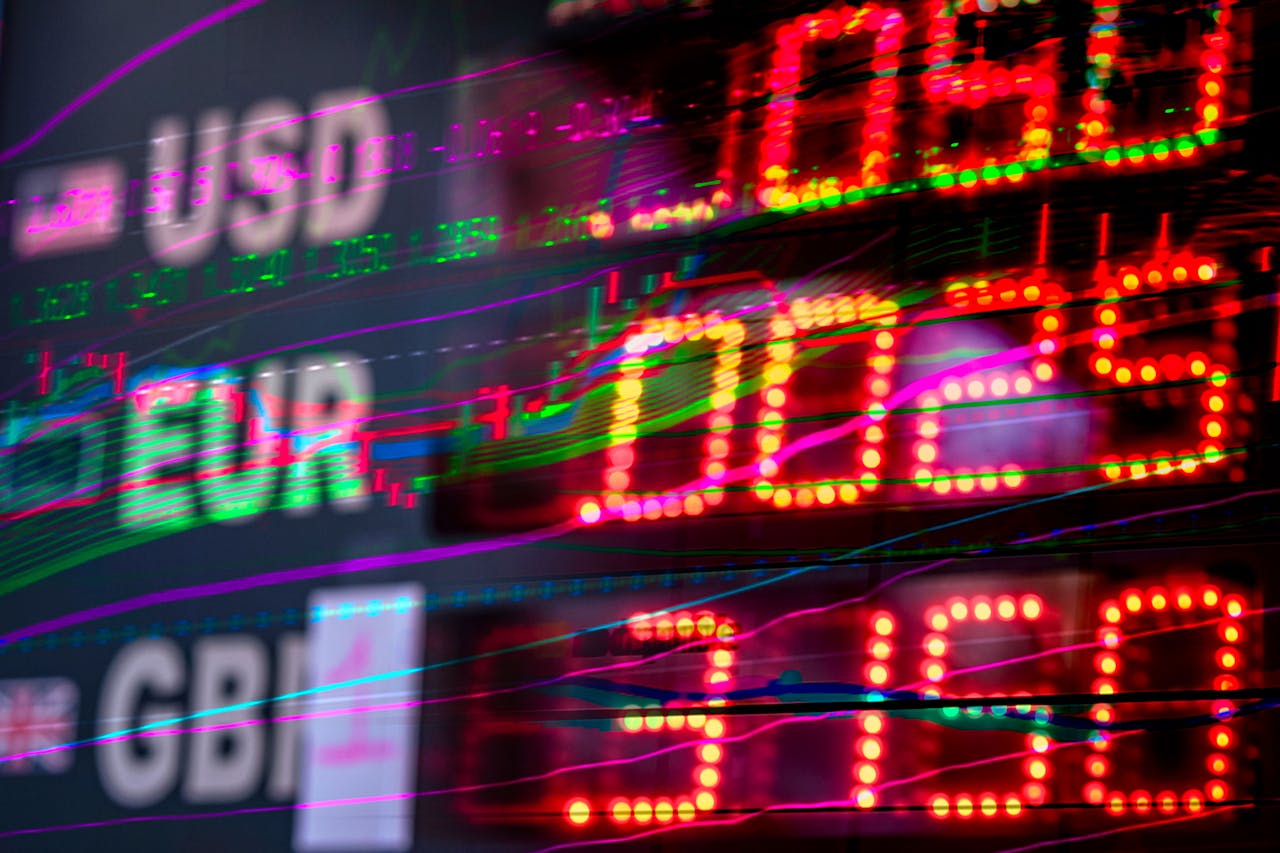
The global foreign exchange market is known for its constant movement. Exchange rates shift in response to economic data, geopolitical developments and shifts in market sentiment. This volatility creates both opportunity and risk for traders. Reacting to sudden market swings requires quick analysis, disciplined decision-making and the ability to monitor markets around the clock.
Because of these challenges, many traders are turning to automated tools that can assist with execution and analysis. A forex automation bot allows traders to automate parts of the trading process by monitoring price movements and executing trades according to predefined rules. By reducing the need for constant manual intervention, automated tools can help traders maintain a more structured and consistent trading approach.
While automation doesn't eliminate risk or guarantee profits, it can help traders manage volatility in ways that manual trading alone often cannot.
Understanding volatility in the forex market
Volatility refers to the speed and magnitude of price movements within a market. In forex trading, currency pairs can move rapidly when important economic data is released or when geopolitical uncertainty affects investor confidence.
Events that frequently trigger volatility include:
- Central bank interest rate decisions
- Inflation or employment reports
- Political instability or global conflicts
- Unexpected economic announcements
For individual traders, these sudden changes can be difficult to manage. Markets often react within seconds, leaving little time to analyze charts or place trades manually. Emotional reactions can also influence decision-making during fast-moving market conditions.
Automation tools aim to reduce these challenges by applying predefined trading rules and responding to market signals in real time.
How automated trading bots work
An automated forex bot is a software program that executes trades based on predetermined strategies. Instead of relying on constant manual monitoring, traders configure the bot with specific conditions that trigger buying or selling decisions.
These strategies often include technical indicators, price levels or algorithmic models that analyze historical market behavior. Once a strategy is defined, the system scans the market for signals that match those criteria.
This approach allows traders to maintain a consistent strategy while reducing the need for constant supervision. Bots can monitor several currency pairs simultaneously and execute trades instantly when specific conditions are met.
Benefits of automation during volatile market conditions
One of the biggest advantages of automation is its ability to respond to market movements instantly. When volatility increases, speed becomes critical. Automated systems can process data and execute trades far faster than human traders. This speed helps ensure that opportunities are not missed due to delays in decision-making or order placement.
Automation can also provide several practical benefits during volatile periods:
- Faster execution: Bots can enter or exit trades immediately when conditions are met
- Emotion-free decision making: Trading rules remain consistent even during rapid market swings
- Continuous monitoring: Markets can be tracked 24 hours a day without fatigue
- Strategy consistency: Automated systems follow predefined logic rather than reacting impulsively.
These advantages make automated tools especially useful for traders who want to maintain discipline in unpredictable market environments.
Risk management and strategic control
Although automation can improve efficiency, successful trading still requires careful risk management. Automated bots operate according to the strategies that traders design, which means the effectiveness of the system depends heavily on how well those strategies are built.
Many traders incorporate safeguards within their automated systems to reduce exposure. These controls can include stop loss orders, position sizing rules and limits on the number of trades executed within a specific timeframe.
Automation can also help traders maintain consistency with their risk management plans. In volatile markets, emotional reactions sometimes lead traders to abandon their strategies or hold losing positions longer than intended. Automated systems remove this emotional element by following predetermined rules.
However, automation should not replace oversight. Traders typically monitor their bots and adjust strategies as market conditions evolve.
The role of data and market analysis
Modern automated trading systems rely heavily on data analysis. Forex markets generate vast amounts of information, including price history, trading volumes and technical indicators.
Bots can analyze these data points continuously, identifying patterns that may signal potential trading opportunities. Some advanced systems also incorporate machine learning techniques that adapt strategies based on changing market conditions.
While human traders may focus on a small number of indicators or charts at once, automated systems can process many variables at the same time. This analytical capacity can provide a more comprehensive view of market behavior, especially during periods of heightened volatility.
Automation as a complement to human decision-making
Automated forex bots are best viewed as tools that complement human traders rather than replace them. Traders still play a critical role in designing strategies, evaluating market trends and adjusting systems when conditions change.
Many traders use automation to handle repetitive tasks like monitoring price movements or executing routine trades. This allows them to spend more time analyzing broader economic developments and refining their trading strategies.
The combination of human oversight and automated execution can create a more balanced trading approach, especially in markets where volatility is a constant factor.
As financial technology continues to evolve, automation is becoming an increasingly important part of modern trading environments. Tools that combine real-time data processing with algorithmic strategies are helping traders respond more effectively to market fluctuations.
While no technology can eliminate the inherent risks of trading, automation provides traders with additional tools to analyze markets, execute strategies efficiently and stay prepared for the rapid movements that define the global currency market.