For decades, moving into management was widely seen as proof that an employee had successfully climbed into a stable and respected position inside corporate America. Now more office workers are watching major CEOs openly question whether some of those roles will still carry long-term value in an AI-driven workplace.
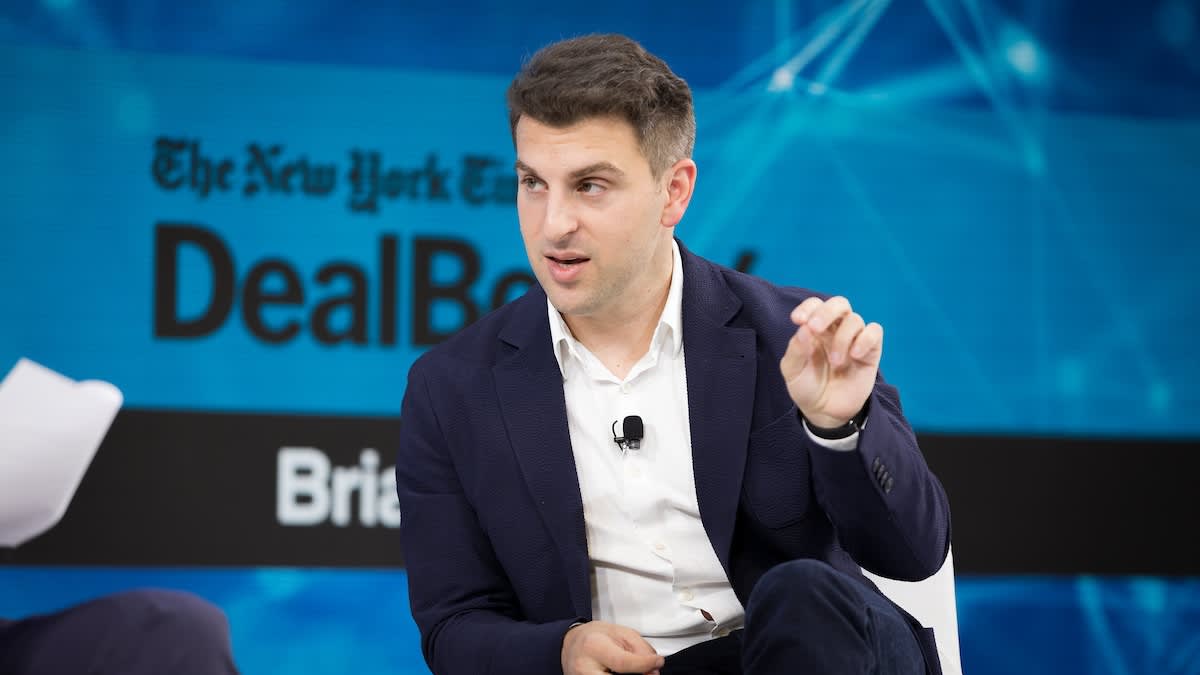
The debate intensified after Airbnb CEO Brian Chesky said managers whose primary role is supervising people rather than directly contributing to projects may have little future inside companies increasingly shaped by artificial intelligence.
“I do not think people managers will have any value in the future,” Chesky said during an appearance on the Invest Like the Best podcast while criticizing managers whose jobs revolve around meetings, one-on-ones and coordination without direct involvement in the work itself.
The remarks struck a nerve because many employees already feel corporate structures changing around them.
At major companies across the tech industry and wider corporate world, management layers are shrinking while businesses invest heavily in AI systems designed to handle scheduling, reporting, coordination and administrative work that once supported entire teams of supervisors and department managers.
What unsettles many office workers most is not simply automation replacing individual tasks. It is the possibility that the traditional path toward promotion and long-term career stability may be changing much faster than employees expected.
The shift is also being driven by money. As companies spend billions on artificial intelligence, executives are increasingly expected to show investors that AI can reduce payroll costs, shrink management layers and help companies operate with fewer employees.
The HRD America report noted that companies including Block, Coinbase and Meta have all pushed toward flatter structures while reducing management layers and placing greater emphasis on leaders remaining hands-on contributors.
Chesky argued that the managers who continue succeeding inside AI-focused companies will increasingly resemble “player-coach” style leaders who remain deeply involved in product development, engineering or operations instead of acting mainly as coordinators.
That idea is making many office workers uneasy because management positions were long viewed as some of the safest roles inside large corporations.
For years, middle-management jobs were treated as relatively secure because they sat between executives and frontline workers. As AI tools become more capable of handling coordination and oversight tasks, more employees are starting to question whether companies will continue maintaining the same large management structures they once relied on.
The HRD America report also pointed to growing pressure on managers to demonstrate technical expertise, direct operational involvement and AI fluency rather than focusing primarily on supervision and performance reviews.
Research cited in the report found Gartner expects 20% of organizations to use AI to eliminate more than half of their middle-management positions by 2026.
For many workers, projections like that reinforce a growing belief that companies are placing more value on employees who directly build, design, code or operate products while placing less value on roles centered mainly around coordination and supervision.
Workers discussing the shift increasingly question whether the old corporate path — moving from junior employee to manager and eventually into leadership — will still exist in the same way a decade from now.
Some employees now wonder whether climbing into management still offers the same security it once did if companies continue flattening structures and reducing layers of oversight.
Others worry younger professionals entering corporate environments may face fewer opportunities to gradually move upward through traditional leadership tracks as AI reshapes how companies organize teams and responsibilities.
For many white-collar employees, the deeper shock is not simply the rise of AI. It is the growing realization that the corporate ladder itself may be changing faster than many careers can adapt to.