The world’s AI boom is becoming increasingly dependent on Taiwan as Nvidia prepares to spend as much as $150 billion a year on the island, reinforcing how much of the global technology economy now rests on a narrow semiconductor network few countries could realistically replace.
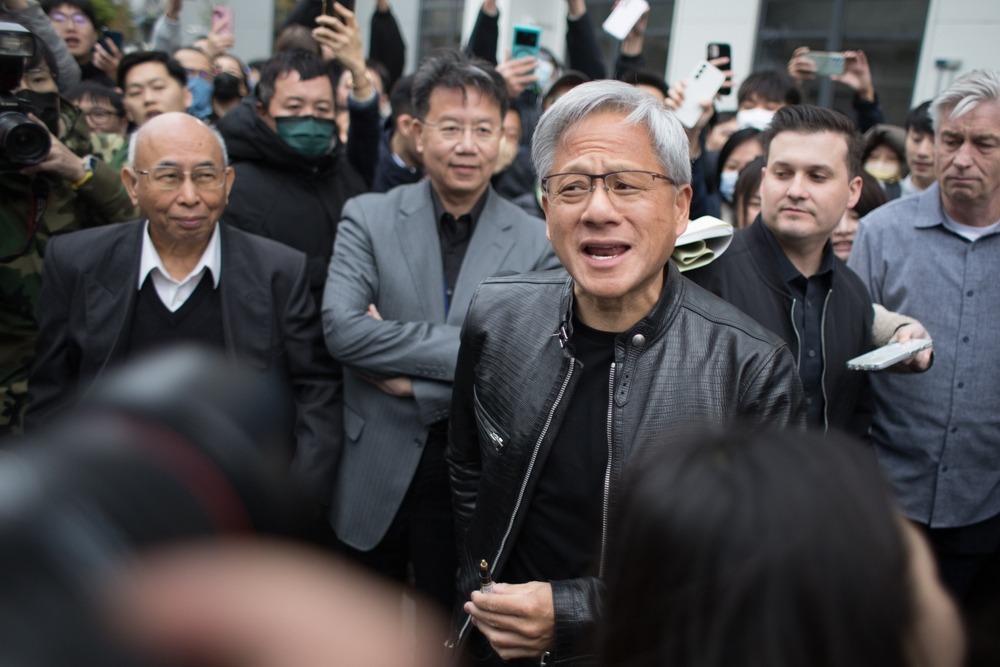
Speaking in Taipei, Jensen Huang called Taiwan the “epicentre” of the AI revolution while unveiling plans for a major Nvidia headquarters expected to employ 4,000 people by 2030. The move brings the company even deeper into the manufacturing system already powering much of the world’s next-generation computing expansion.
Only a few years ago, Nvidia was spending around $10 billion annually in Taiwan. Huang now says that figure is heading toward $150 billion a year as the company races to secure advanced chips, packaging technology and supercomputing capacity before global demand tightens further.
This is no longer just a technology story. Large parts of the economy are beginning to reorganise around access to AI computing power, and Taiwan now sits at the centre of that shift. The island’s semiconductor ecosystem — led by TSMC — has become one of the most strategically important industrial networks in the world as governments and corporations scramble to secure long-term chip access.
Silicon Valley is no longer the only centre of gravity here. Taiwan is.
The race to build AI systems is already distorting investment flows across the wider economy. Data centre construction is accelerating globally. Electricity demand is climbing sharply. Engineering talent is being pulled toward semiconductor manufacturing, automation and computing infrastructure while companies outside the AI surge increasingly compete for the same financing and labour.
Money is moving aggressively into AI-linked projects, and other industries are starting to feel the imbalance.
Some firms are redirecting budgets toward automation simply to avoid falling behind competitors. Others are struggling to justify rising technology spending while broader economic conditions remain uncertain. The divide between companies benefiting directly from the AI surge and those trying to keep pace is becoming more visible.
Housing pressure is also beginning to reappear around major technology corridors as investment and hiring concentrate around AI infrastructure buildouts. That pattern has started reshaping local labour markets and commercial development priorities in regions tied closely to semiconductor growth.
The more governments and businesses lean on AI, the more leverage flows toward a relatively small group of companies capable of producing the hardware underneath it.
That concentration is becoming harder to ignore. Alongside Nvidia, rivals including Advanced Micro Devices are also expanding rapidly inside Taiwan’s semiconductor sector, deepening reliance on manufacturing partners such as Foxconn, Wistron and Quanta Computer. What is forming around Taiwan is no longer simply a supply chain. It is becoming one of the central pressure points underneath the modern global economy.
Investors continue rewarding that dominance for now. Nvidia became the first company to surpass a $5 trillion market valuation last year, and Huang said the company could be worth significantly more within the next several years as AI adoption accelerates further.
But the AI boom is also concentrating extraordinary economic power into a manufacturing system the world has become deeply dependent on at exactly the moment governments are growing more anxious about losing strategic control over critical technology infrastructure.
The wealth being created is enormous. So is the dependency forming underneath it. Entire industries are now tying their future growth to a semiconductor network concentrated in one region, and the economic pressure surrounding that reality is beginning to spread far beyond the technology sector itself.