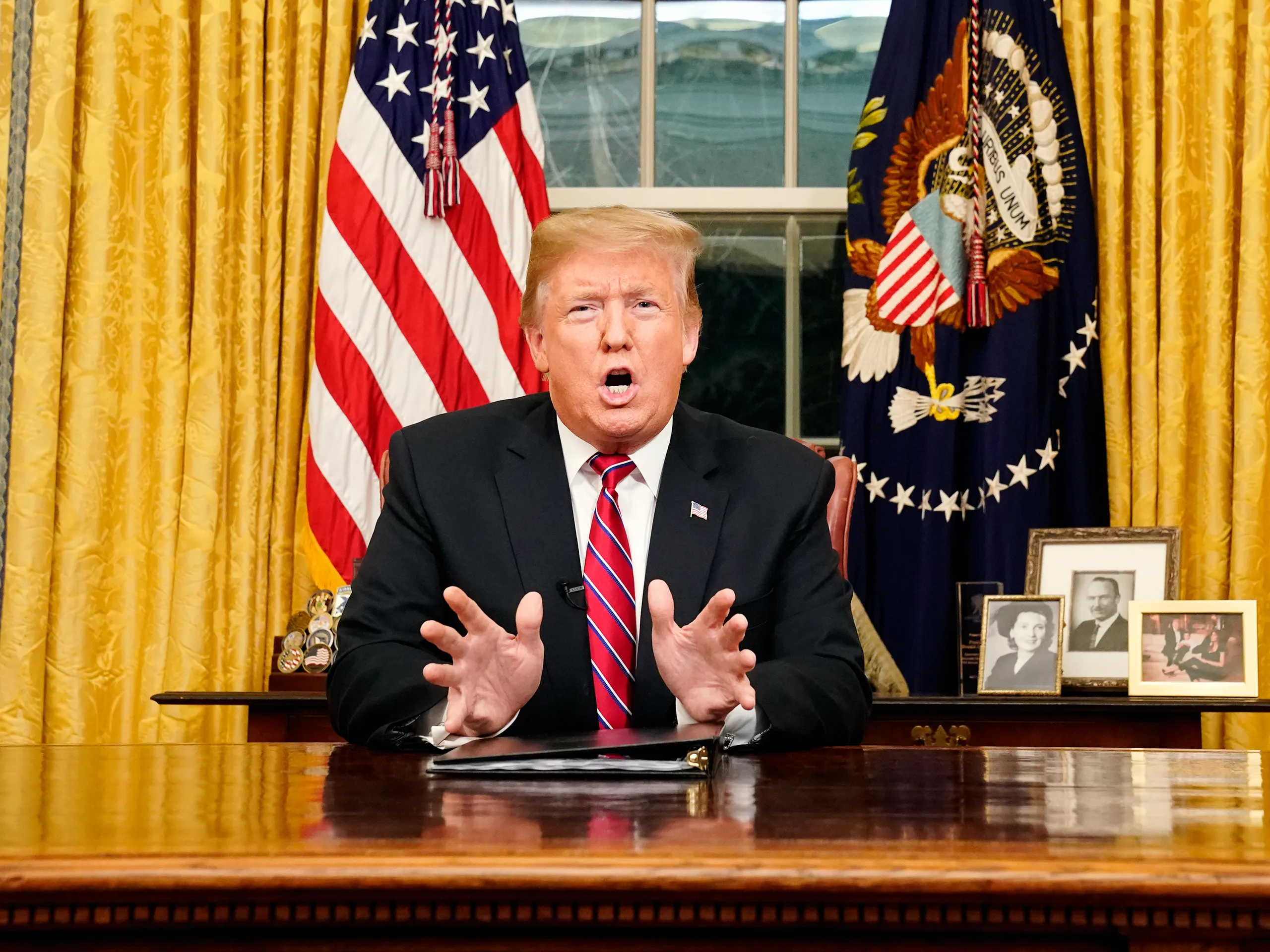
President Donald Trump's warning that the United States "must respond" after a U.S. Army Apache helicopter was shot down near the Strait of Hormuz is reviving concerns that oil prices, shipping expenses and inflation could move higher again. The incident has sharpened attention on one of the world's most important energy corridors at a time when households and businesses are already dealing with elevated costs and fragile economic confidence.
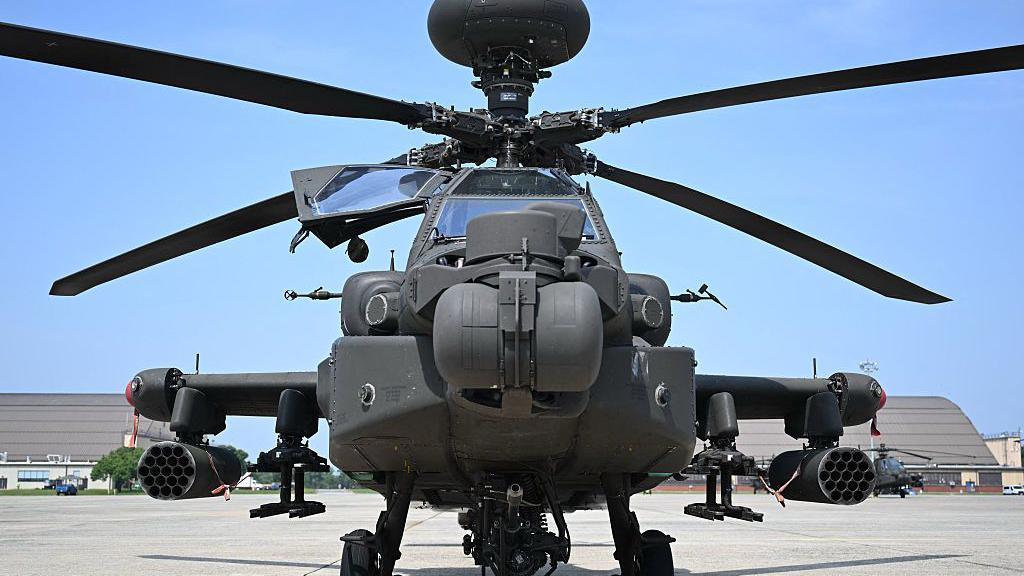
AH-64 Apache helicopters are American-made twin-turboshaft attack aircraft (file image)
The helicopter was brought down near the critical waterway after months of conflict involving the United States, Iran and Israel. Although the two service members aboard were rescued safely, investors and business leaders are focused on a different question: whether the latest military escalation will lead to further disruption across global trade routes and energy supplies.
The Strait of Hormuz remains one of the most strategically important shipping lanes in the world, carrying a substantial share of global oil exports and serving as a vital artery for international commerce.
Markets have become highly sensitive to developments in the region because even limited interruptions can ripple quickly through the wider economy.
Shipping companies face greater operating risks, insurers may reassess coverage costs, and energy traders are forced to account for the possibility of further disruption. Those expenses rarely remain confined to financial markets. They often work their way into transport bills, manufacturing expenses and ultimately the prices consumers pay for everyday goods.
The economic strain created by the conflict is already visible. Since fighting intensified earlier this year, higher energy costs have added pressure to supply chains and contributed to rising prices across multiple sectors.
Food producers, logistics companies, airlines and manufacturers all depend on reliable fuel supplies and predictable transport routes. When those assumptions come under stress, companies often delay expansion plans, scale back hiring intentions or pass additional expenses on to customers.
The latest escalation also presents a challenge for central banks trying to keep inflation under control. A sustained rise in oil prices would make it harder for policymakers to ease borrowing conditions for households and businesses. For families dealing with mortgage payments, credit card balances and rising living expenses, another energy-driven inflation shock would arrive at a difficult moment. Employers facing higher financing costs may also become more cautious about investment and recruitment.
Markets tend to cope with short-lived geopolitical shocks. The bigger challenge emerges when uncertainty lingers around a route that sits at the heart of global energy trade. Investors are now asking whether the conflict is moving toward containment or entering a more unpredictable phase. The answer influences everything from stock valuations to corporate spending plans.
The latest incident also arrives as hopes for a lasting ceasefire continue to slip away. Iran and Israel exchanged fire again this week, while Israel widened operations against Hezbollah in Lebanon. Every new confrontation increases the risk that disruption spreads beyond the region's battlefields and into energy markets, shipping networks and business planning.
Businesses can adapt when expenses rise predictably. What becomes far more difficult is planning around a vital shipping corridor where every new military incident raises the possibility of another jump in energy prices, transport costs and inflation. For households watching bills, companies managing expenses and investors looking for stability, each new incident makes the economic outlook a little harder to predict.