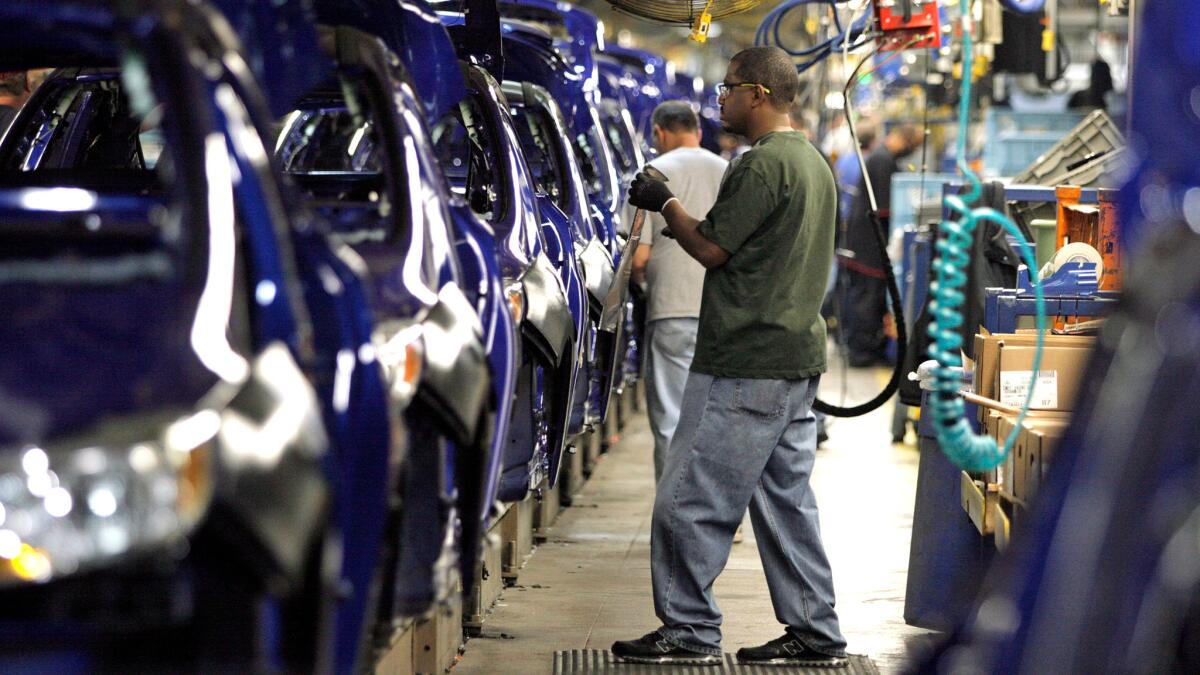
Car buyers and auto workers could be facing fresh uncertainty after the Trump administration proposed tougher U.S. content rules for vehicles built in North America, a move that may increase manufacturing costs and force automakers to rethink where they build, hire and invest.
The proposal, unveiled during talks with Mexico over revisions to the U.S.-Mexico-Canada Agreement (USMCA), arrives at a time when many households are already struggling with high vehicle prices and expensive borrowing costs.
According to people familiar with the U.S. negotiating position, Washington wants vehicles to contain 82% North American content to qualify for preferential treatment under the trade pact, up from the current 75% threshold. The plan would also require half of that value to originate specifically from the United States, creating a far more demanding sourcing standard for automakers operating across North America.
If adopted, the changes would mark one of the most significant shifts in North American automotive trade rules since USMCA replaced NAFTA. For manufacturers that have spent decades building supply chains crossing borders during production, the new requirements are likely to force a costly reassessment of where parts are made, assembled and sourced.
The industry faces that challenge at a difficult moment. New vehicle prices remain elevated compared with pre-pandemic levels, while financing costs continue to weigh on buyers. Many households have become more cautious about large purchases, leaving automakers with limited room to absorb additional expenses without risking weaker demand.
Supporters argue that stronger domestic sourcing requirements could boost U.S. manufacturing capacity and encourage more investment in American factories. Yet the transition may not be straightforward. Automakers and suppliers have invested billions of dollars under existing trade rules, and any major shift in sourcing requirements is likely to influence decisions about factory expansions, supplier contracts and hiring plans.
The Trump administration's negotiating position is also creating uncertainty beyond the United States and Mexico. Sources familiar with the talks said it contains no specific Canadian content requirement, despite Canada being deeply integrated into North America's automotive supply chain. Canada is not participating in the current talks, adding another layer of uncertainty for manufacturers with operations spread across all three countries.
Investors are watching closely because the debate stretches beyond cars. Governments around the world have become far more willing to intervene in supply chains they once largely left to market forces, creating fresh uncertainty for companies making long-term investment decisions. That trend is forcing executives to weigh political priorities alongside cost, efficiency and profitability when deciding where future production should be located.
The effects would not stop at assembly plants. Parts manufacturers, trucking firms, warehouse operators and thousands of workers tied to the automotive supply chain could all find themselves watching closely as companies decide where future production is placed. For communities that depend on manufacturing investment, even small shifts in sourcing rules can carry significant economic consequences.
For consumers, the biggest question remains affordability. The average cost of buying and financing a vehicle has become a growing source of financial strain, particularly as household budgets remain under pressure from years of elevated living costs. Any increase in production expenses raises the possibility that some of those costs eventually reach buyers.
The negotiations remain ongoing and there is no guarantee the proposed changes will be adopted in their current form. Even so, the talks underscore how trade policy is becoming increasingly tied to industrial strategy, economic competition and national manufacturing goals.
For now, manufacturers are being asked to plan for a future that may look very different from the one they built under existing trade rules. Whether that ultimately delivers more American factory jobs or simply higher costs across the industry remains one of the biggest questions hanging over the negotiations.