Hundreds of laid-off workers expected to return to a GM-backed battery plant next month are now being told they must wait until August, as the electric vehicle slowdown continues to hit manufacturing jobs.
For workers, it means more uncertainty. For the industry, it is another warning sign that demand is not growing fast enough to support the expansion plans built during the EV boom.
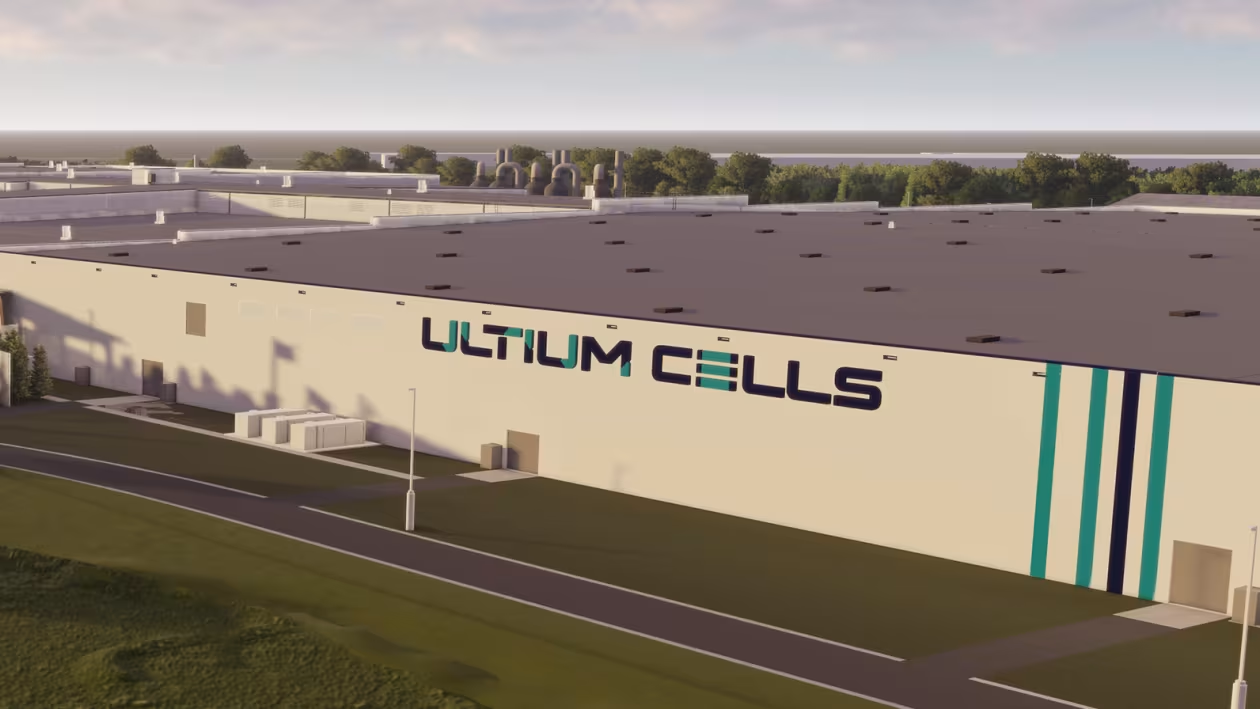
Workers at the Ultium Cells battery plant in Warren, Ohio, thought they were just weeks away from returning to work. Instead, the GM-LG Energy Solution venture has delayed their return until August, extending months of uncertainty as the electric vehicle market continues to fall short of industry expectations.
The decision extends financial uncertainty for hundreds of workers and highlights a growing challenge for the EV industry. Factories, supply chains and hiring plans were built around expectations of rapid growth, but a slower market is forcing manufacturers to scale back production and reassess how quickly those investments will pay off.
Battery factories were once seen as symbols of a manufacturing revival. Automakers and suppliers committed billions of dollars to new facilities, betting that electric vehicle adoption would continue rising quickly. Those investments are still moving forward, but the pace of the transition is proving less predictable than many forecasts suggested.
Ultium Cells temporarily laid off 850 workers at the Ohio facility last year and permanently eliminated another 480 positions. While a small number of employees have recently returned to the plant, most remain away from the production line as the company adjusts operations to match current market conditions.
The impact extends beyond a single factory. Manufacturing jobs often support surrounding businesses, from restaurants and retailers to service providers that depend on steady local spending. When employees remain out of work for longer than expected, households frequently become more cautious with discretionary purchases and larger financial commitments, creating ripple effects throughout local communities.
Automakers across North America have spent much of the past year reassessing production targets as EV sales growth has moderated. The removal of a federal $7,500 tax credit last September added another challenge for manufacturers trying to balance long-term investment plans with near-term market realities.
The financial stakes extend far beyond the factory floor. Battery plants represent some of the largest industrial investments made during the push toward electrification. When production schedules are reduced or worker recalls are delayed, questions inevitably emerge about how quickly those investments will generate the returns companies once expected.
The Ohio delay is not happening in isolation. Similar adjustments are appearing across parts of the manufacturing sector as companies that expanded aggressively for an anticipated surge in electric vehicle purchases recalibrate production to reflect actual buying patterns. That process can take time, particularly when factories, supply chains and workforces were built around expectations of much faster growth.
For now, the workers waiting to return to the Ohio plant remain in limbo while automakers continue recalibrating their EV strategies. The longer sales remain softer than expected, the more difficult it becomes for employees, suppliers and local communities to know when the next phase of growth will arrive—and whether those jobs and opportunities will ultimately look the same as originally promised.