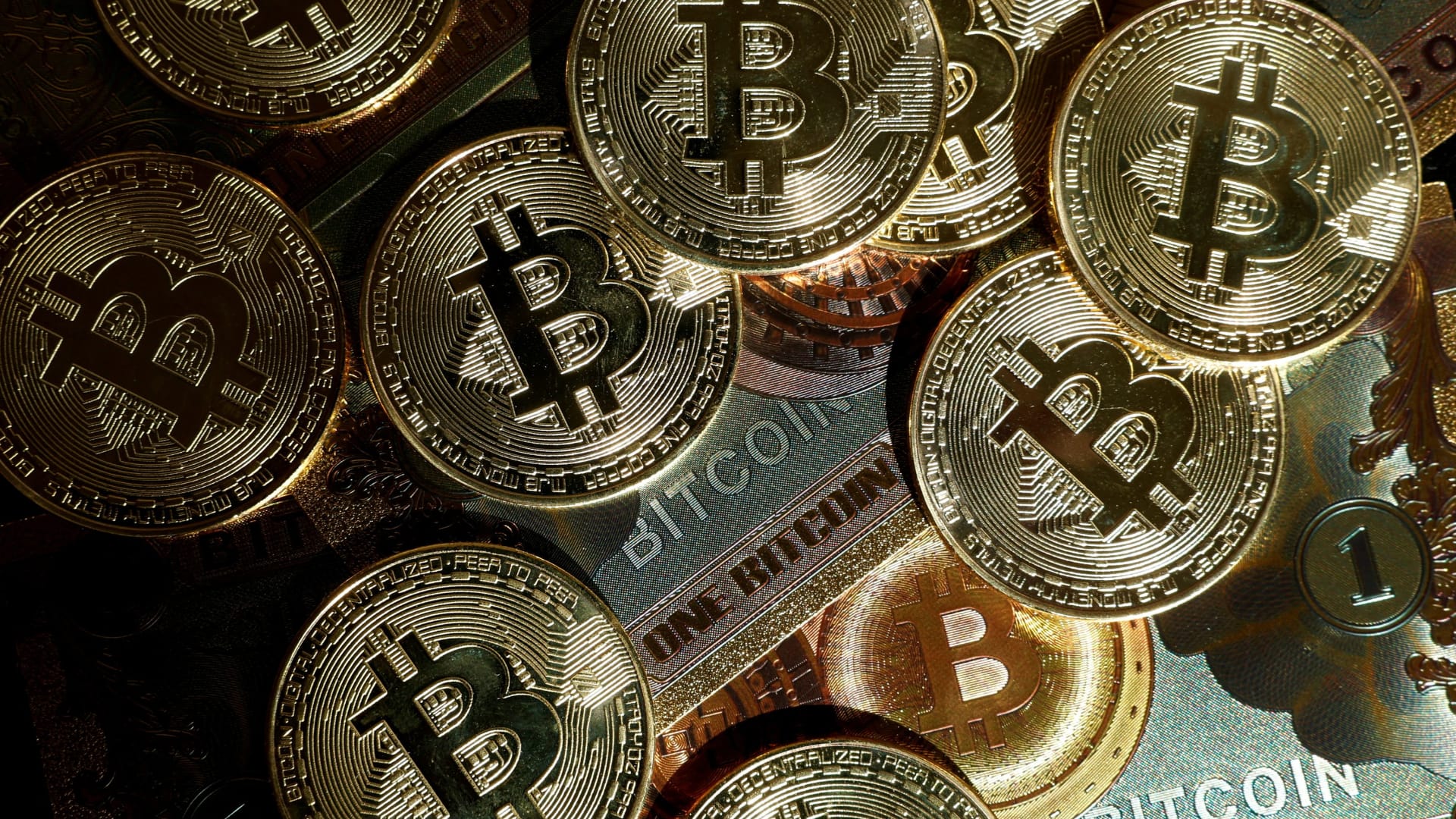
Bitcoin is heading toward its worst start to a year in more than a decade as investors pull billions of dollars out of crypto and redirect money into artificial intelligence stocks, a shift that is exposing how concentrated financial markets are becoming around a handful of dominant themes.
What began as a selloff in one asset class is increasingly reflecting a broader change in market behaviour as cash chases perceived winners and leaves less room for disappointment elsewhere.
The world's largest cryptocurrency has fallen roughly 15% this week and is down around a third since the start of 2026. At the same time, AI-linked companies, semiconductor manufacturers and technology funds continue attracting enormous amounts of fresh investment as traders hunt for growth in an economy where confidence remains uneven and opportunities feel concentrated in fewer places.
The move highlights how quickly market leadership can change. Not long ago, crypto was viewed as one of the most exciting destinations for investment flows. Today, the attention once given to digital assets is pouring into the companies building data centres, manufacturing advanced chips and supplying the infrastructure behind the AI boom.
That shift is creating visible pressure across financial markets. Semiconductor stocks have surged while bitcoin has moved sharply lower, suggesting fund managers are becoming more selective about where they place risk. In an environment where growth is harder to find, money is no longer spreading broadly across speculative assets. It is moving toward areas perceived to have clearer earnings potential and stronger commercial demand.
Adding to the pressure, Strategy, the largest corporate holder of bitcoin, disclosed this week that it had sold part of its holdings for the first time since 2022. While the sale was relatively small, it drew attention because it came from one of the strongest institutional supporters of bitcoin and reinforced concerns that even long-term believers are adapting to changing market conditions.
Competition within the crypto sector has also intensified. Bitcoin no longer dominates digital assets the way it once did. Stablecoins continue expanding their role in payments and transactions, while rival cryptocurrencies compete for attention and market share. The result is a more crowded landscape at a time when fewer investment dollars appear willing to chase risk.
The rise of stablecoins offers another clue about how market behaviour is evolving. Assets linked to traditional currencies are attracting greater interest because they provide stability in an environment where volatility remains a concern. For many buyers, preserving wealth has become almost as important as generating returns.
The story no longer belongs only to crypto. A surprisingly large amount of market momentum is now tied to a relatively small group of AI-related companies and chipmakers. The gains have been impressive, but they have also left many portfolios leaning on the same trade at the same time.
For households and retirement savers, that concentration matters. Diversification has long been viewed as one of the most effective ways to manage risk, yet the strongest investment performance is now coming from a narrow slice of the market. When money crowds into fewer assets, future volatility can become more disruptive if expectations change or growth slows.
Plenty of retail investors who piled into crypto during the post-pandemic surge are now looking elsewhere for growth. Some are rotating into AI-focused funds and technology shares, while others are moving toward assets perceived as offering greater stability. Those decisions may appear individual, but together they are helping reshape the flow of money across global markets.
The record pace of withdrawals from bitcoin exchange-traded funds underlines the scale of the shift. Billions of dollars have left crypto investment products this year even as semiconductor and AI-focused funds continue attracting substantial inflows. Markets are not losing money altogether. They are redistributing it.
Where investors are choosing to put their cash says a lot about how markets are changing. Buyers are becoming more disciplined, more selective and less willing to spread money widely across speculative themes. In periods of economic confidence, funds tend to search broadly for opportunity. In periods of greater caution, they often cluster around whatever appears safest, strongest or most likely to deliver growth.
As billions continue moving toward a handful of AI-linked winners, the debate is shifting. The issue is no longer just whether bitcoin can bounce back. It is whether markets are becoming so dependent on a narrow group of winners that any stumble could be felt much more widely.