President Donald Trump says Iran's supreme leader, Mojtaba Khamenei, is "very seriously injured" as negotiations between Washington and Tehran move closer to a potential peace agreement, a development that could reshape both regional stability and global energy markets. The comments arrive after three months of conflict that have disrupted energy supplies, pushed fuel prices higher and increased costs for businesses and households around the world.
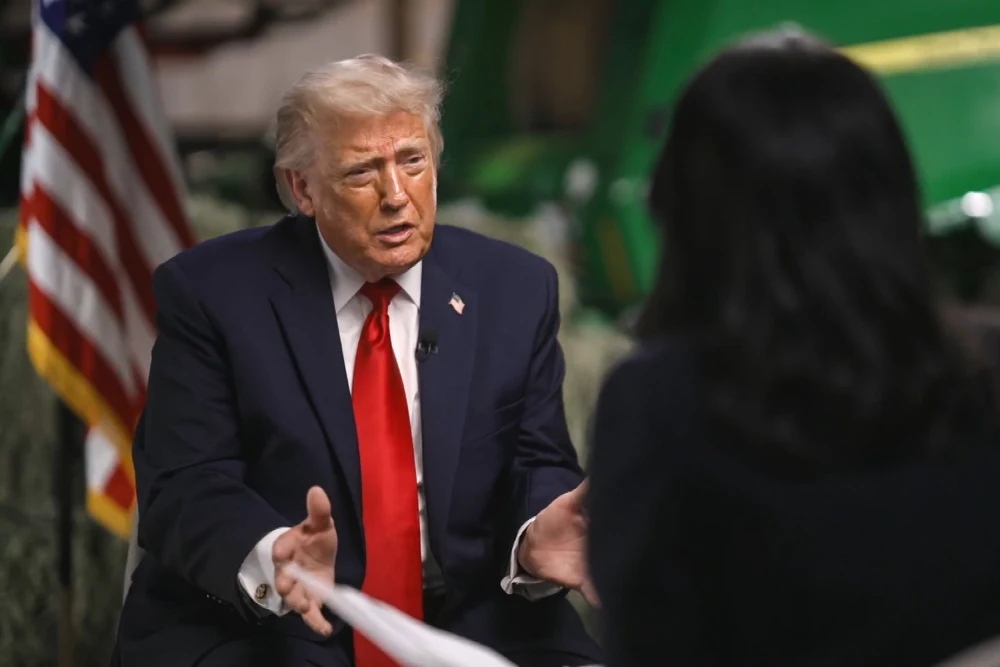
Speaking to NBC News, Trump said the United States and Iran were "very close" to reaching a deal that could bring the war to an end. He described Iran's new leadership as more rational than before and suggested Khamenei remains involved in approving a potential agreement despite the severity of his reported injuries.
Trump also outlined what a future settlement could look like, saying the United States would work with Iran to remove and destroy highly enriched uranium as part of a broader effort to prevent Tehran from obtaining nuclear weapons. While investors have responded positively to signs of diplomatic progress, questions about the condition of Iran's leadership are creating new doubts at a crucial point in the talks.
What happens in Tehran rarely stays confined to the region. The conflict has already highlighted how vulnerable the global economy remains to disruptions in key energy corridors. The Strait of Hormuz, through which roughly a fifth of global oil shipments pass, has become a focal point for traders, governments and businesses trying to gauge the risk of further supply interruptions. Transportation costs rise when oil prices move sharply, supply chains become more expensive and companies face renewed strain on already stretched margins.
Trump acknowledged that the conflict has contributed to higher gasoline and fertilizer prices, arguing that the economic cost was necessary to prevent Iran from developing nuclear weapons. He predicted energy prices would fall if a permanent agreement is reached, but many companies are unlikely to make major decisions based on optimism alone. After several years of volatile energy prices, supply chain disruption and inflation, many businesses have become reluctant to commit to major spending plans until conditions look more predictable.
A jump in fuel prices rarely stays confined to petrol stations. Companies often delay hiring, postpone expansion plans and scrutinise spending more closely when operating costs become harder to forecast. Families facing elevated mortgage payments, rents and household bills tend to react in much the same way, becoming more cautious about discretionary spending and larger purchases.
Economic slowdowns often begin with small changes in behaviour rather than dramatic events. Even modest increases in energy costs can ripple through the wider economy if businesses and consumers simultaneously decide to pull back. Spending slows, investment weakens and growth can lose momentum long before official economic data captures the change.
The situation becomes harder to assess when the health of the country's most powerful figure is suddenly in question. Political transitions during periods of conflict rarely unfold smoothly, particularly when negotiations involving security, energy and international sanctions are underway. Investors will be watching closely for signs that the reported injuries affect decision-making inside Tehran or complicate efforts to finalise an agreement.