When Ali Larter revealed that Taylor Sheridan only showed up to the Landman set three times during the filming of season two, it immediately caught the attention of fans — and industry insiders alike.
For a creator known for his uncompromising vision and hands-on storytelling, the number felt almost shocking. Sheridan’s name is synonymous with modern prestige television, yet here he was, largely absent from the day-to-day production of one of Paramount+’s most expensive dramas.
And that revelation tells a much bigger story.
Because while Taylor Sheridan may not have been physically present on set very often, Landman is unmistakably his creation — and the scale, confidence, and financial weight behind the series reveal just how powerful his position has become inside Paramount’s streaming empire.
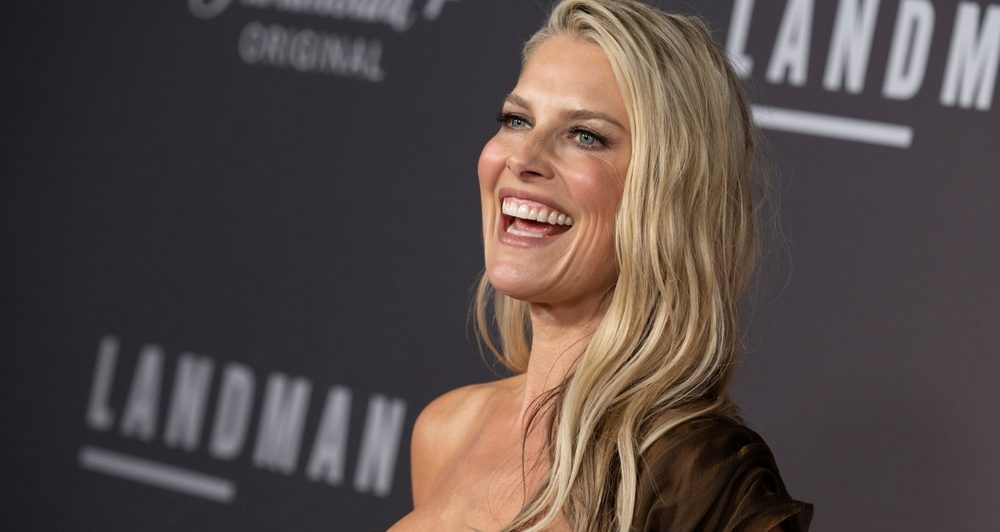
Ali Larter smiles on the Landman red carpet, celebrating the hit series’ success and engaging with fans and media at the premiere.
What Is Landman and Why Does It Matter?
Landman is a Paramount+ original series co-created by Taylor Sheridan and inspired by the high-stakes world of Texas oil production. The show stars Billy Bob Thornton as Tommy Norris, a hard-edged fixer navigating corporate power, family dysfunction, and the moral gray zones of America’s energy industry. Ali Larter plays Angela, his volatile, sharp-tongued wife, while season two introduced Sam Elliott as Tommy’s father, T.L.
Season two concluded on January 18 and marked a turning point for the series — creatively, commercially, and culturally.
For Paramount, Landman is not just another drama. It is part of a carefully constructed portfolio of Sheridan-led shows designed to anchor Paramount+ in an increasingly brutal streaming market.
“Taylor Was Only on Set Three Times”
Speaking to PEOPLE, Larter offered a surprisingly candid look at how Sheridan operates behind the scenes.
“Taylor was only on set three times this year,” she revealed.
“He was there for the white truffle scene in the premiere, because he’s going to make sure that things are going the way he wants.”
After that, she says, Sheridan stepped back.
“He kind of just let the train barrel ahead.”
It wasn’t disengagement. It was delegation — and it speaks volumes about where Sheridan now sits in the television hierarchy.

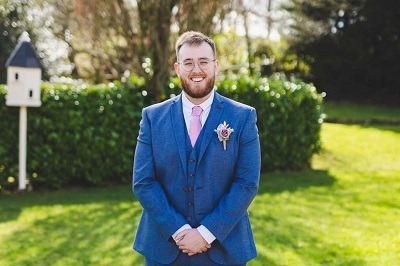
Taylor Sheridan makes a stylish appearance on the red carpet, showcasing his signature blue suit.
Creative Control Without Constant Presence
Season two of Landman was directed entirely by Stephen Kay, a veteran filmmaker Larter describes as “such a gift to the show” and “immensely talented.” His steady hand allowed Sheridan’s voice to remain intact while giving the cast and crew room to expand the show’s emotional range.
This approach mirrors how Sheridan now oversees much of his growing slate. Rather than micromanaging every scene, he sets the tone, defines the thematic spine, and trusts trusted collaborators to execute.
That level of trust is earned — and expensive.
When Landman Found Its Identity
According to Larter, season two is when audiences truly understood what Landman was trying to be.
“Our show has all these tones in it,” she explained.
“We’re going to take you on a roller coaster — high action, dramatic scenes, vulnerable love stories, and then high comedy.”
Angela, often dismissed within the narrative as chaos incarnate, becomes more layered this season. Larter says she’s constantly looking for ways to ground the character emotionally.
“Even though she can be up to no good all the time, the heart runs deep in her.”
The arrival of Sam Elliott’s T.L. deepened that emotional framing.
“It’s like Taylor’s showing the audience how to think about Angela and Ainsley through T.L.’s eyes,” Larter said.
That ability to shift perspective without softening the edges is classic Sheridan — a storytelling instinct that has become enormously valuable to Paramount.
How Much Did Paramount Spend Making Landman?
While Paramount has never publicly confirmed Landman’s budget, industry estimates place the series firmly in premium-drama territory.
Based on production scale, cast salaries, and location-heavy filming across Texas, Landman is widely believed to cost between $12 million and $15 million per episode.
That puts season two alone in the $120–150 million range, aligning it with Sheridan’s other big-budget projects such as Yellowstone, Tulsa King, and Mayor of Kingstown.
These costs are not incidental. Paramount has positioned Sheridan’s shows as cornerstone content — programming designed not just to attract subscribers, but to keep them.
In an era where streaming services are struggling with churn, Sheridan’s ability to deliver repeatable, binge-worthy success has become invaluable.
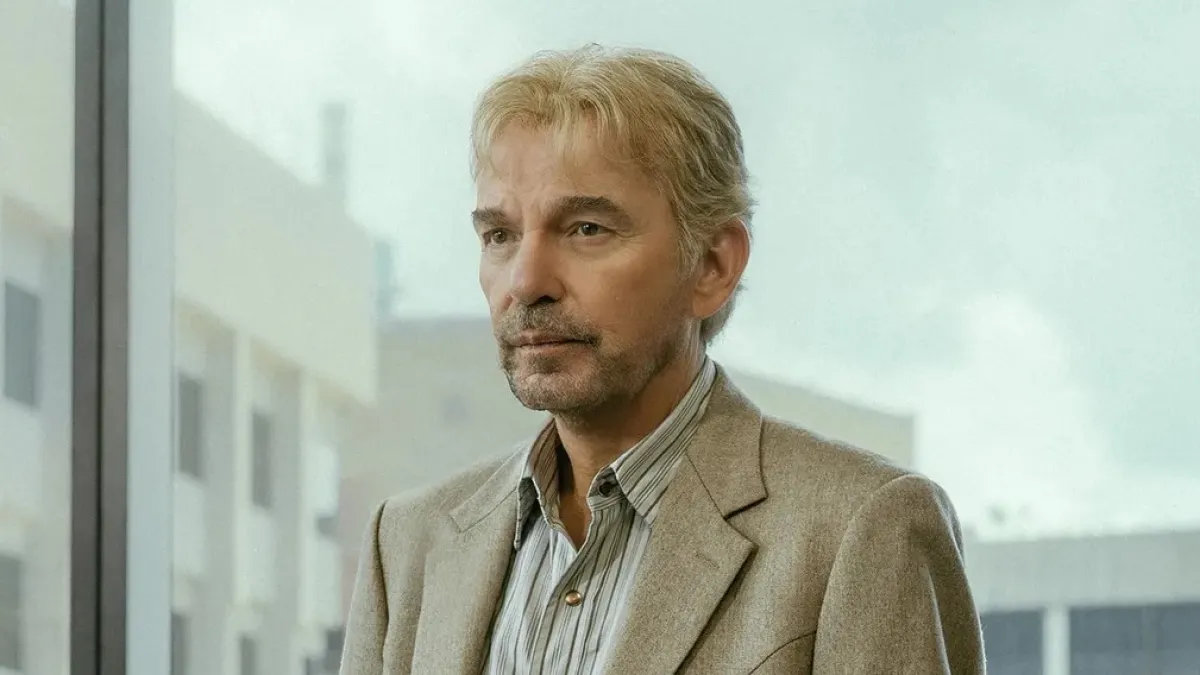
Billy Bob Thornton delivers a powerful performance as Tommy Norris in Landman, showcasing the intensity that has revitalized his career.
How Much Money Has Taylor Sheridan Made From Landman?
Taylor Sheridan’s overall deal with Paramount is widely reported to be worth between $200 million and $250 million, making it one of the richest creator agreements in television history.
Landman is just one part of that deal — but it is a significant one.
Industry insiders estimate Sheridan earns:
-
$5–10 million per season upfront as creator and executive producer
-
Performance-based backend bonuses tied to renewals and viewership
-
Long-term equity value as the Sheridan-led universe expands
Conservatively, Landman alone is believed to have already generated $20–30 million for Sheridan, with far greater upside if the series continues for multiple seasons.
Crucially, this income is not tied to how often he shows up on set.
It’s tied to results.
Why Paramount Keeps Betting on Sheridan
Sheridan’s shows consistently:
-
Drive Paramount+ subscription growth
-
Generate strong completion rates
-
Encourage binge viewing
-
Anchor marketing campaigns
In other words, they behave exactly how streaming platforms need flagship content to behave.
Landman may not yet have the cultural saturation of Yellowstone, but it serves a different purpose: it proves Sheridan’s formula works beyond the Western genre, tackling corporate America, energy politics, and modern masculinity with the same sharp edge.
The Sheridan Method: Authority Without Visibility
Ali Larter once described Sheridan as a “provocateur,” and the label still fits — though not in the way people might expect.
Sheridan provokes discomfort. He challenges audiences. He refuses neat moral resolutions. And now, he does it from a position of creative authority that allows him to step back without losing control.
Showing up three times wasn’t absence.
It was confidence.
What Landman Says About Sheridan’s Legacy
Landman represents a new phase of Taylor Sheridan’s career — one where he no longer needs to be omnipresent to shape the final product.
The themes are still there: power, legacy, family, survival. The setting has shifted from ranches to oil fields, but the DNA is unmistakable.
And Paramount knows exactly what it has.
As streaming platforms cut costs and chase relevance, Sheridan’s shows remain rare examples of expensive television that actually delivers long-term value.

Taylor Sheridan joins the Yellowstone cast for a star-studded red carpet moment.
Inside Landman, Taylor Sheridan, and Paramount+
Is Landman based on a true story or real people in the oil industry?
While Landman is not based on a single true story, it draws heavily from real-world oilfield dynamics in West Texas. Taylor Sheridan has long been known for embedding authentic occupational detail into his shows, and Landman reflects real tensions between corporate interests, landowners, environmental pressures, and blue-collar labor. Industry consultants with firsthand oilfield experience were reportedly involved to ensure terminology, power structures, and workplace culture felt grounded rather than fictionalized.
This approach mirrors Sheridan’s earlier work, where realism is achieved not through biography, but through accurate systems and lived-in detail.
Why does Taylor Sheridan work with the same actors across different shows?
Sheridan frequently reuses actors because he prioritizes trust, speed, and tonal consistency over star novelty. In a high-output production environment like Paramount’s Sheridan-led slate, working with familiar performers reduces creative friction and allows deeper character exploration.
Actors such as Sam Elliott, Billy Bob Thornton, and others understand Sheridan’s rhythm — the silences, the moral ambiguity, the refusal to over-explain. This shared shorthand allows productions to move faster and maintain quality across multiple series airing simultaneously.
Could Landman influence how future Paramount+ dramas are made?
Yes — Landman is quietly becoming a test case for how Paramount develops prestige drama outside traditional genre lanes. Unlike Yellowstone, which leans into mythic Western iconography, Landman is contemporary, corporate, and politically charged.
If the show continues to perform well, it strengthens Paramount’s confidence in adult-skewing, conversation-driven dramas that don’t rely on franchise IP or spectacle alone. That could shape future commissioning decisions, particularly as streaming platforms pivot away from volume and toward fewer, higher-impact originals.
The Bigger Picture
Ali Larter’s revelation wasn’t gossip. It was insight.
It showed how Taylor Sheridan has evolved from gritty screenwriter to media empire builder, capable of trusting his collaborators while overseeing one of the most lucrative creative partnerships in modern television.
Landman season two is now streaming on Paramount+.
And whether Sheridan is on set three times or thirty, the results speak for themselves.
Because when the creator barely shows up — and the show still works — it means the system he built is doing exactly what it was designed to do.
And for Paramount, it’s paying off.