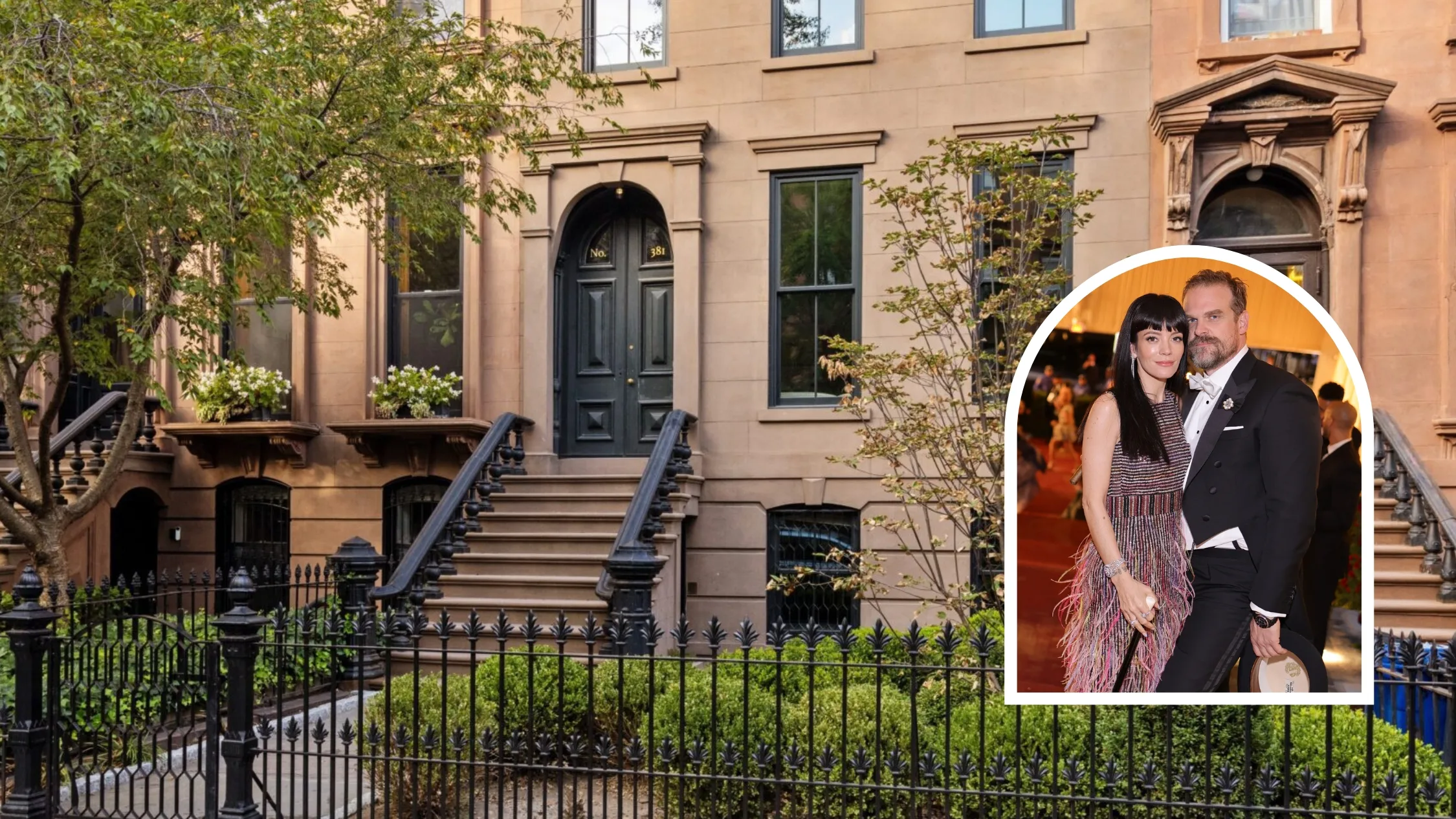
Lily Allen and David Harbour are closing a chapter — both personally and financially. The former couple has sold their luxurious Carroll Gardens, Brooklyn brownstone at a loss, marking a poignant turn following their widely reported split.
The Victorian-inspired home, initially listed at $7.9 million in October 2025, ultimately sold for $7.3 million, according to Carl Gambino Real Estate’s Instagram. While the sale represents a financial setback, it also underscores the emotional weight of Allen and Harbour’s separation, a story reflected in both Allen’s music and public commentary.
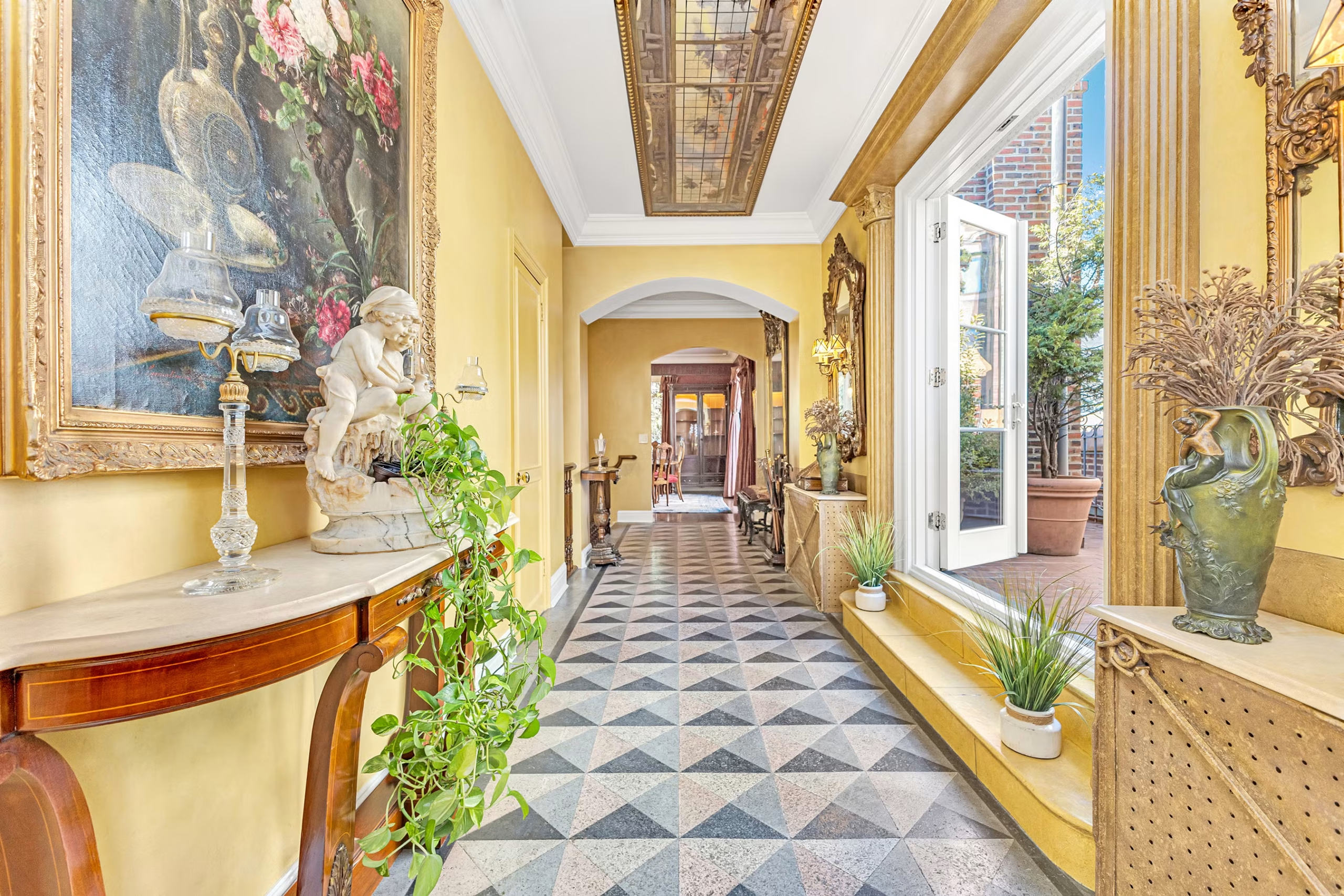
The vibrant entrance hallway of Lily Allen and David Harbour’s Brooklyn brownstone, with French doors opening to the garden, showcases the home’s bold and eclectic style before it sold at a loss.
Lily Allen Brooklyn Brownstone Interior Design and Features
The townhouse stands out not only for its prime Brooklyn location but also for its bold, eclectic interiors. Designed by AD100 designer Billy Cotton and architect Ben Bischoff of MADE, the living room features a pea green tray ceiling, intricate crown molding, a coordinating fireplace, multicolored floral wallpaper, green velvet couches, and a bejeweled chandelier with black lampshades.
The kitchen offers a more understated elegance, with cream-colored tiles and cabinets, complemented by simple gingham-cushioned chairs. A charming backyard provides a private retreat amid Brooklyn’s bustling streets.
Previously featured in Architectural Digest (2023), the home drew viral attention for its maximalist style, cementing its reputation as a space where design meets personality. The home’s bold character mirrored Allen’s own artistic vision and life in New York City.
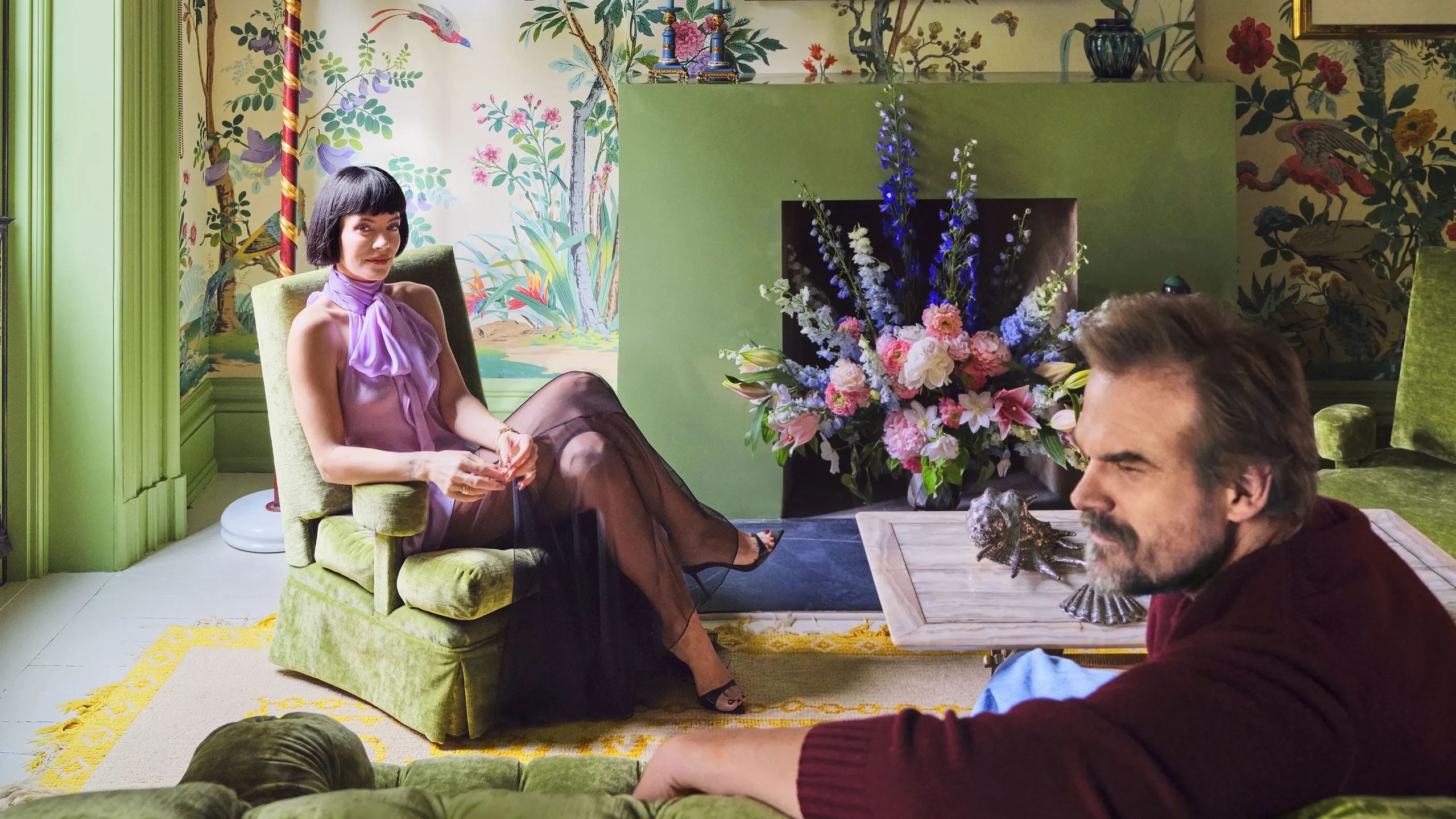
Lily Allen and David Harbour relax in the green-accented living room of their Brooklyn brownstone, a space filled with eclectic design details before the home sold at a $600K loss.
Why Lily Allen and David Harbour Split
Harbour, 49, and Allen, 39, separated in early 2025 after four years of marriage. Sources told People the union had been “crumbling,” and Allen herself alluded to a tough period affecting her mental health on her BBC podcast Miss Me? in December 2024. She described stress impacting her appetite and daily routine, painting a candid picture of the personal toll the split took.
The couple married in Las Vegas in 2020 in a ceremony officiated by an Elvis Presley impersonator. Allen’s daughters, Marnie Rose (12) and Ethel Mary (13), attended alongside friends and family. Allen met Harbour through the celebrity dating app Raya, and their transatlantic pairing drew media attention throughout their marriage.
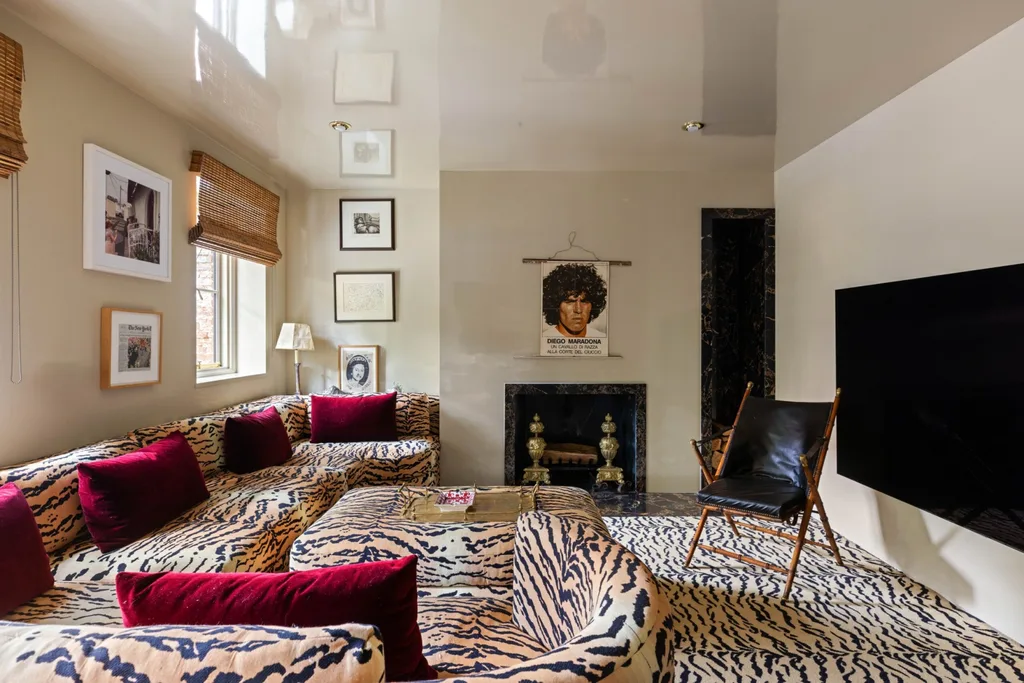
“The zebra-themed reception room of Lily Allen and David Harbour’s Brooklyn brownstone highlights the home’s bold, maximalist design before it sold at a $600K loss.
How the Brownstone Inspired Lily Allen’s Album West End Girl
The Carroll Gardens home was more than a residence; it served as a creative space that inspired Allen’s 2025 album West End Girl. The record features lyrics that seem to reflect her split with Harbour — raw, introspective, and emotionally charged.
Yet Allen clarified that some songs are written “in character,” blending autobiography with fiction — a style known as autofiction. “I’ve tried to document my life in a new city and the events that led me to where I am in my life now,” Allen said. “At the same time, I’ve used shared experiences as the basis for songs which try to delve into why we humans behave as we do, so the record is a mixture of fact and fiction.”
The home’s bold interiors and artistic flair echo Allen’s own expressive style, blending emotion, creativity, and unapologetic individuality.
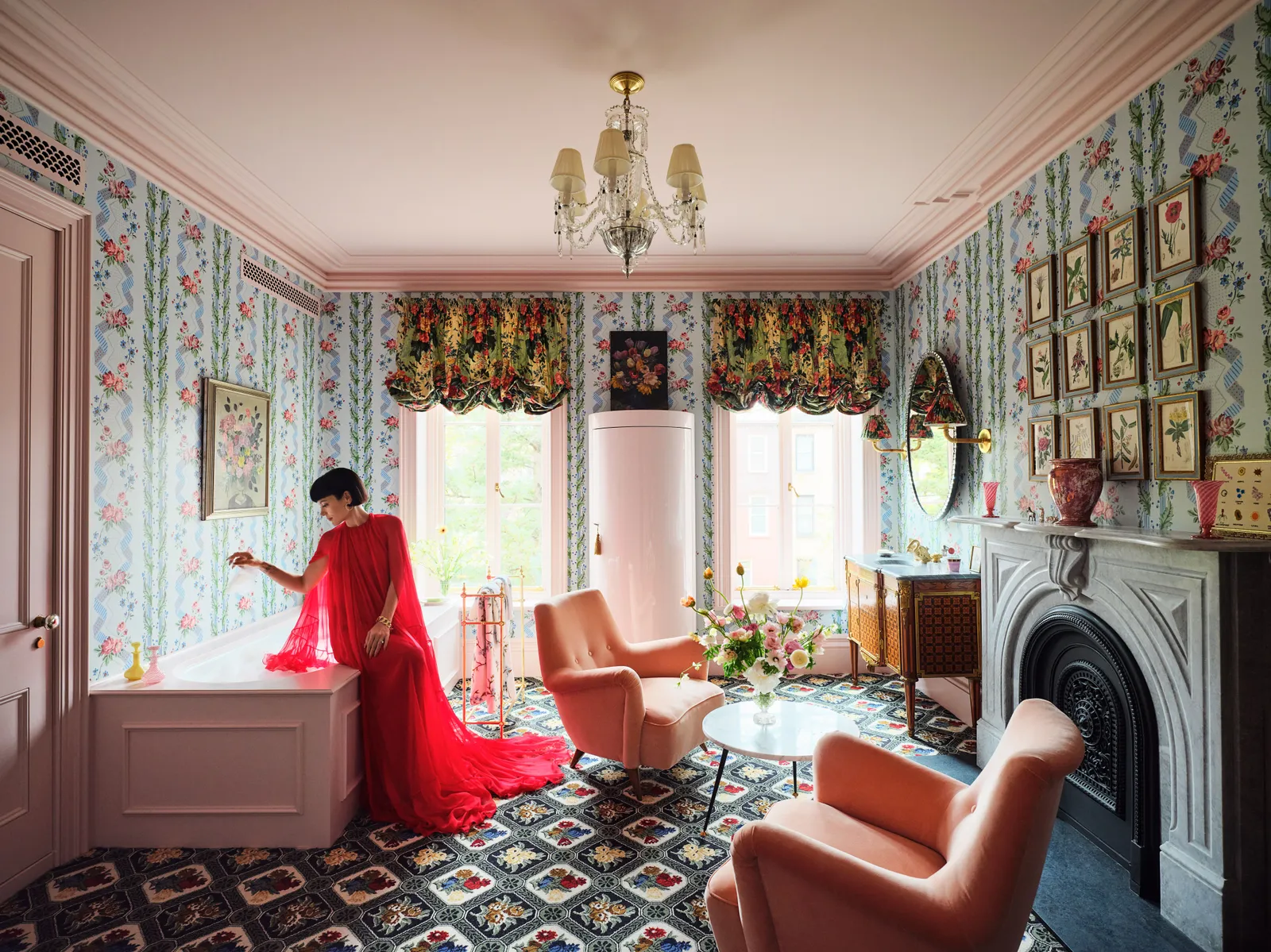
Lily Allen poses in the vibrant living room of her Brooklyn brownstone, showcasing red chairs and colorful walls that reflect the home’s bold design before it sold at a $600K loss.
Financial Details: Luxury Home Sold at a $600K Loss
The Carroll Gardens brownstone ultimately sold for $7.3 million, down $600,000 from its original $7.9 million listing. While the property’s design, location, and distinctive interiors made it highly desirable, real estate experts say that market timing and buyer behavior likely influenced the final sale price.
As a marital asset, the proceeds from the sale are expected to be divided between Lily Allen and David Harbour, though the exact split depends on the terms of their divorce settlement. Typically, in a standard New York property split without a prenuptial agreement, proceeds would be divided equally, meaning each party could receive roughly $3.65 million, minus costs such as realtor fees, taxes, and any outstanding mortgage payments.
For Allen and Harbour, the home was far more than a financial investment. It symbolized a chapter of their lives together, serving as both a family residence and a creative sanctuary for Allen’s music. Selling it at a loss carries both monetary and emotional weight, representing the tangible end of their partnership and the beginning of separate paths forward.
Moving Forward: Independence and Creativity
Post-split, Allen and Harbour are focusing on their individual pursuits. Allen continues to create music, channeling personal experiences into her art, while Harbour remains busy with acting roles across film and streaming projects.
The sale of the brownstone allows both to move forward physically and emotionally, closing one chapter and opening another. Fans are drawn not only to the celebrity aspect but to the human story of love, loss, and resilience — themes that resonate far beyond Brooklyn brownstones and music studios.

Lily Allen and David Harbour pictured embracing on the red carpet during happier times, before their high-profile split.
Everything Fans Want to Know About Lily Allen and David Harbour’s Split and Home Sale
What inspired Lily Allen’s interior design choices in the Brooklyn brownstone?
Lily Allen’s Brooklyn home reflects her love for maximalist, eclectic design, blending bold colors, vintage patterns, and modern accents. Collaborating with designer Billy Cotton and architect Ben Bischoff, Allen chose details like multicolored floral wallpaper, velvet furnishings, and custom lighting to create a playful yet sophisticated environment that mirrors her artistic personality and London-meets-New-York aesthetic. The home’s interiors were not just decorative; they served as a source of creative inspiration for her music, particularly the West End Girl album.
How does selling a luxury home in Brooklyn typically affect celebrity taxes?
In New York City, the sale of a luxury property like Allen and Harbour’s brownstone carries several tax considerations. Sellers are subject to capital gains tax if the property increased in value since purchase, as well as New York State and City transfer taxes. Even when selling at a loss, certain transaction-related costs, like broker commissions, legal fees, and closing costs, may impact the net proceeds. High-profile celebrity sales often involve estate planning and financial advisors to minimize tax liability while complying with NYC regulations.
How common is it for celebrity splits to influence album or artistic work?
It’s quite common for personal relationships to influence celebrity creative output. Lily Allen herself has acknowledged that her experiences with Harbour and living in Brooklyn shaped the themes of her West End Girl album. Many musicians, actors, and artists draw on personal highs and lows — including marriages, breakups, and home life — to create emotionally resonant work. This practice, often referred to as autofiction or confessional art, allows audiences a glimpse into the artist’s real-life struggles while maintaining creative narrative flexibility.