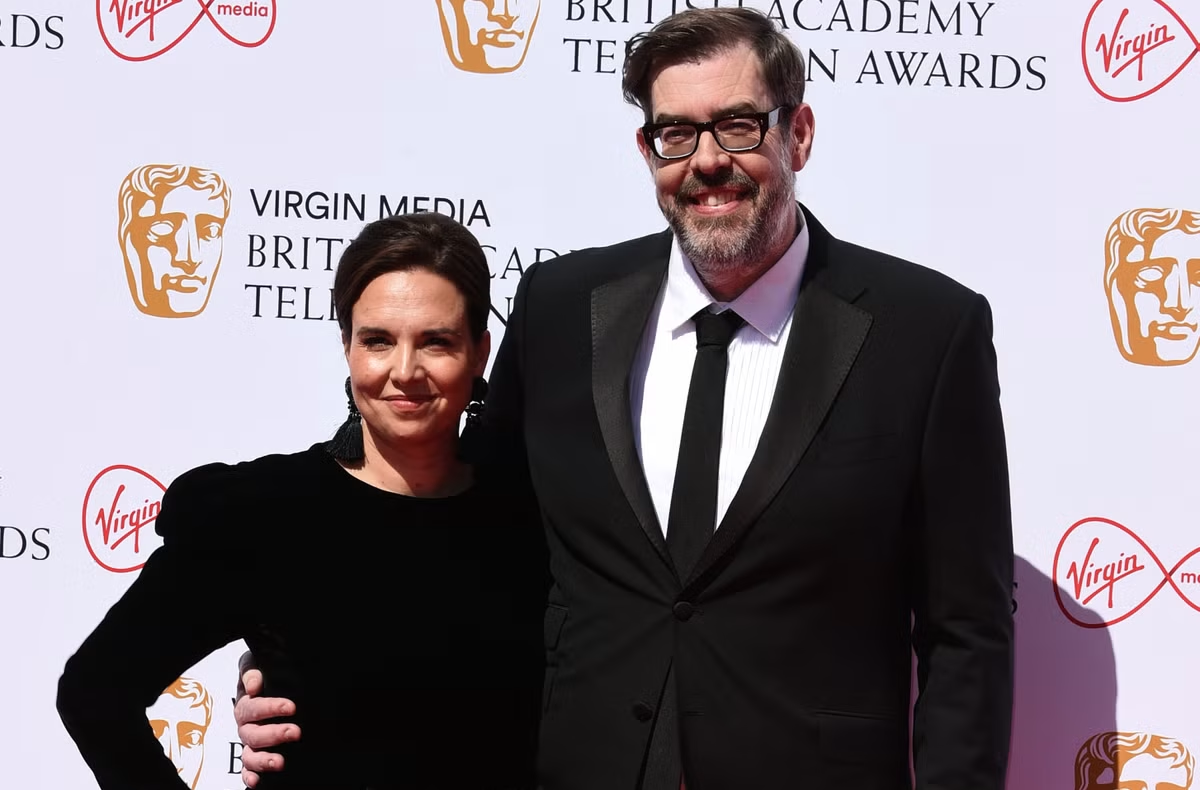
The early weeks of 2026 marked a profound milestone in the British media landscape as Richard Osman and his spouse, Ingrid Oliver, finalized the acquisition of a £9 million London townhouse.
While celebrity property moves are frequent, this transaction serves as a primary case study in the modern "IP-led" wealth model. Funded significantly by the windfall from the 2025 Netflix adaptation of The Thursday Murder Club, the purchase signals Osman's successful migration from a traditional salaried media professional to a high-yield global intellectual property holder.
The Foundation: Production and the "Pointless" Baseline
Before the literary explosion, Osman’s wealth was rooted in the structural mechanics of television production. Serving as an executive producer and creative director at Endemol UK, he operated within a corporate framework where earnings were tied to production credits and salaried leadership roles.
His early career generated a stable, high-tier income through credits on landmark formats such as Deal or No Deal and 8 Out of 10 Cats. Unlike the variable royalties of the publishing world, these earnings represented a traditional "time-for-money" exchange, albeit at the highest levels of the industry.
The pivot to on-screen visibility in 2009 via the BBC’s Pointless introduced a secondary revenue stream: presenting fees. Over a 13-year tenure, Osman’s compensation—though partially obscured by routing through production entities—established a consistent capital base.
Industry analysts note that long-running BBC formats typically offer per-episode fees that, when produced in bulk, create the liquid capital necessary for initial high-value investments. By the time he stepped back from Pointless in 2022, Osman had effectively used his television career to de-risk his transition into the much more volatile world of commercial fiction.
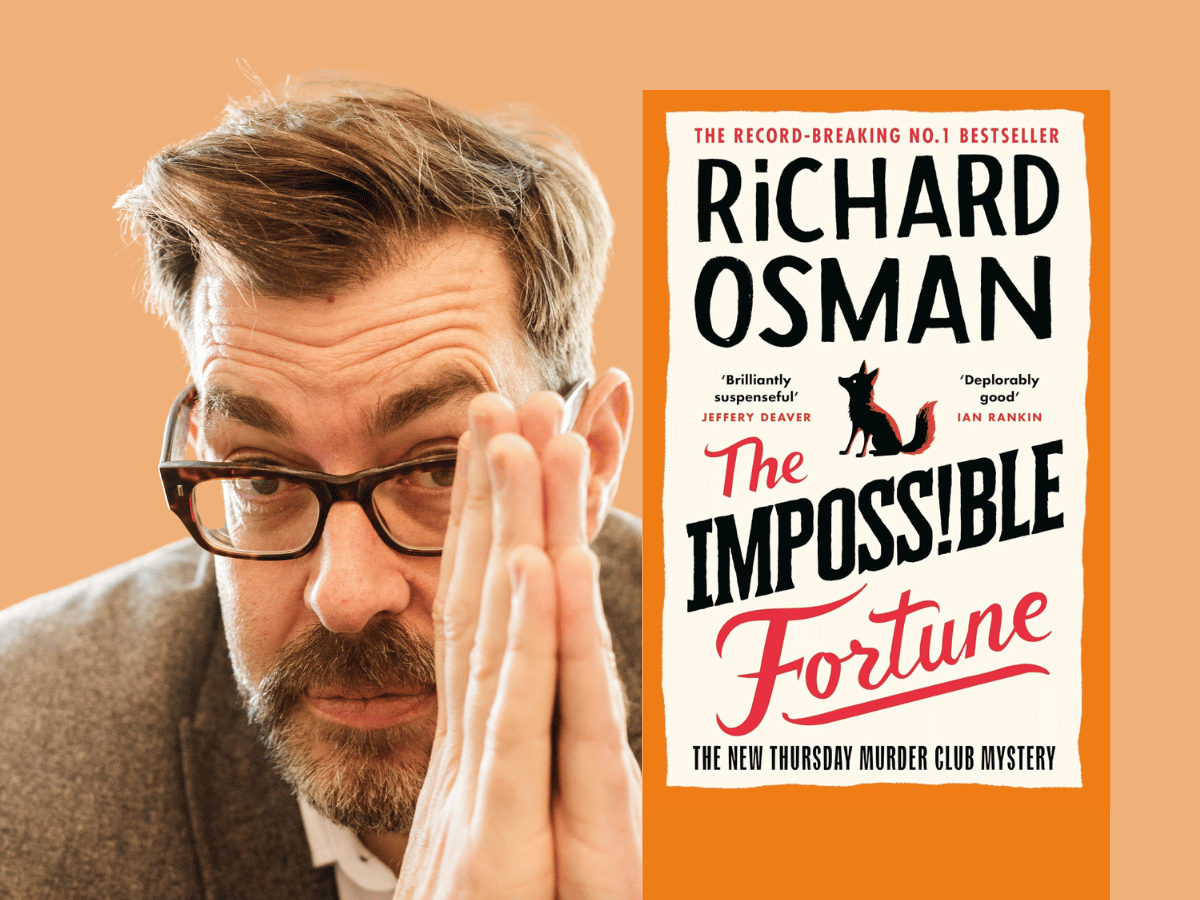
Richard Osman with The Impossible Fortune, the latest instalment in The Thursday Murder Club franchise.
The Literary IPO: Scaling Intellectual Property
The financial acceleration Osman experienced between 2020 and 2026 is almost entirely attributable to the scalability of book royalties. Unlike television presenting, where income is capped by the number of days spent in a studio, publishing offers a "long-tail" revenue model.
Following a competitive ten-publisher auction in 2019, Osman secured a seven-figure advance from Penguin Random House. This was followed in 2023 by a four-book deal valued at over £10 million, providing a massive injection of upfront capital.
| Metric | 2020 Performance | 2025/2026 Performance |
| Total Global Sales | 1 Million Copies | 17 Million+ Copies |
| Bestseller Status | 1 No. 1 Title | 5+ Consecutive No. 1 Titles |
| Top 2025 Title | N/A | The Impossible Fortune (391k+ Hardbacks) |
| Corporate Cash | ~£2.1 Million | ~£4.5 Million |
The publishing machine is particularly lucrative once an author "earns out" their advance. With global sales exceeding 17 million copies by early 2026, the recurring royalty flow—typically 10% to 15% of the retail price for hardbacks—likely exceeds several hundred thousand pounds annually from back-catalogue sales alone.
This "passive" income provides the liquidity required to maintain premium London assets without the need for active broadcasting commitments.
The Netflix Multiplier and Asset Appreciation
In August 2025, the release of the Thursday Murder Club film on Netflix acted as a global fiscal catalyst. Licensing deals with major streamers often involve a dual-payment structure: an upfront acquisition fee for the rights and "backend" participation tied to viewership performance. Given that the film dominated Netflix’s global charts for weeks, the resulting "performance bonuses" are widely cited as the primary funding source for the couple’s £9 million townhouse acquisition.
This real estate move reflects a strategic consolidation of assets. By moving from a documented £1 million property in Chiswick to a £9 million residence in a premium London borough, Osman has shifted his wealth into an asset class that serves as a hedge against inflation. In the current 2026 market, prime London real estate continues to outperform the wider UK housing market, often appreciating at rates of 5% to 7% annually.
Financial Note: The transition from liquid cash (often held in corporate vehicles like Six Seven Entertainment) to "brick-and-mortar" equity is a classic wealth-preservation strategy for high-net-worth individuals in the creative sectors.
Corporate Control and Future Outlook
The governance of this wealth remains tightly controlled through Six Seven Entertainment Limited, where Osman serves as the sole director. Company filings from late 2025 show cash reserves of approximately £4.5 million, a figure that significantly understates his total wealth because it does not account for the market value of his intellectual property or his private real estate holdings.
As of 2026, Osman’s financial profile is no longer that of a "television personality" but that of an IP mogul. With a new franchise, We Solve Murders, already established as a top-five bestseller in 2025, the "Osman Model"—leveraging television fame to build a self-sustaining literary and cinematic empire—remains the gold standard for media-to-publishing transitions.

Richard Osman smiles during a televised talk show appearance as his profile continues to rise across publishing and television.
Executive Summary: The "Osman Model"
Richard Osman's 2026 financial status is the result of a deliberate shift from salaried media roles to high-equity IP ownership. By leveraging a 13-year television platform to launch a record-breaking literary career, he has achieved a level of financial autonomy where a single streaming licensing deal can fund a £9 million property acquisition. His current portfolio is a diversified blend of liquid corporate cash, high-appreciating real estate, and a "long-tail" royalty stream from 17 million units of global intellectual property.
Beyond the Balance Sheet: Exploring the Osman Business Ecosystem
While property acquisitions and book advances dominate the headlines, several nuanced aspects of Richard Osman's professional life provide a clearer picture of how he manages his brand and legacy.
Did Richard Osman benefit financially from the $2.2 billion sale of Endemol Shine?
When Banijay acquired Endemol Shine Group in 2020, Osman was the company’s Creative Director, a role he held for two decades. While he was a "key creative" during the company’s growth from a small team to a global powerhouse, Osman has been candid about the transition from an entrepreneurial environment to a corporate one.
Public records do not explicitly list him as a major shareholder at the time of the sale; however, top-tier executives in "super-indies" typically receive significant "stay bonuses" or performance-related payouts during such acquisitions. His departure shortly after the merger allowed him to pivot fully into "The Osman Model" of individual IP ownership through Six Seven Entertainment.
How does his congenital nystagmus influence his professional choices?
A little-known factor in Osman’s career is his congenital nystagmus, a condition that causes involuntary eye movement and significantly limits his vision (he cannot drive and has difficulty reading autocues).
This has subtly shaped his financial and professional path: his reliance on memory and "trivia" rather than scripts made him a unique asset in unscripted television. Professionally, this has also led to a significant philanthropic flow; he is a patron of the Nystagmus Network and has used his platform to raise tens of thousands for the charity, viewing his "disability" as a creative catalyst rather than a hurdle.
Who actually owns the intellectual property for Pointless and House of Games?
Despite being the creator of these formats, Osman does not "own" them in the way he owns his novels. The rights to Pointless and House of Games are held by Remarkable Entertainment, a label under the Banijay UK umbrella.
In the television industry, creators who develop shows while employed by a production company (like Endemol) generally do so as "work for hire," meaning the company retains the IP. However, as the creator, Osman would typically negotiate "creator royalties" or profit participation—a recurring revenue stream that flows as long as the format is sold or aired globally, regardless of whether he remains the host.