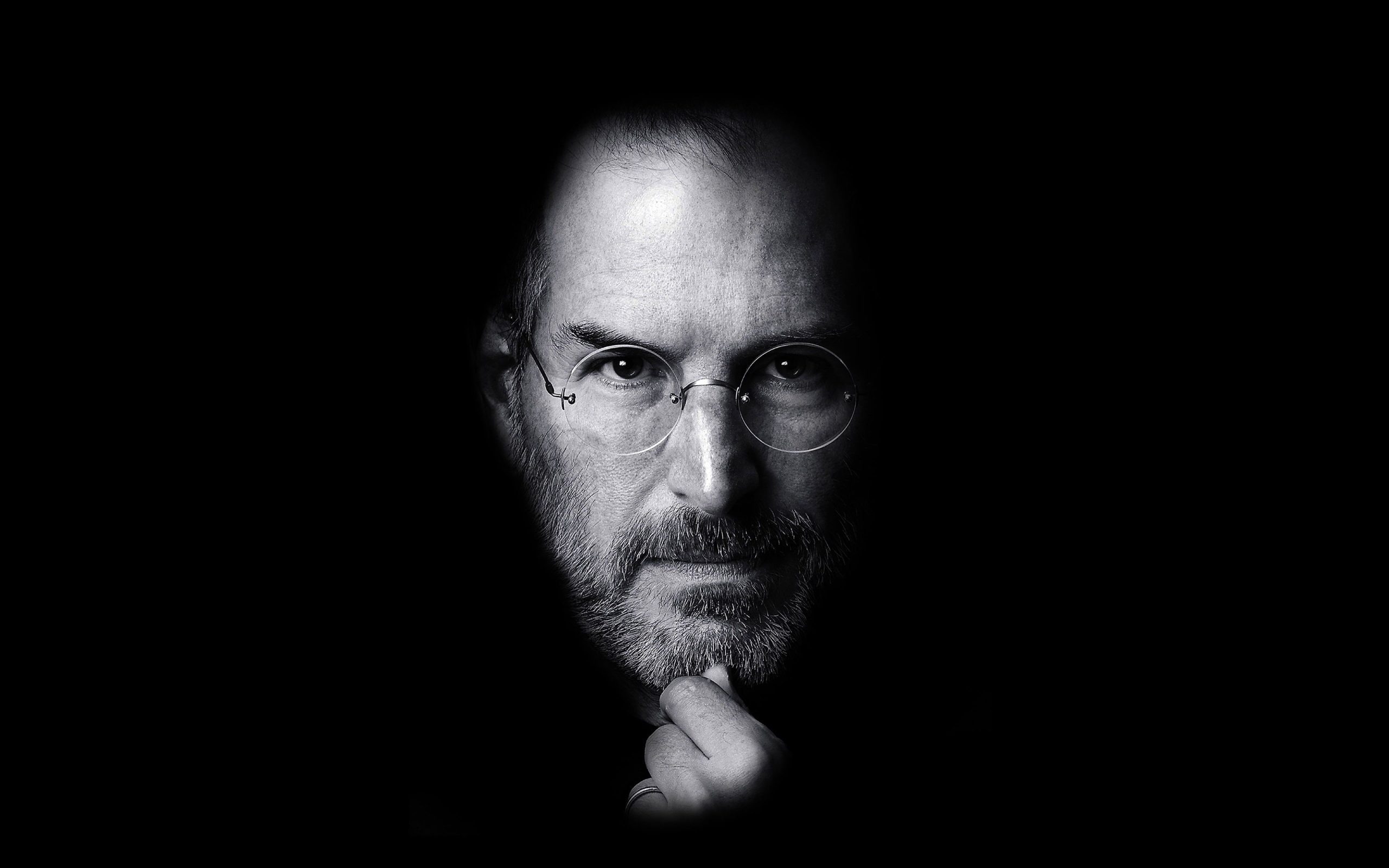
Steve Jobs, the visionary co-founder of Apple Inc., continues to fascinate not just for his innovations but for the astronomical wealth he amassed during his life. At the time of his death in 2011, his estate was valued at $7 billion, largely tied to Apple and Disney stock. But what if Jobs were still alive today?
Adjusting for stock splits, market growth, and inflation, his fortune could approach $55 billion, underscoring the extraordinary power of equity in transformative companies and illustrating how concentrated investments can amplify wealth in the long term.
Wealth Origins: Apple, Pixar, and a $1 Salary
Jobs’ fortune was never built on salaries. During his second tenure as Apple CEO (1997–2011), he famously earned $1 annually, letting his equity do the heavy lifting. When Apple went public in 1980, Jobs held an 11% stake valued at $130 million, though he sold most of it in 1985. His exit limited his early benefit from Apple’s growth but freed capital for ventures like Pixar.
In 1986, Jobs acquired Pixar from Lucasfilm for $5 million, adding $50 million in funding over the years. Disney’s 2006 acquisition of Pixar gave Jobs 138 million Disney shares, valued at $4.35 billion in 2011. Returning to Apple after buying NeXT for $429 million, Jobs received stock grants that made him the owner of 5.5 million Apple shares, worth roughly $2.08 billion at his death. Real estate and minor assets rounded out his net worth to $7 billion. His wealth came from a highly concentrated portfolio: Apple and Disney, rather than diversified holdings.
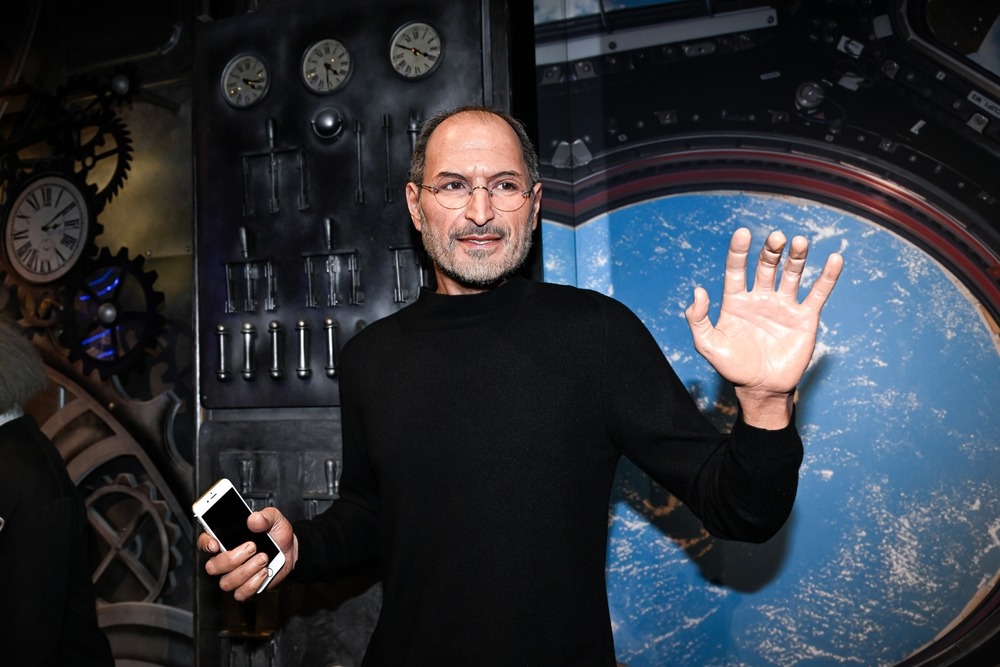
Steve Jobs immortalized in wax, showcasing his signature look and revolutionary iPhone, celebrating his lasting impact on technology.
Growth Over Time: Stock Appreciation and Market Dynamics
The hypothetical growth of Jobs’ holdings highlights the power of equity. Apple stock has split 7-for-1 in 2014 and 4-for-1 in 2020, multiplying his original 5.5 million shares to 154 million today. With Apple closing at $258.28 per share on January 29, 2026, this stake would be worth $39.8 billion. Disney’s shares, valued at $4.35 billion in 2011, would now total $15.4 billion at $111.58 per share—a 3.5-fold increase.
Inflation adjustments further reinforce the scale of Jobs’ hypothetical fortune. From October 2011 to January 2026, the U.S. consumer price index rose by about 55%, but his equity-heavy portfolio far outpaced inflation. Even accounting for market dips like the 2020 COVID-19 crash, Apple and Disney rebounded to create unparalleled compounded growth. Excluding dividends, Jobs’ 2011 holdings could have hypothetically grown from $6.43 billion to $55.2 billion, a 15.5% compound annual growth rate.
Estate Control: Laurene Powell Jobs and Strategic Stewardship
After his death, Jobs’ assets passed through revocable living trusts, avoiding probate and public disclosure. His widow, Laurene Powell Jobs, controls the estate through entities like Emerson Collective, prioritizing philanthropy, education, and social causes. The four children—Lisa Brennan-Jobs, Reed, Erin, and Eve Jobs—received multimillion-dollar inheritances but not the bulk of the estate.
Powell Jobs’ management allowed for strategic asset decisions, like the 2017 sale of nearly half the Disney stake, about 64 million shares for $7 billion. The estate remains under family oversight, preserving privacy while supporting both investments and charitable goals.
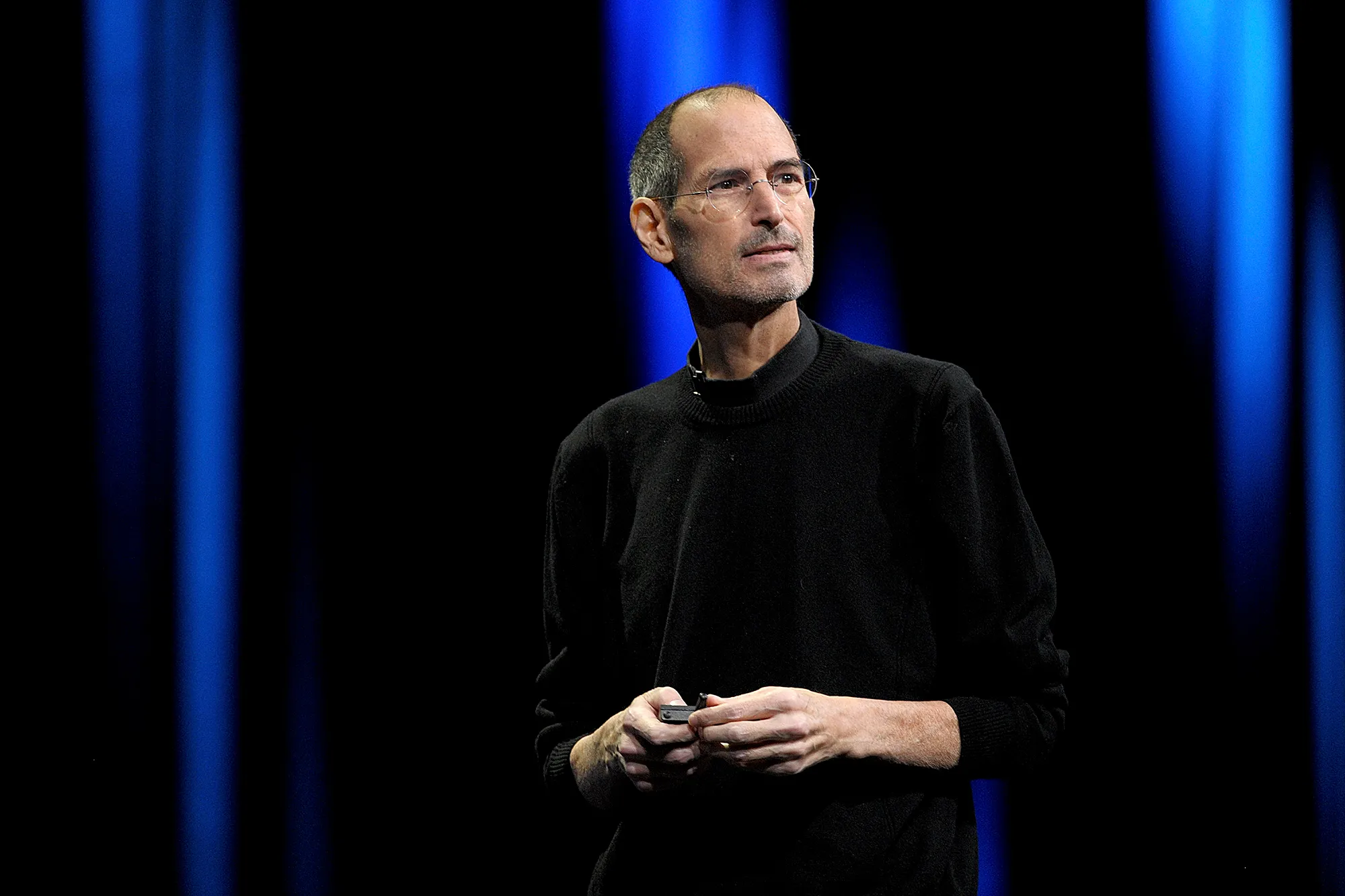
Steve Jobs captivating an audience during a keynote, illustrating his legendary presentation style that shaped the tech world.
Current Picture: Hypothetical vs Reality
If Jobs were alive today with unchanged holdings, his net worth could approach $55 billion, driven by Apple and Disney appreciation. In contrast, the actual estate is valued around $12.1 billion as of mid-2025, reflecting asset sales and philanthropic outflows. Powell Jobs retains about 74 million Disney shares (worth $8.25 billion) and a portion of Apple stock, now totaling over 150 million shares after splits.
This contrast illustrates the difference between hypothetical compounding and estate management decisions, emphasizing the lasting impact of early equity, market growth, and strategic planning. Jobs’ fortune exemplifies how high-risk, high-reward investments in transformative companies can create generational wealth while also allowing for purpose-driven philanthropy.
Lifestyle and Assets: Examining Steve Jobs' Personal Holdings
In analyzing the financial profile of Steve Jobs, his personal assets during his lifetime reflected a mix of strategic acquisitions and modest living relative to his wealth. Valued at approximately $7 billion at his death in 2011, his portfolio included real estate, vehicles, and high-value commissioned projects, often acquired through earnings from corporate equity. These holdings underscore themes of targeted investment in functionality and design, with ownership typically held personally or through family structures until transferred via trusts upon his passing.
Real Estate Acquisitions
Jobs' real estate assets focused on residential properties in California, emphasizing practicality over extravagance. In 1991, he purchased a seven-bedroom Tudor-style home on Waverley Street in Palo Alto for an undisclosed amount, serving as his primary residence. This 5,768-square-foot property, built in 1930, was valued at around $4 million in contemporary estimates, though exact figures remain private. It represented a family-oriented investment, housing Jobs, his wife Laurene Powell Jobs, and their children until his death.
Earlier, in 1984, Jobs acquired the Jackling House, a 17,250-square-foot Spanish Colonial Revival mansion in Woodside, California, for approximately $2 million. Set on six acres, the property was minimally furnished and used sporadically. Jobs sought to demolish it in favor of a smaller home, but legal disputes delayed this; the structure was eventually razed after his death in 2011, with the land retained by his estate.
Additionally, during the 1980s, Jobs invested in a luxury apartment in New York City's San Remo building, a cooperative on Central Park West, though specific purchase details and value are not publicly verified beyond its high-end status. These properties collectively accounted for a portion of his $572 million in non-equity assets at death, highlighting a preference for California-based holdings with potential for appreciation.
Vehicles and Transportation
Jobs' automotive choices emphasized German engineering, with acquisitions funded from personal wealth. He owned a 1966 BMW R60/2 motorcycle, purchased in the early 1980s for an estimated $3,000-$5,000, reflecting an interest in classic designs.
In later years, he drove Mercedes-Benz SL55 AMG convertibles, typically silver, acquired new every six months to exploit a California vehicle code allowing six months without permanent plates—each costing around $130,000. This practice, spanning the 2000s, resulted in multiple identical vehicles over time.
Jobs also owned Porsche 911 models, including Turbos, with similar replacement patterns; a 1980s 911 was valued at approximately $50,000 at purchase. Earlier in his career, he sold a Volkswagen Microbus for $1,300 in 1976 to fund Apple's prototype development, illustrating early asset liquidation for business growth. Vehicle holdings remained modest in number, prioritizing utility.
Aviation Assets
A significant asset was a Gulfstream V private jet, awarded by Apple's board in 2000 as compensation, valued at $40 million (with Apple incurring $88 million total including reimbursements). Customized for family and business travel, it facilitated cross-country trips and vacations. Ownership was personal, with operational costs partially covered by Apple for corporate use, representing an efficient wealth deployment for mobility.
Maritime Commission and Other Purchases
In 2008, Jobs commissioned the superyacht Venus from Feadship, designed by Philippe Starck, at an estimated cost of $120 million. The 78-meter vessel, featuring aluminum and glass construction, was funded from his Disney and Apple equity proceeds but completed in 2012 posthumously. It passed to his estate, now controlled by Laurene Powell Jobs.
Other notable purchases included a $5 million acquisition of Pixar from George Lucas in 1986, later augmented by $50 million in investments—a business asset that appreciated dramatically. Personal items like a Tiffany lamp and custom stereo system reflected minimalist expenditures, with no verified large-scale art or collectible portfolios.
Today, these assets' values have evolved: The Palo Alto home appreciated to over $30 million inflation-adjusted, while the yacht and jet remain under estate control, demonstrating how targeted acquisitions can sustain long-term financial impact.
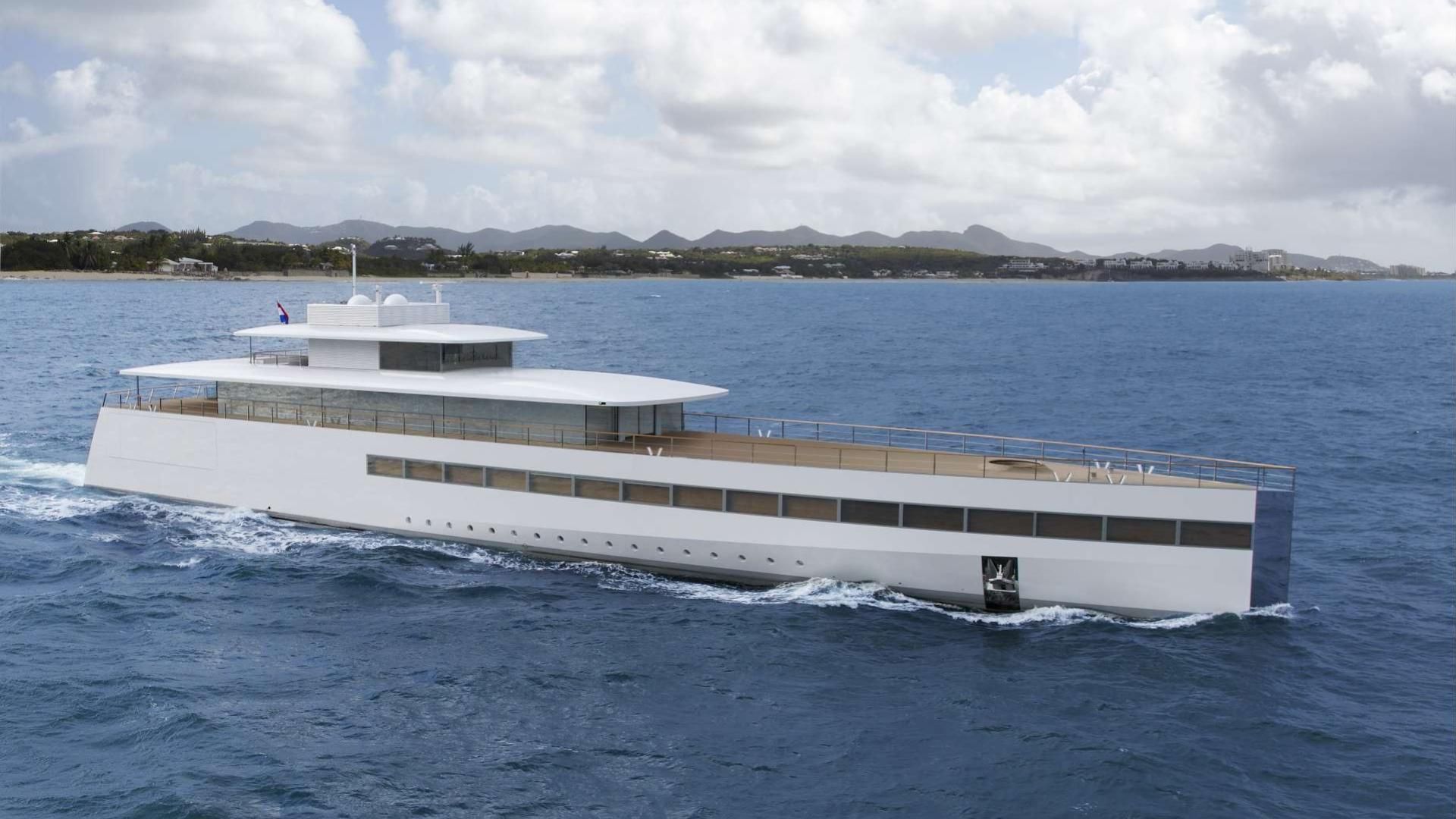
Steve Jobs' custom-designed yacht Venus, a symbol of his personal success and love for minimalist luxury.
Steve Jobs Wealth Insights: What People Want To Know
How many Apple shares did Steve Jobs hold at his death?
Jobs owned 5.5 million Apple shares in 2011, which would be equivalent to 154 million shares today after stock splits.
Did Steve Jobs have any major financial losses?
His main “loss” was selling most of his early Apple shares in 1985. This reduced his early potential gains but allowed him to invest in Pixar and NeXT.
How much of Jobs’ fortune went to charity?
While Jobs himself gave little publicly during his lifetime, Laurene Powell Jobs has directed billions through the Emerson Collective, focusing on education, immigration reform, and social impact projects.