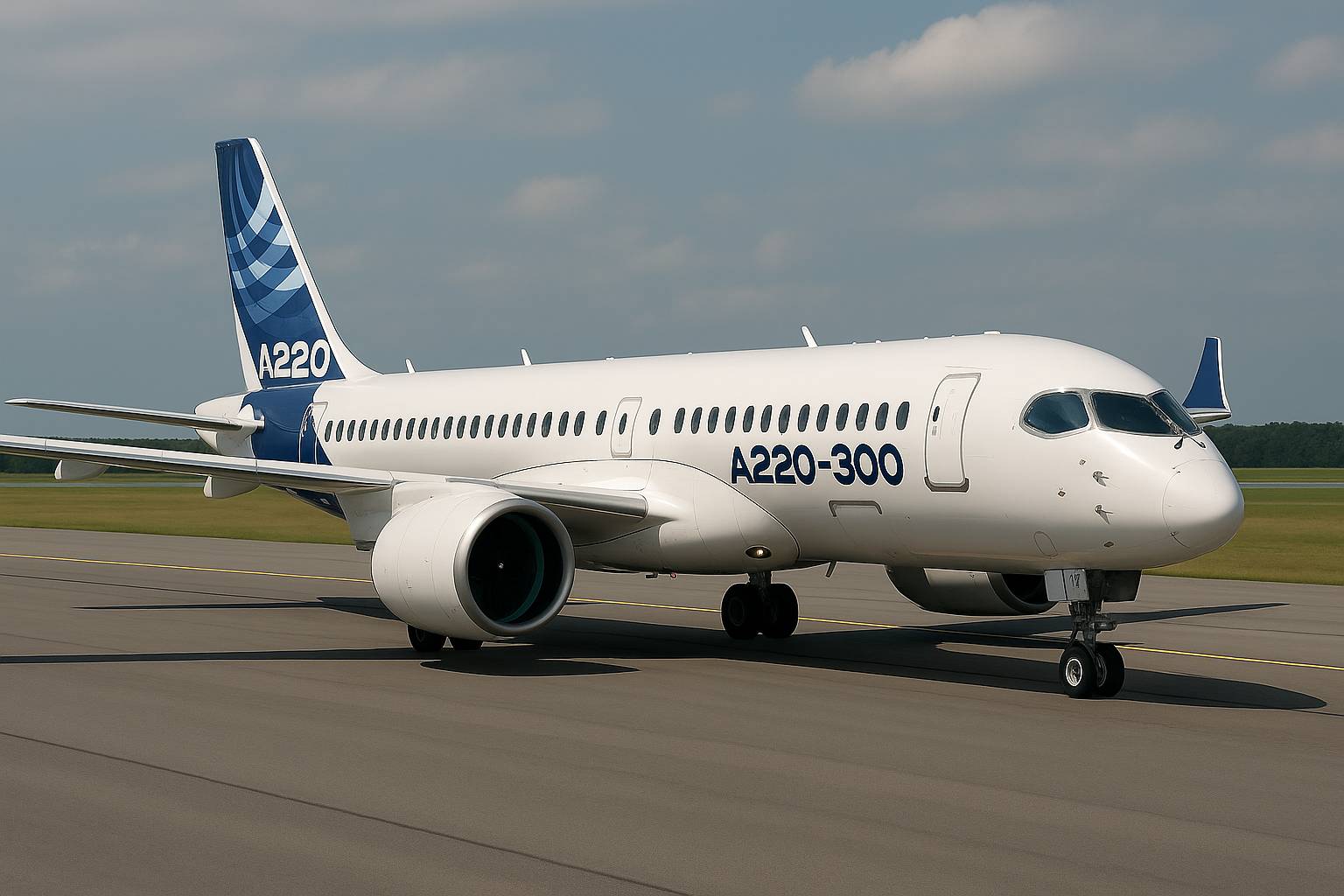
Airbus is pulling back from plans to quickly launch a larger A220 passenger jet after a muted response from key buyers, a setback that is highlighting growing caution around major investment decisions across the aviation sector.
Industry sources told Reuters that Airbus is wavering over when to launch a stretched version of the A220, with what had once been seen as a potential announcement at July's Farnborough Airshow now looking far less likely. While the company insists no decision has been made, the shift in tone reflects a market that appears less eager to embrace another major investment programme than it did just a few months ago.
The debate extends well beyond a single aircraft.
Large commercial jet programmes represent some of the biggest long-term industrial investments in the global economy. They require years of planning, billions of dollars in spending and confidence that airlines, leasing firms and passengers will continue supporting growth well into the future. When those decisions begin slowing down, it can offer a glimpse into how businesses are assessing risk more broadly.
Airbus has been studying a larger A220 that would carry around 180 passengers compared with roughly 160 on current versions. The proposal could improve the economics of a programme that has struggled to generate profits since Airbus acquired it from Canada's Bombardier in 2018. A larger aircraft would also allow Airbus to renegotiate supplier agreements and potentially reduce production costs.
Yet enthusiasm from key buyers appears mixed.
Leasing companies, which have become increasingly influential in determining which aircraft succeed commercially, are reportedly concerned about the potential impact on existing aircraft values. Airlines are also weighing whether lower operating costs are worth accepting a reduction in range, particularly at a time when fleet flexibility remains highly valuable.
The debate is unfolding as parts of the aviation sector continue dealing with production constraints and engine-related challenges. Airlines gathering for the International Air Transport Association summit in Brazil this weekend are still grappling with the fallout from durability issues affecting Pratt & Whitney engines, problems that have disrupted operations and complicated fleet planning decisions across the industry.
Those pressures are encouraging companies to slow major spending decisions and demand clearer returns before committing capital. Airlines may still like the economics of a larger aircraft, but many appear unwilling to move forward until more uncertainties are resolved.
Businesses rarely announce that confidence is weakening. More often, it shows up through delayed spending, postponed projects and slower investment decisions. The questions surrounding the A220 increasingly resemble that pattern.
Across many industries, companies are taking longer to sign off on expensive projects than they were a few years ago. Higher financing costs, tighter margins and uncertainty around future demand have pushed management teams to focus more heavily on proven returns. Expansion plans are still being pursued, but the bar for approval has become noticeably higher.
For Airbus, the timing matters because the A220 remains one of the few areas of its portfolio that has yet to consistently deliver the returns expected from a mature aircraft programme. A larger model could strengthen its position against Brazilian rival Embraer while helping improve profitability. Delaying a decision, however, also delays potential gains.
Airbus is also trying to avoid creating problems elsewhere in its own portfolio. A larger A220 could attract new customers, but it might also overlap with aircraft Airbus already sells successfully, creating fresh questions about pricing and demand. Balancing those competing interests is becoming increasingly important as the company evaluates its next move.
Recent demand for the existing A220 has eased some of the immediate pressure to act. AirAsia's order for 150 aircraft demonstrated there is still strong appetite for the current model, giving Airbus more flexibility to wait while it evaluates the market.
Seen in isolation, this looks like an aircraft programme delay. Viewed more broadly, it reflects a business climate in which large investment decisions are taking longer and facing greater scrutiny. Companies still want growth. What they seem less willing to do is take expensive bets before the economics are clear.
Airbus may still launch the larger A220. What has changed is the speed of the conversation. Earlier this year the industry was talking about when the aircraft would arrive. Now the discussion has shifted to whether buyers are ready to commit at all.