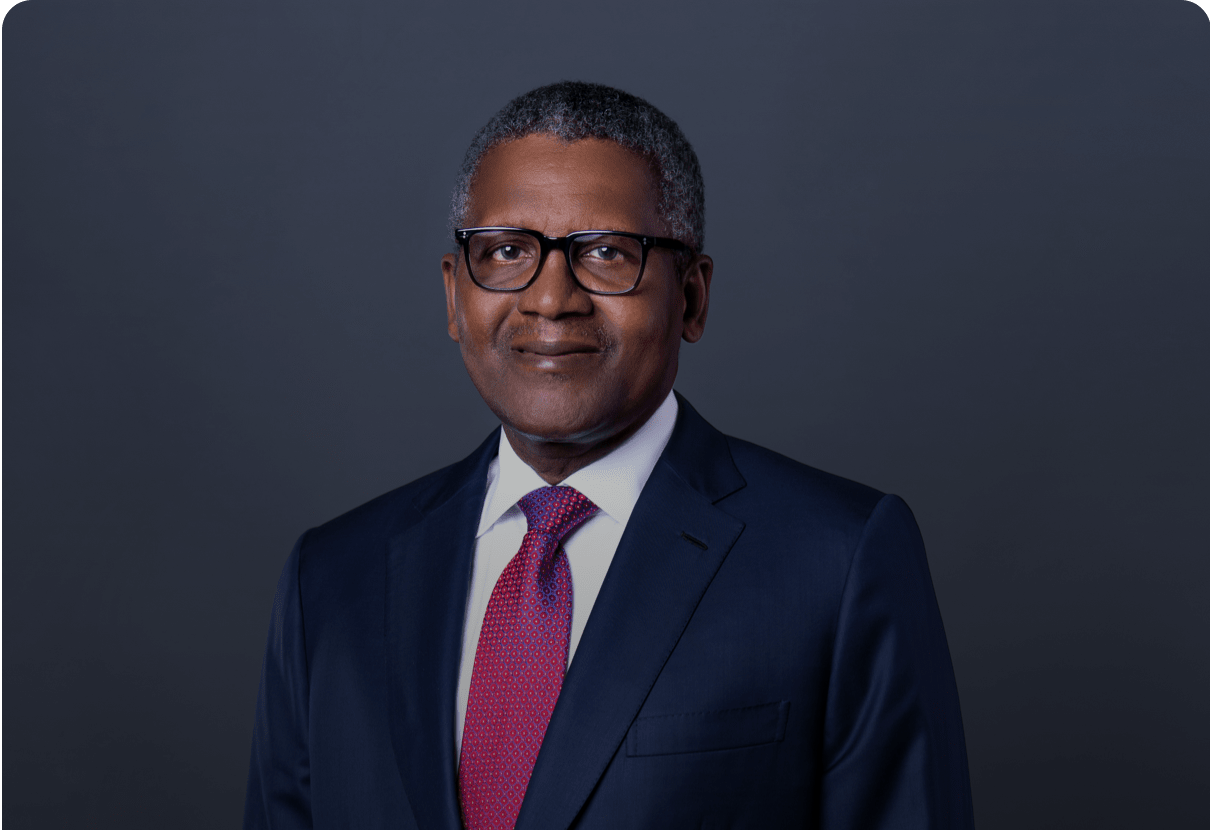
Aliko Dangote is preparing to take Dangote Cement to London, a move that would put a clearer market price on one of the biggest assets behind Africa’s largest personal fortune. The Lagos-listed cement group is valued at almost $13 billion, and the plan to sell about 10% of its shares to outside investors would give global funds a rare chance to value part of Dangote’s industrial empire directly.
The listing plan comes after a strong run for Dangote’s public and private assets. Dangote, founder of Dangote Group and controlling shareholder of Dangote Cement, is currently estimated to be worth about $35.4 billion, making him Africa’s richest person. The London plan would put part of that wealth in front of global investors and create a clearer valuation for Dangote Cement outside Nigeria.
Who Is Aliko Dangote?
Aliko Dangote is a Nigerian industrialist, founder of Dangote Group and Africa’s richest person. His businesses span cement, oil refining, fertiliser, sugar, salt, packaged food and other industrial assets, placing him at the centre of African infrastructure, energy and consumer supply chains. Dangote built his fortune from cement trading, then expanded Dangote Group into manufacturing, refining, fertiliser, food and other industrial assets. The group now includes sub-Saharan Africa’s biggest cement producer and the continent’s largest oil refinery.
How Much Is Aliko Dangote Worth?
A reasonable current estimate for Aliko Dangote’s wealth is $33 billion to $37 billion, with Bloomberg’s $35.4 billion figure sitting near the middle of that range. The lower end allows for volatility in Nigerian-listed shares, currency effects and uncertainty around private-asset valuations. The upper end allows for the refinery’s scale, Dangote Cement’s share-price gains, possible listing premiums and the value of other closely held industrial assets. Dangote Cement’s latest public results support that range because they show the listed business behind a large part of his fortune is still growing. In its Q1 2026 unaudited results, Dangote Cement reported group revenue of ₦1.198 trillion, up 20.4% year-on-year, while profit after tax rose 53.5% to ₦321.1 billion and earnings per share increased 55.7% to ₦19.14. Those figures help explain why the London listing carries financial weight. Dangote’s wealth is not a bank-balance figure; it is mainly a valuation of controlled assets, and Dangote Cement’s latest quarter shows revenue, profit and EPS still moving higher before the company asks international investors to price part of the business.
How He Built the Fortune
The largest asset behind Dangote’s fortune is the Dangote Oil Refinery, a $20 billion project that has pushed his wealth beyond cement and deeper into energy. His fortune also rests on large stakes in Dangote Cement and the refinery project, alongside interests in sugar, salt, fertiliser, packaged food and other industrial assets. Dangote Cement’s own investor presentation adds another layer to the valuation picture. The company reported Q1 2026 EBITDA of ₦567.1 billion, up 22.8%, with Nigeria revenue of ₦861.8 billion and Pan-African revenue of ₦370.0 billion. The same investor materials show Q1 2026 group volumes up 13.8% to 7.5Mt, which supports the idea that Dangote’s cement wealth is tied to operating growth rather than a passive paper valuation alone.
That ownership structure puts Dangote far above a conventional executive-pay story. He is wealthy because he controls productive assets in sectors tied to construction, fuel, agriculture and basic consumption. Cement links him to housing and infrastructure. Refining links him to fuel supply, exports and energy security. Fertiliser and food manufacturing link him to agriculture and household demand. The pattern has been consistent for decades: build control in industries where demand is structural rather than fashionable. Dangote’s wealth grew from ownership of capacity, distribution and pricing power in markets where population growth, urbanisation, construction and energy needs keep demand alive. It is the same economic logic now driving the battle for AI dominance, where the most valuable companies are not only selling intelligence, but controlling the chips, data centres, energy and cloud infrastructure needed to deliver it.
Why the London Listing Changes the Valuation
Dangote Cement is already public in Lagos, but London would change the audience. A secondary listing would move part of the business from a primarily Nigerian-market valuation into the view of global institutions that may price it differently because of liquidity, governance standards, index eligibility and access to larger pools of capital. Dangote Cement’s investor-relations page listed the share price at ₦1,040 as of May 6, 2026, which shows the Lagos market had already priced the business at a high level before any London listing. That public-market anchor is useful when estimating Dangote’s wealth because the cement stake is not being valued from guesswork alone. For Dangote, the financial point is valuation. A concentrated industrial fortune can look huge on paper while still carrying a discount because much of it is tied to local markets or private holdings. Selling about 10% of Dangote Cement would create a new valuation marker and potentially narrow the gap between how local markets price the asset and how international investors value African infrastructure exposure.
Strong demand in London could support Dangote Cement’s valuation and strengthen the public-company part of Dangote’s fortune. Weak demand would reveal how much caution global investors still attach to African assets, currency risk, corporate control, liquidity and emerging-market exposure. The cement plan also sits beside another potential market test. Dangote reportedly plans to sell up to 15% of his oil-refining company through a Lagos IPO this year. Together, the cement listing and refinery IPO point to a shift from tightly held industrial control towards selective market pricing of the empire’s biggest assets.
Dangote is not giving up control. He is inviting outside investors to put prices on businesses that have often been valued through local trading, private estimates and billionaire-index methodology. For a fortune built from concentrated ownership, that shift changes how the market sees the wealth behind the headline number.
London Listing Test
The London Stock Exchange would gain a high-profile international listing at a time when the UK market has struggled to attract major companies. Recent UK listing-rule changes were designed to make London more competitive, and Dangote has said lower minimum listing requirements made the city more appealing. The outcome would say something about both sides. If London can attract demand for a company with Dangote Cement’s scale, African footprint and strong share-price momentum, the reforms gain a useful proof point. If demand disappoints, it would show that easier rules cannot by themselves remove investor concerns about liquidity, currency exposure, governance and emerging-market risk.
Aliko Dangote’s estimated wealth remains $33 billion to $37 billion, with Bloomberg’s $35.4 billion figure the clearest public anchor. The London listing plan does not change that number overnight. It changes the way part of the number may be tested, priced and understood by global investors.
More from Finance Monthly: Why Disney Shares Rose After Park Attendance Fell
Bob Iger Net Worth: Disney CEO Pay, Stock Wealth and the $45.8M Package