As shareholders press for transparency on Bernard Arnault’s succession plan at LVMH, concerns are mounting over the 76-year-old billionaire’s long-term role after he again extended his CEO term. Despite these questions, Arnault continues to steer the world’s largest luxury conglomerate through market volatility and global economic shifts.
His net worth, estimated between $180 billion and $200 billion, is almost entirely tied to his family’s controlling stake in LVMH, illustrating a legacy built on strategic acquisitions and careful brand cultivation. This fortune positions Arnault among the wealthiest individuals globally, blending exceptional business acumen with a lifelong passion for art, culture, and family continuity.
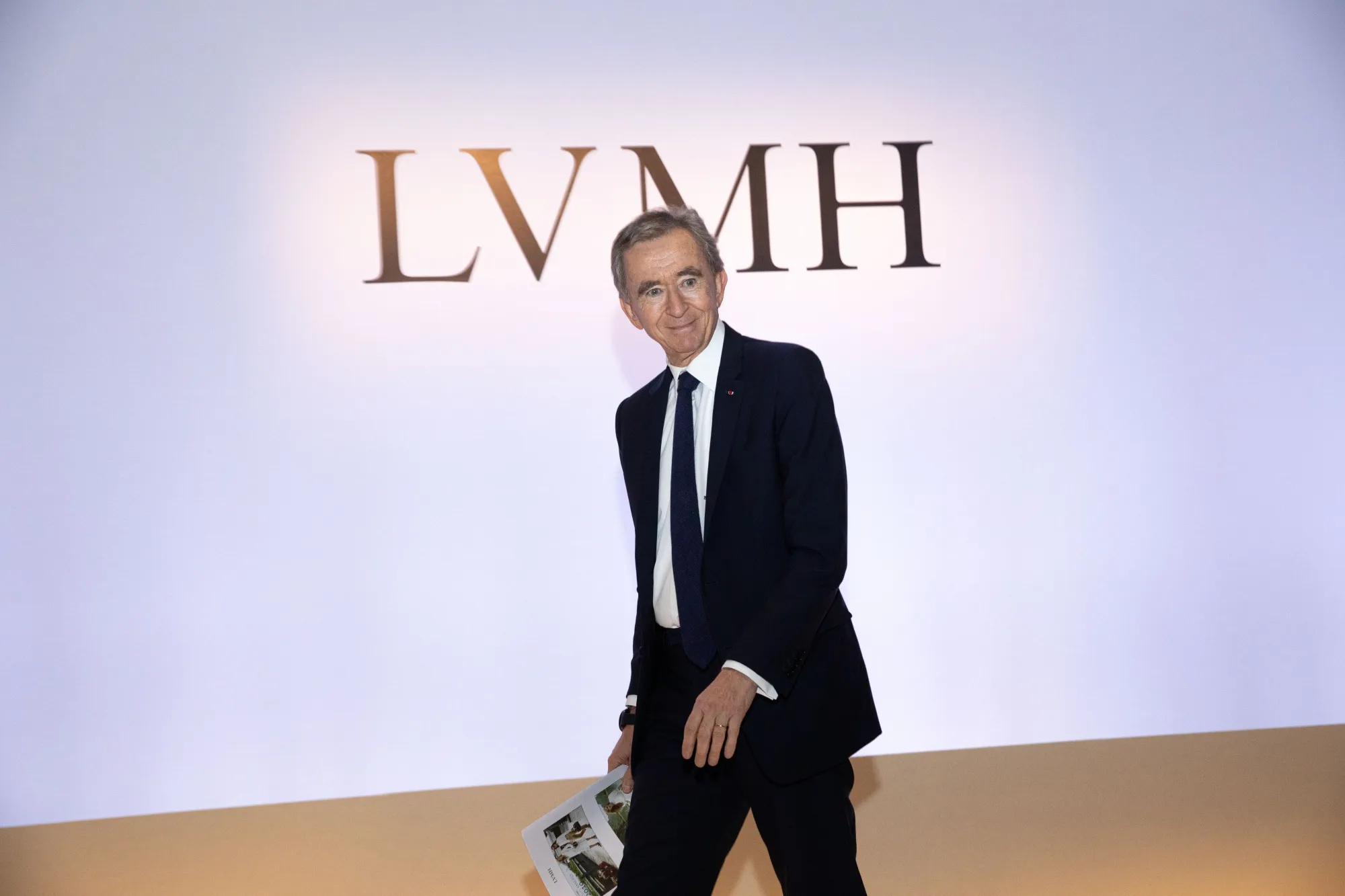
Bernard Arnault, chairman and CEO of LVMH, pictured in front of the company’s logo as questions about the luxury group’s succession plans mount.
Early Life: Northern French Roots Shape Precision and Ambition
Born 5 March 1949 in Roubaix, France, Bernard Jean Étienne Arnault grew up in a household that balanced industry and art. His father, Jean Arnault, owned a civil engineering firm, while his mother, Marie-Josèphe Savinel, was a pianist, exposing Bernard to both technical discipline and creative thinking from an early age. Raised in a devout Catholic household in France’s textile hub, he displayed early entrepreneurial flair, playing shopkeeper with siblings and absorbing lessons from his father’s business operations.
Arnault excelled academically, attending Lycée Faidherbe in Lille before studying at the prestigious École Polytechnique, where he graduated in 1971 with degrees in civil engineering and mathematics. These formative years cultivated a methodical, analytical mindset, later reflected in his precise, data-driven approach to luxury brand acquisitions and global business strategy.
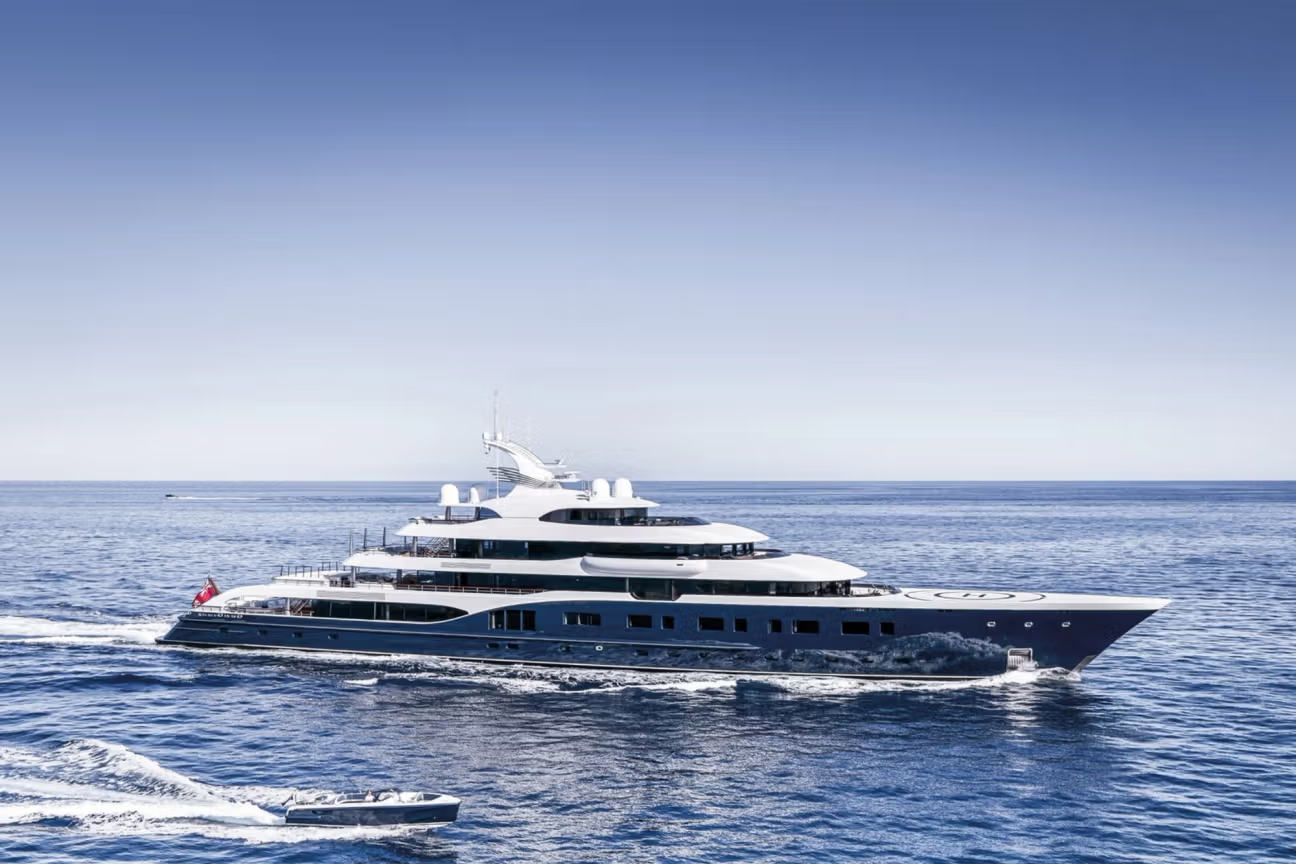
Bernard Arnault’s $150 million superyacht Symphony, a 101-metre vessel symbolising the LVMH chairman’s immense wealth and global lifestyle.
Career: From Family Construction Firm to Luxury Titan
Arnault began his professional journey at his father’s construction company, Ferret-Savinel, in 1971. By 1978, he became company president, gradually steering the firm toward real estate development and strategic growth initiatives. His first bold foray into luxury came in 1984, with the $15 million acquisition of the bankrupt Boussac group, gaining control of Christian Dior and laying the foundation for his dominance in fashion.
In 1989, Arnault engineered the landmark merger of Louis Vuitton and Moët Hennessy into LVMH, assuming the roles of chairman and CEO while systematically acquiring more than 75 iconic brands, including Sephora, Tiffany & Co., and Fendi. Through these calculated moves, Arnault transformed a single construction family business into a global luxury powerhouse, now valued at over €375 billion in market capitalization. His leadership has emphasized digital innovation, sustainability, and careful integration of his five children into executive roles to ensure continuity.
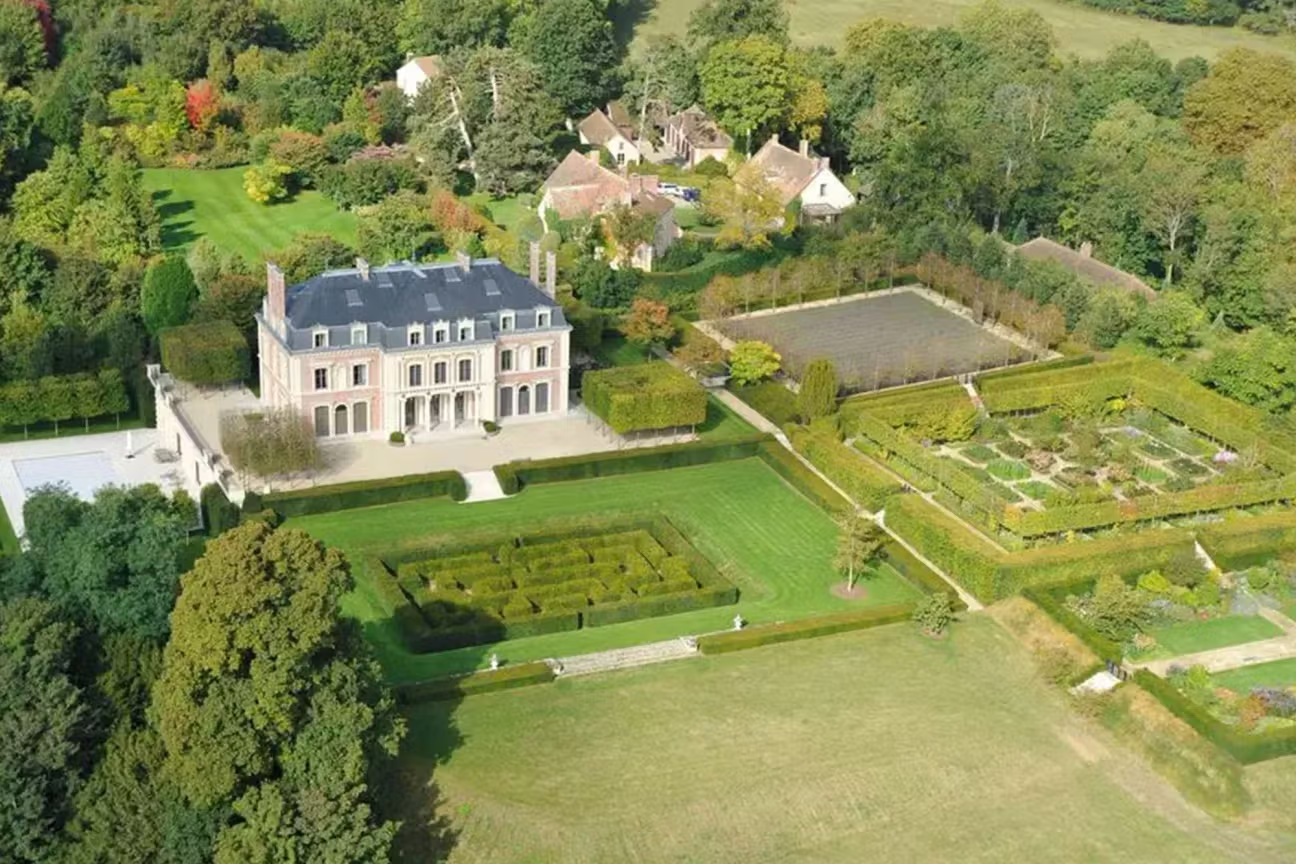
An aerial view of Bernard Arnault’s Paris residence, a landmark property reflecting the LVMH chief’s wealth and long-standing ties to French culture.
Net Worth: Empire Built on Luxury Brands and Strategic Vision
Bernard Arnault’s net worth of $180–200 billion stems almost entirely from his family’s 48% stake in LVMH, making him one of the richest people on the planet. Unlike wealth built primarily through business ventures or public-facing investments, Arnault’s fortune reflects ownership of highly profitable, globally recognized luxury brands, augmented by a diversified portfolio of real estate and minority stakes in other companies.
Professional Earnings and Stock Holdings
Arnault’s wealth breaks down mainly through LVMH shares, with the conglomerate boasting a market capitalization exceeding €375 billion and annual revenues around €86 billion from its portfolio of over 75 brands, including Louis Vuitton, Dior, and Sephora. Additional contributions come from holdings in companies like Carrefour and Hermès, along with an expansive real estate portfolio spanning vineyards, hotels, and commercial properties across Europe and the United States.
His CEO salary hovers around €10 million annually, supplemented by substantial dividends—often in the hundreds of millions—and performance-based bonuses tied to LVMH's growth, while family trusts and holding companies like Agache provide long-term control and security, minimizing reliance on liquid cash amid market fluctuations. These structures not only safeguard the family's influence but also optimize tax efficiency, ensuring the wealth remains resilient even as luxury demand ebbs and flows with global economic trends.
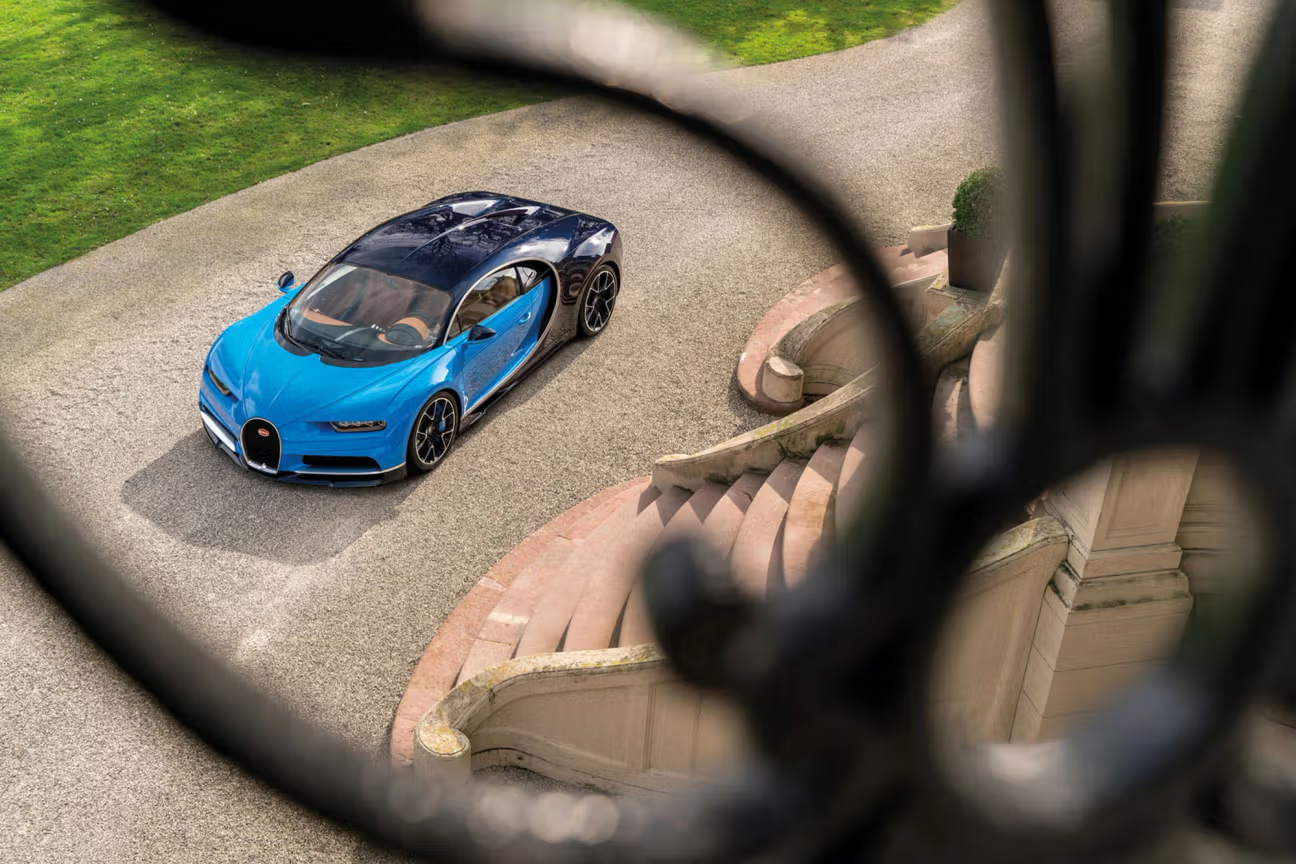
Bernard Arnault’s blue Bugatti Chiron, a rare hypercar that reflects the LVMH chairman’s taste for engineering excellence and understated luxury.
Building Wealth Through Acquisitions and Brand Expansion
Arnault’s financial success has been driven by strategic acquisitions and brand revitalization. After the 1984 Dior acquisition for $15 million through the bankrupt Boussac group, the 1989 LVMH merger created a foundation for subsequent billion-dollar purchases, including Tiffany & Co. for $15.8 billion in 2021, expanding the conglomerate’s reach into jewelry and watches, alongside earlier deals like Sephora in 1997 and Fendi in 2000. He has modernized brands through e-commerce, digital marketing, and sustainability initiatives, targeting emerging luxury markets in Asia and beyond, where LVMH derives over 40% of its sales from high-growth regions like China.
Groupe Arnault, his family office, channels capital into technology startups and other ventures, blending innovation with the preservation of heritage brands through investments in areas like AI-driven personalization and eco-friendly production. This strategy helped LVMH generate €86 billion in annual revenue, solidifying Arnault’s reputation as a visionary in the global luxury sector, with a focus on long-term value creation that has seen the company's stock rise over 500% in the past decade alone.
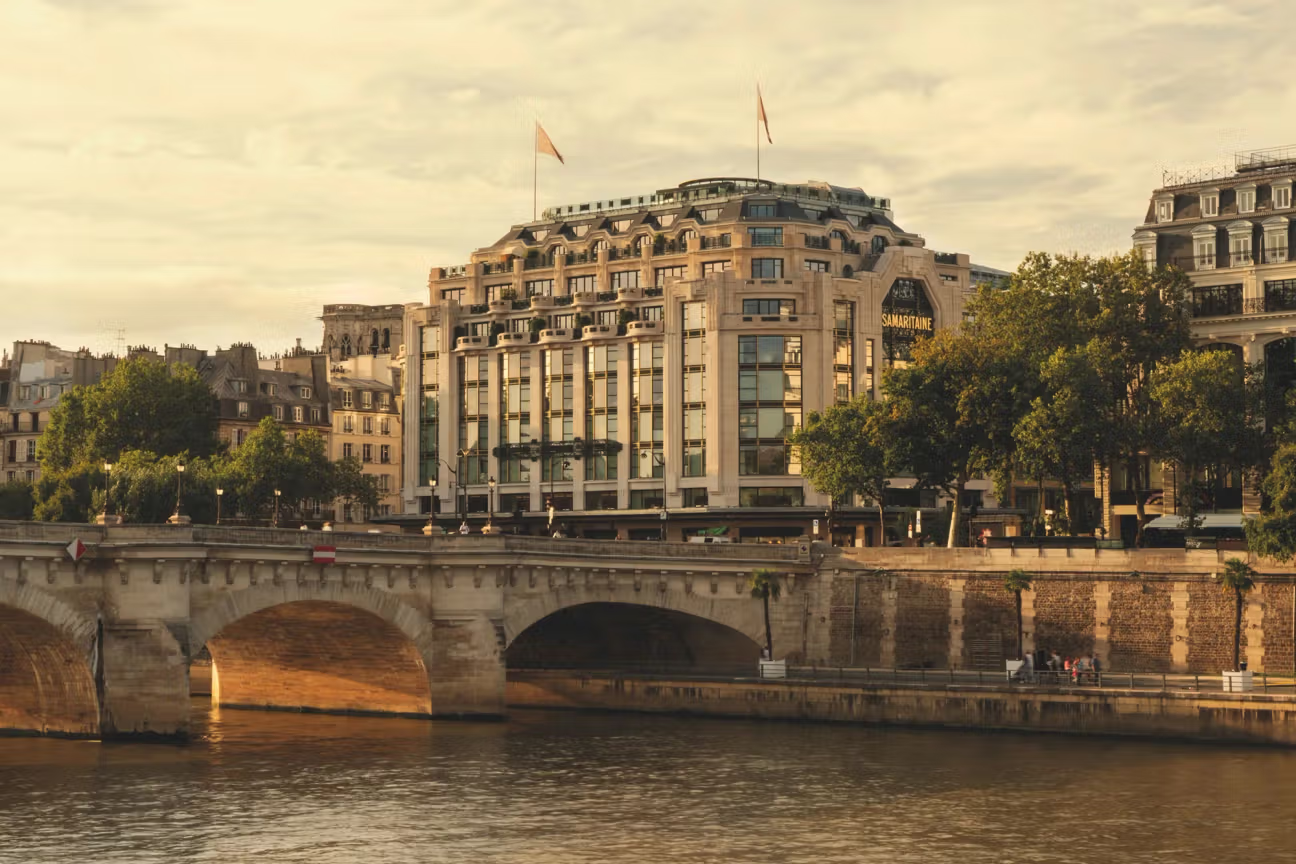
Cheval Blanc, the ultra-luxury hotel brand owned by Bernard Arnault, exemplifying LVMH’s expansion into high-end hospitality and experiential luxury.
Lifestyle and Notable Assets: Opulence with Purpose
Arnault enjoys a luxurious lifestyle centered on family, culture, and strategic indulgence. He resides in a $200 million Paris mansion housing priceless art, alongside other properties including the Château Cheval Blanc winery in Bordeaux valued at $200 million, a $137 million private island in the Bahamas for ultimate seclusion, and a portfolio of vineyards in regions like Saint-Émilion and Pomerol that produce acclaimed wines under the LVMH umbrella. His Beverly Hills holdings include multiple multi-million-dollar homes, such as a $30 million estate acquired for expansion purposes, balancing business and leisure needs across continents.
Transportation features include private jets, such as a Bombardier Global 7500 worth around $75 million for efficient global travel, and yachts, notably the $150 million Symphony—a 101-meter vessel with amenities like a helipad, indoor pool, and glass-bottomed spa—ensuring mobility with unparalleled privacy. While details on his car collection are largely private, it likely includes elite models from Ferrari, such as a LaFerrari valued over $1.4 million, and Mercedes classics, prioritizing discretion over public display in line with his understated public persona.
Arnault’s art collection, displayed in the Fondation Louis Vuitton—a €100 million Frank Gehry-designed museum in Paris—contains works by Picasso, Warhol, Basquiat, and Hirst, exceeding $1 billion in value and serving as both a personal passion and a cultural asset that appreciates over time. He channels millions into cultural philanthropy, including €200 million for the Louvre and Notre-Dame restorations, plus additional pledges like €10 million for French hospitals during crises, reflecting a philosophy of investing in timeless value rather than ostentatious display, while fostering goodwill that indirectly bolsters LVMH's brand prestige.
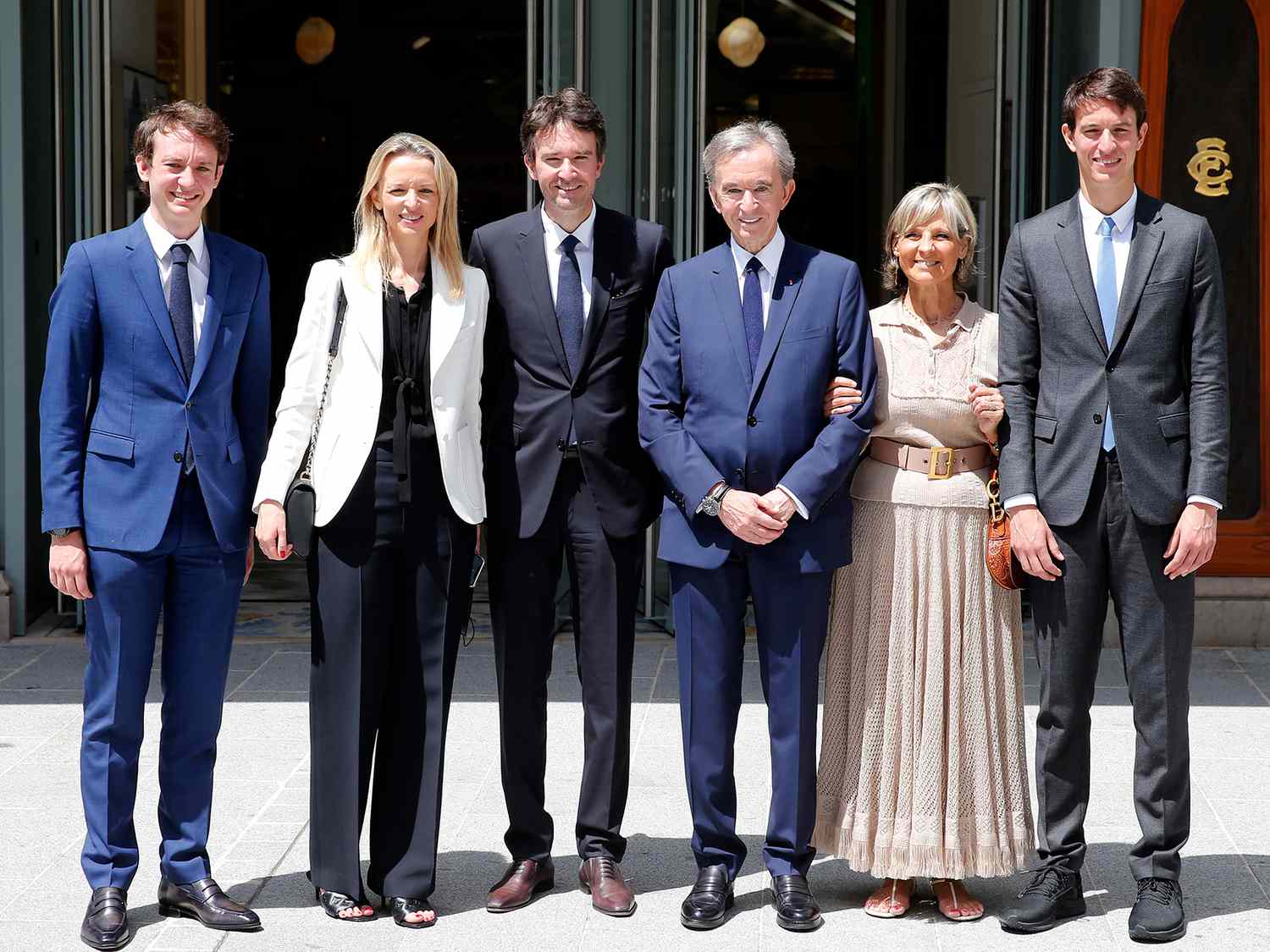
Bernard Arnault pictured with his wife and five children, reflecting the family-driven structure behind the LVMH empire and its multigenerational leadership.
Key Questions About Arnault’s Wealth and Legacy
How might succession uncertainties affect Arnault’s net worth?
With five children holding key roles at LVMH, unclear succession plans could cause stock volatility, potentially impacting billions in value. Family trusts, however, help mitigate these risks and ensure long-term stability.
What role do Arnault’s art investments play in his wealth?
His billion-dollar collection both appreciates as an asset class and enhances LVMH’s cultural prestige, yielding intangible benefits like brand elevation and tax-efficient philanthropy.
Could trade tensions affect his fortune?
Recent tariff threats, such as 200% duties on French wines, have temporarily reduced his wealth by billions via stock market reactions, highlighting sensitivity to geopolitical pressures despite diversified holdings.
Closing Thoughts: Luxury, Vision, and Legacy
Bernard Arnault exemplifies the intersection of strategic business vision, cultural investment, and personal legacy. His net worth of $180–200 billion reflects decades of disciplined growth, calculated risk-taking, and careful stewardship of luxury brands. As succession questions emerge, the French billionaire’s influence in both global markets and art patronage ensures that his empire will remain a defining presence for generations.