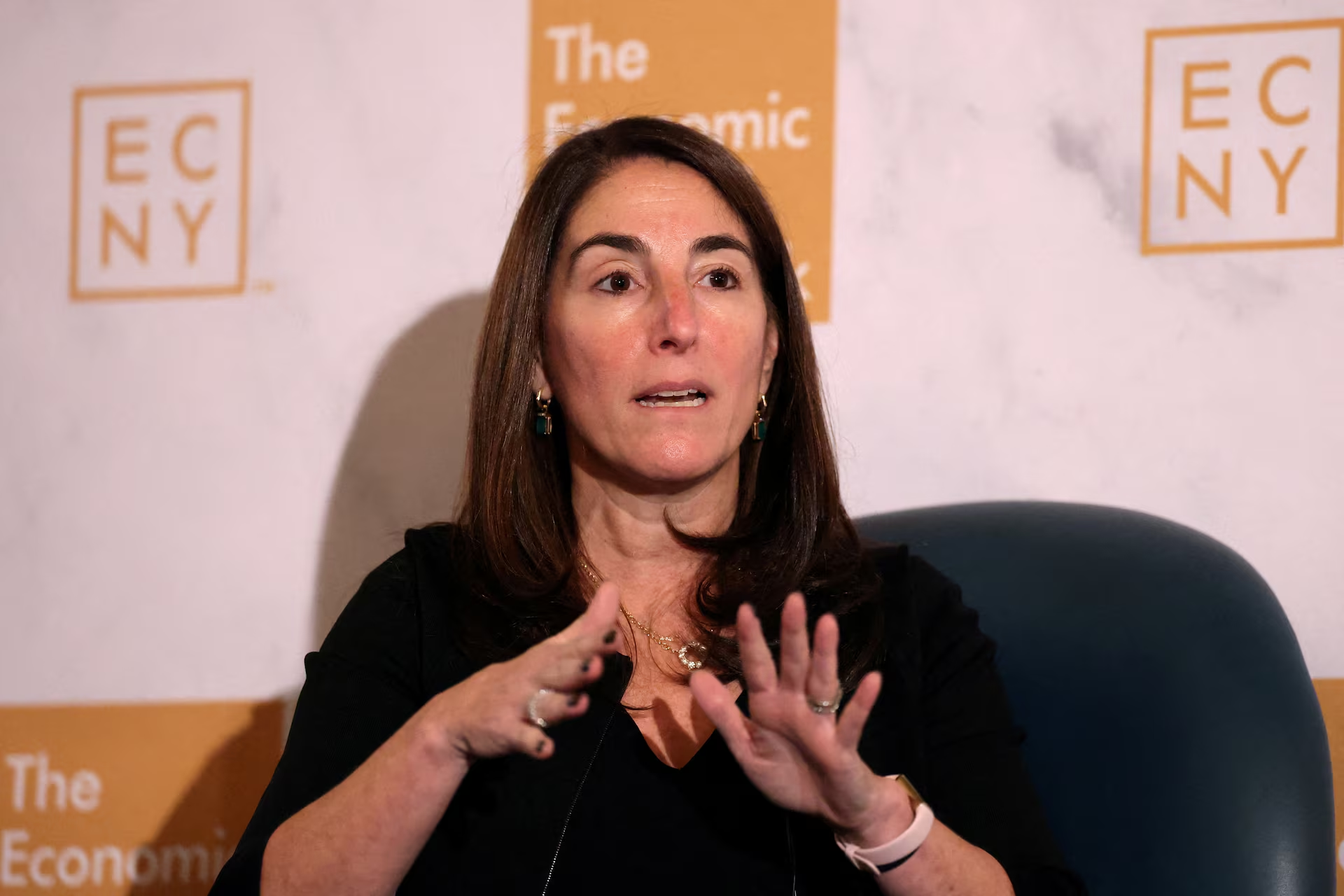
Beth Hammack, president of the Federal Reserve Bank of Cleveland, has said policymakers still have time to assess incoming economic data before deciding their next monetary-policy move, after September employment figures showed US hiring slowing.
Speaking to PBS following the latest employment report, Hammack said she places greater weight on underlying trends than on any single monthly data release. The Federal Open Market Committee is due to meet on October 27-28, leaving policymakers further inflation and economic data to assess before the next rate decision.
US nonfarm payroll employment increased by 29,000 in September, while the unemployment rate was 4.2%. The Bureau of Labor Statistics also revised July and August payroll growth down by a combined 60,000 jobs. Average hourly earnings increased 0.1% during September and were 3.0% higher than a year earlier.
Hammack indicated that employment remains around her assessment of maximum employment, while inflation continues to be the greater concern. She told PBS that unemployment has remained relatively stable and warned that persistent inflation could become harder to control if households and businesses begin treating repeated price increases as normal.
That distinction matters because the Federal Reserve has recently returned to tighter policy. At its September 15-16 meeting, the FOMC raised the target range for the federal funds rate by 0.25 percentage point to 3.75%-4.00%. The decision was unanimous, with the Fed saying inflation remained elevated and that the increase would support a more timely return to its 2% objective.
The weaker September hiring figures add another factor to the October decision, but Hammack's comments stop short of signalling how she believes the Fed should vote. Her emphasis is instead on assessing the full body of data before the meeting while keeping inflation firmly in focus.
For CFOs and finance directors, that leaves the cost-of-capital outlook unusually sensitive to incoming economic releases. Businesses with floating-rate borrowing, planned bond issuance or refinancing requirements cannot assume that softer employment automatically means cheaper money. Treasury teams also face continued uncertainty over dollar funding costs, bond yields and currency hedging as expectations around the Fed's policy path change.
September consumer-price data are scheduled for October 14, followed by producer-price data on October 15. The Federal Reserve will also publish its Beige Book on October 14, providing policymakers with further evidence on business activity, hiring and pricing conditions across its districts.
Hammack's stance reinforces the importance of looking beyond headline payroll numbers. The September report showed hiring slowing, but unemployment remained relatively stable, while the Cleveland Fed president continues to see inflation as the greater risk to the central bank's dual mandate.
Finance teams planning funding or investment decisions through the final quarter may therefore need to stress-test against both an unchanged policy rate and a further increase. The next few weeks of inflation and activity data will help shape the Fed's October decision rather than the September jobs report determining the outcome on its own.