Author: Livio Mangiatordi
Publication Date: December 12, 2024
In October 2024, the international expert council announced the results of the prestigious "Era of Innovations" competition. A professional jury reviewed over 1,500 applications from around the world and selected just two winners in the key categories.
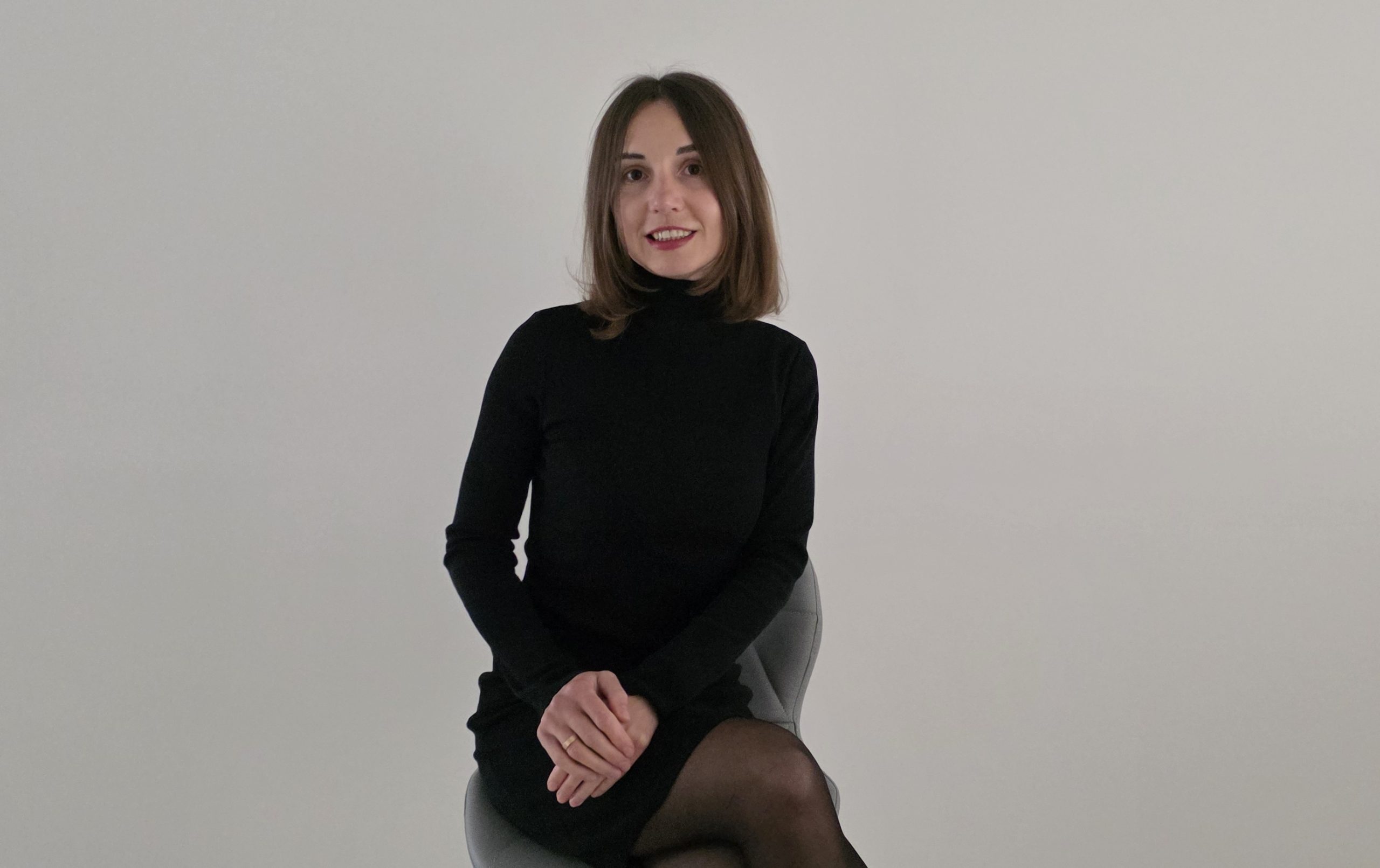
The FinTech Innovator category award went to Tatsiana Masiuk, an expert in international finance and project management. Her career path includes successful work at the Ministry of Finance, structuring large syndicated loans, and optimizing business processes in the US telecommunications sector.
The editorial team of Finance Monthly spoke with Tatsiana to discuss effective tools for raising international capital and modern methods of operational management.
— Tatsiana, congratulations on receiving the award. What specific achievements of your team did the jury evaluate this year?
— Thank you. The expert council analyzed the measurable economic indicators of my projects over the past few years and evaluated the ability to integrate technological control tools into traditional corporate finance.
The main selection criterion was the real value of the projects to the business, including increasing operational efficiency and improving access to international financing. Winning the competition among 1,500 participants confirms the effectiveness of the management methodologies we selected.
— Let's move on to your experience with major deals. How do you raise $85 million in foreign markets?
— The process of raising capital always begins with a deep internal audit of the borrower. International investors meticulously evaluate financial and operational risks.
My portfolio includes a case involving a large bank where we focused on structuring complex financial instruments. This allowed us to fully support foreign economic activities. We initiate negotiations with foreign partners only after establishing a transparent deal structure. Capital prefers predictability and clear repayment mechanisms.
— You managed the raising of a syndicated loan worth €120 million. What is the main challenge when working with a pool of foreign investors?
— The primary task of a financial manager in such projects is the synchronization of terms. A syndicated loan implies that a group of independent financial institutions provides a single loan under shared rules.
We negotiated to align legal and financial conditions for three months. Each foreign bank fiercely protected its interests. Our team found a compromise thanks to precise mathematical calculations and the creation of a transparent mechanism for share distribution. These resources were successfully directed toward the development of exporting enterprises.
— In such large-scale transactions, precise wording is critical.
— In international finance, this is standard. Any inaccuracy in a contract can completely block a deal that has been under preparation for six months.
— Previously, you worked at the Ministry of Finance of the Republic of Belarus and dealt with sovereign Eurobonds. How does this experience help you now in the corporate sector?
— Working in a government body provides a systemic understanding of macroeconomic processes. My responsibilities included coordinating interactions with international rating agencies like Fitch Ratings and the OECD. This directly influenced the reduction of government borrowing costs.
The state uses Eurobonds to diversify its sources of funding. I apply this exact same principle in commercial business. A company should not depend on a single creditor. Experience in managing public debt teaches you how to scale solutions to the level of entire industries.
— You also co-authored the concept for the Investment Fund under the "Belt and Road" initiative. Could you tell us more about that?
— The main challenge was the difference between national legal and financial systems. Foreign investors operate under their own regulations, while the host side is guided by local legislation.
My role was to develop a hybrid concept for the fund. We established clear legal mechanisms for investment protection and profit distribution that fully satisfied both parties. This created a solid foundation for long-term cross-border partnership.
— You studied at the Joint Vienna Institute under World Bank and IMF programs, and also completed internships in India and China. What fundamental rule of effective management have you identified for yourself?
— The key rule is the uncompromising standardization of all operational processes. International investment funds refuse to cooperate if a company's internal procedures do not meet global standards.
In Austria, the training focused on developing competencies in financial markets. In India, I studied the best practices of the banking sector. This knowledge proves that an organization's financial system must operate stably, regardless of the influence of external factors.
— Currently, you are developing your career in the US as a Key Account Manager at the telecommunications company Rullex. Why did you choose this specific direction?
— The infrastructure telecom sector in the US is currently showing high growth rates. Rullex builds complex network facilities. Such projects require significant capital investments, precise budgeting, and strict control over timeframes.
My experience in managing cross-border portfolios turned out to be highly sought after at the operational level to optimize the company's internal business processes.
— You managed to reduce project completion times in the company by 20-30%. What tools did you utilize?
— We completely restructured the system of interaction with contracting organizations and changed the supply chains for complex equipment. Previously, the approval stages for project documentation took weeks.
I introduced an end-to-end financial and schedule control system. Now management logs any delays in real-time. This allows us to promptly eliminate disruptions before they lead to financial losses.

— So, you transferred strict banking discipline into the field of infrastructure construction.
— Yes, tight control over the movement of resources always accelerates the production cycle.
— What are the specifics of working with large clients in the US at the end of 2024?
— Large corporations demand absolutely transparent financial models. The client wants to see the distribution structure of every single dollar within the contract.
Our team prepares detailed analytics that fully justify the economic feasibility of network modernization costs. This significantly increases the level of trust in us. As a result, clients sign long-term contracts with Rullex because they see the company's financial stability and predictability.
— Your banking portfolio also includes the launch of a $10 million deposit product. What significance did this project have?
— This project allowed the bank to attract a significant volume of additional funding. The influx of capital from major international institutions always strengthens the overall liquidity of the financial system. Ultimately, these funds work for the real sector of the economy: they finance production and contribute to job creation.
— What is the main challenge for a top manager of your profile today?
— The high speed of global market changes. Processes that previously remained unchanged for years are now transforming in months.
A modern leader must possess cross-functional expertise: understand finance, technology, and operational management with equal depth. Today, the demand is for a specialist who knows how to quickly secure capital and manage it effectively in a shifting global economy.
How Process Standardization Attracts Capital
The commercial success of large infrastructure projects is always based on precise mathematical calculations and systemic operational control.
Tatsiana Masiuk’s career track — from managing sovereign Eurobonds at the Ministry of Finance to optimizing business processes in the US telecommunications sector — clearly proves this rule.
Deep financial expertise and the application of international standards allow cross-border companies to maintain stability, successfully attract investment, and discover new growth points in any economic climate.
Winning the international "Era of Innovations 2024" competition served as official confirmation of Tatsiana's high standing within the global professional community.