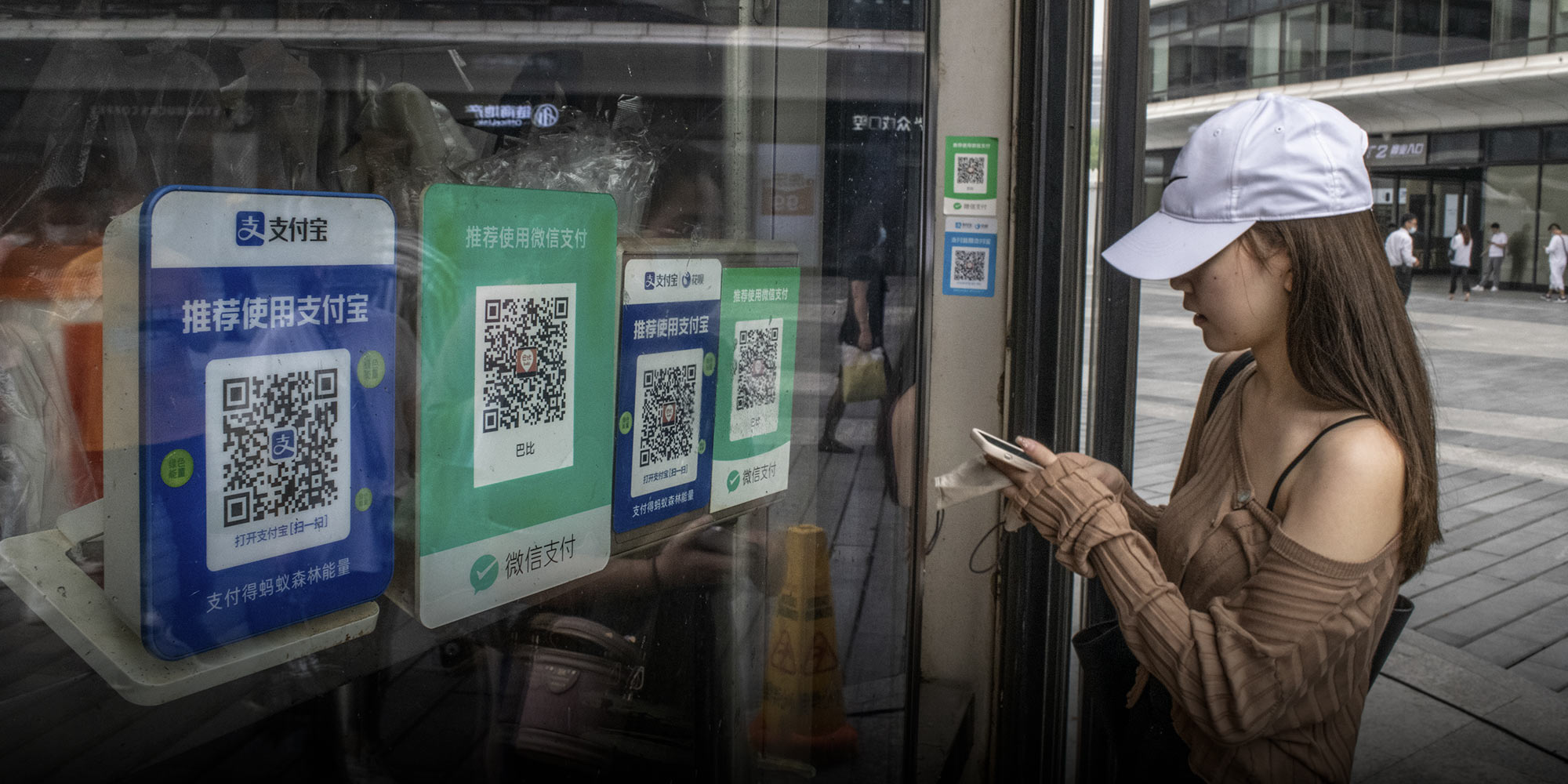
Two of the world’s largest payment ecosystems are beginning to overlap as PayPal users gain access to merchant payments in China through a new integration with Tencent, routed across WeChat and its embedded WeChat Pay network.
On the surface it looks like a tourism-friendly update, a way for visitors to move through China’s cashless economy without friction, but underneath it marks a slow shift in how separate payment systems begin to connect at the infrastructure level.
China already runs heavily on QR-based payments, with WeChat Pay and Alipay embedded into transport, retail and everyday services, operating largely within a closed domestic loop. The PayPal connection does not replace that structure, but it introduces a controlled bridge into it, linking international payment flows more directly into a system that was previously insulated from Western platforms. The change is small in scale but significant in direction, because once these networks connect, the separation between them is no longer complete.
The immediate impact is likely limited given uneven foreign visitor volumes, but the relevance sits less in transaction size and more in access. Payment systems don’t just process spending, they define who can enter a financial environment and how that access is structured. Even a narrow interoperability layer shifts that logic, quietly changing how cross-border spending routes are built and who sits in the middle of them.
Tencent has already been moving toward broader compatibility, including foreign card linking since 2019 and incentives for international users to adopt its payment rails. The PayPal integration extends that path by embedding a Western payment provider more directly into China’s QR merchant infrastructure rather than keeping it at the edges, tightening the connection between systems that were previously separated by design.
What emerges is not disruption, but gradual convergence. Payment networks that once operated in parallel are beginning to overlap through shared infrastructure, and that overlap reduces friction for users while increasing dependence on a smaller number of interconnected platforms.
For consumers it feels seamless at checkout, but at the structural level it reflects a financial environment where boundaries between domestic and international payments are becoming harder to define, and where everyday transactions increasingly run through fewer, more connected rails, a shift that echoes the same tightening of consumer behaviour and payment caution seen in broader market reactions to PayPal’s recent slowdown and weakening momentum across digital spending.