
Phil Collins, the voice behind timeless hits like “In the Air Tonight” and the driving force of Genesis, continues to captivate audiences worldwide even as he navigates serious health challenges. Just days before his 75th birthday, Collins spoke candidly about his struggles during a BBC podcast on January 21, revealing the toll of multiple surgeries and complications that have reshaped his daily life.
Yet, with a net worth of $350 million, Collins’ story remains one of triumph — from humble beginnings to becoming one of rock’s wealthiest figures, leaving an indelible mark on music history and the business of music.
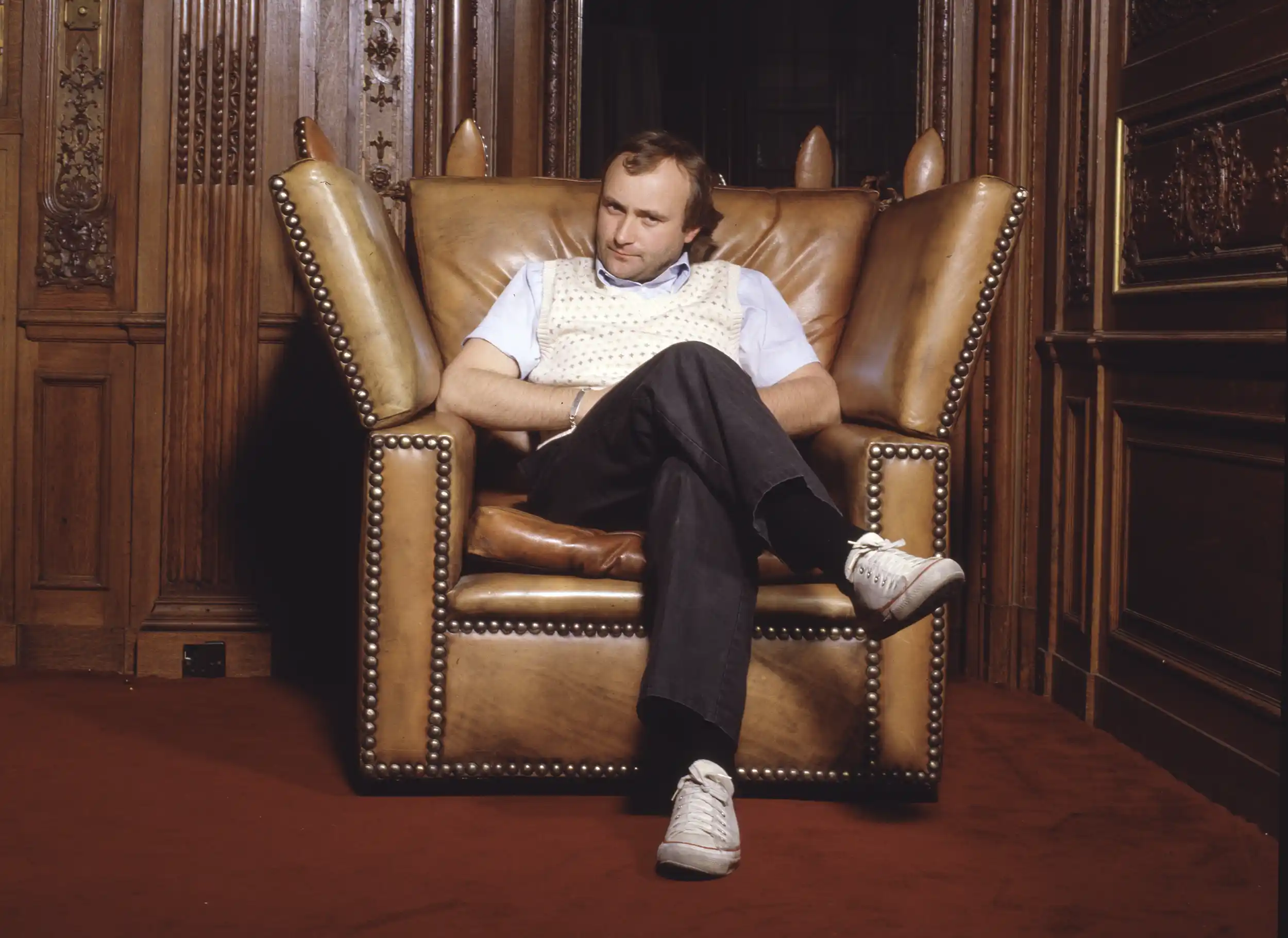
Phil Collins in his prime, captured during a 1980s photoshoot, showcasing the charisma and style that made him a music legend.
From London Streets to Global Stage: Early Life and Inspiration
Born Philip David Charles Collins on January 30, 1951, in Chiswick, London, Collins grew up in a working-class family with creativity embedded in daily life. His father worked as an insurance agent, while his mother managed a theater school, exposing him to performance at an early age.
By age five, Collins received a toy drum kit that ignited a lifelong passion. He later attended drama school and landed small acting roles, including in West End productions like Oliver!. These formative experiences gave him stage confidence and a flair for storytelling, which would shape both his solo work and his Genesis performances. The postwar London environment instilled discipline and resilience, qualities that would help him weather the highs and lows of a multi-decade music career.
How Phil Collins Became a Global Music Icon
Collins’ professional journey began in the late 1960s when he joined Genesis as their drummer. Initially supporting frontman Peter Gabriel, Collins stepped into the lead vocalist role after Gabriel’s departure in 1975. This move transformed Genesis’ sound, bringing a more accessible pop-rock style to a band known for progressive compositions. Albums like Invisible Touch defined an era and launched Collins into the global spotlight.
Simultaneously, his solo career took off in the 1980s. Face Value (1981), inspired by personal heartbreak, sold millions and earned Grammy nominations. Collins also proved his versatility by contributing to movie soundtracks, most notably Disney’s Tarzan, where his Oscar-winning “You’ll Be in My Heart” showcased a melodic, cinematic sensibility.
Over his career, Collins has sold over 150 million records, collaborated with icons like Eric Clapton, and appeared in films such as Buster. Touring has remained a key revenue and profile booster, including the 2017–2019 Not Dead Yet tour. Despite retiring from touring in 2022 after Genesis’ farewell shows, his influence continues through reissues, streaming, and tributes.
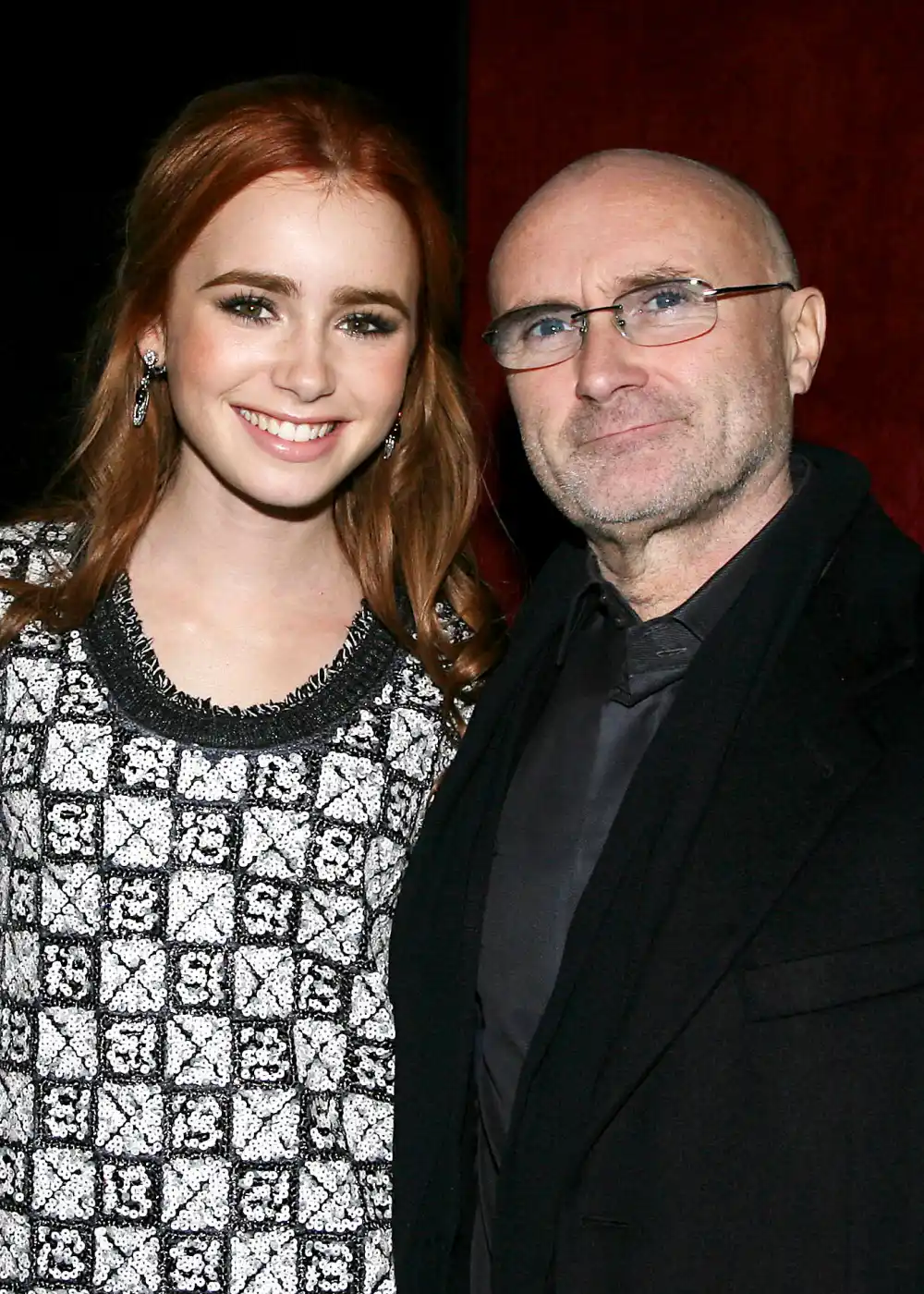
Phil Collins with his daughter Lily Collins, highlighting their strong family connection and mutual support in both music and film careers.
Family, Health, and the Challenges Behind the Fame
Collins’ personal life has been as eventful as his career. He shares a close bond with his daughter, Lily Collins, the acclaimed actress known for Emily in Paris, who often credits her father’s guidance in navigating fame. Collins has five children, including Nicholas and Matthew, with Nicholas joining him as a drummer on Genesis’ final tour.
Three divorces have cost Collins around $80 million in settlements, yet he has maintained amicable ties where possible. His health struggles have been profound. A 2007 spinal injury damaged vertebrae and nerves, leading to drop foot and eventually ending his drumming career. Multiple knee surgeries, COVID complications, and kidney issues from past drinking habits have further affected his mobility, requiring 24-hour care.
Despite these obstacles, Collins remains optimistic. He achieved two years of sobriety, crediting it with improving his kidney health and enabling him to focus on family, recovery, and day-to-day joys. Speaking on the BBC podcast, he acknowledged the difficulty of recent years but emphasized, “I’m all right now,” reflecting a quiet resilience and perspective gained over decades of fame.

Phil Collins performs seated on stage, showing resilience and dedication to music despite ongoing health struggles.
Phil Collins’ Net Worth Breakdown: How a Drummer Built a Fortune
As of 2026, Phil Collins’ net worth stands at an impressive $350 million, derived from a combination of music, tours, publishing rights, and savvy financial decisions. His solo albums and Genesis catalog continue to generate tens of millions annually, with publishing royalties averaging around $6.2 million per year before major deals.
Touring proved lucrative, with peak earnings reaching $50 million per year, including $45 million from the Not Dead Yet tour. A landmark 2022 sale of music rights to Concord Music Group added substantially to his wealth, with his solo catalog reportedly fetching $150 million of the total deal. Real estate investments, including a Miami Beach mansion and Swiss properties, have also contributed, while divorce settlements trimmed some gains.
Even with health setbacks limiting live performances, streaming, licensing, and catalog income continue to flow, ensuring financial stability and a lasting legacy in music business circles.

Phil Collins’ former Miami Beach mansion, sold for $39 million, reflecting the rock legend’s taste for privacy, elegance, and timeless design.
Lifestyle, Philanthropy, and Lasting Influence
Real Estate: Privacy and Scenic Retreats
Collins’ wealth has supported a comfortable, yet grounded, lifestyle that leans toward nostalgia and quality over excess. Real estate highlights include a Miami Beach mansion purchased for $33 million and later sold for $39 million, alongside Swiss properties offering scenic privacy and quiet retreats that suit his reflective nature.
Cars: Classic Collections Over Flash
His car collection emphasizes classic British and European models. Highlights include a 1958 Austin Metropolitan, gifted by Robert Plant, valued around $15,000–$25,000 for similar restored examples, and a 1959 Austin A35, which has drawn auction interest in the $10,000 range due to its celebrity provenance.
Other notable vehicles include a Jaguar Mark 2 from his 1988 film Buster (priced between $30,000–$60,000 for enthusiasts) and a low-mileage BMW E30 520i Touring, a rare twin-sunroof model valued at $20,000–$40,000 today. Reports suggest additions like vintage Rolls-Royces, Ferraris, and Porsches, with some pieces exceeding $100,000, reflecting his passion for timeless engineering over ostentation.
Watches and Jewelry: Subtle Sophistication
Collins favors high-end watches blending functionality with elegance, such as a Rolex Yacht-Master in stainless steel and platinum (typically $10,000–$15,000 pre-owned) and a Panerai Luminor Marina (around $5,000–$8,000).
He has also owned more extravagant timepieces, including a Richard Mille RM 11-03 (over $150,000), a Rolex GMT-Master II with meteorite dial ($50,000–$70,000), and a rose gold Patek Philippe Nautilus (~$100,000), though some were auctioned by ex-wife Orianne Cevey amid their separation. Jewelry remains understated in public appearances, complementing his refined style without drawing undue attention.
Philanthropy: Giving Back Through Music and Causes
Beyond personal indulgence, Collins is committed to philanthropy. He has donated millions to music education programs and animal welfare, including a $5 million contribution to a sanctuary in his hometown. Collectibles like Alamo memorabilia have been sold to fund charitable causes, demonstrating a blend of business acumen and personal generosity while keeping his legacy impactful beyond music.
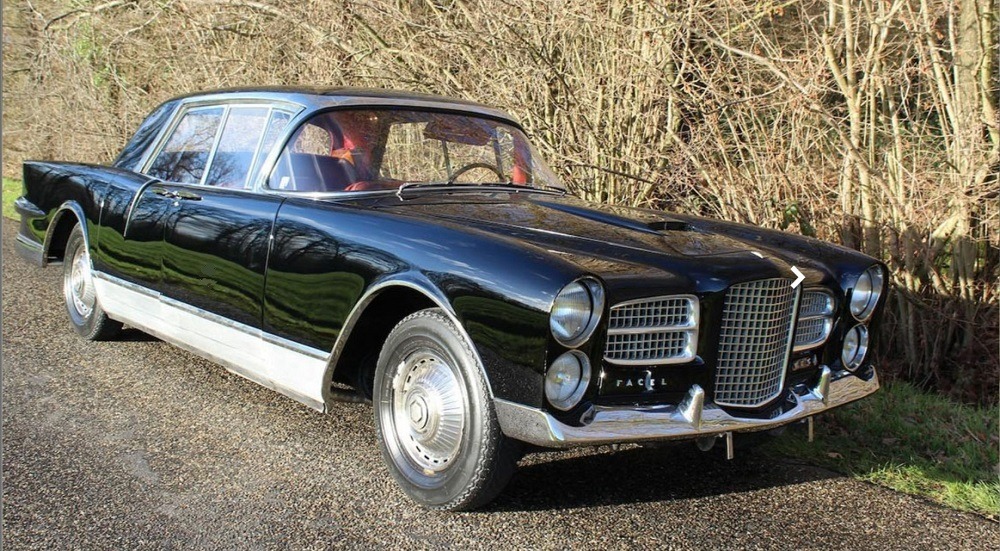
Phil Collins’ 1958 Facel Vega Excellence, part of his renowned collection of classic cars, reflecting his love for rare, timeless engineering and style.
People Also Ask: Fresh Insights on Phil Collins and His Wealth
How has Phil Collins’ sobriety journey influenced his outlook on life?
Collins credits two years of sobriety with improving kidney health and fostering a calmer, more mindful perspective. He now focuses on family, creative projects, and everyday joys rather than the high-pressure lifestyle of touring.
Which Phil Collins songs continue to generate the most royalties?
Tracks like In the Air Tonight, Against All Odds, and You’ll Be in My Heart remain top earners through streaming, commercials, and film placements, collectively generating millions annually for Collins and his estate.
Could Phil Collins return to music creation despite retirement?
He hinted in his recent interview at experimenting in the studio once mobility improves, suggesting new material could emerge, exciting fans who hope for fresh recordings from the legendary drummer.
How have collaborations contributed to Collins’ fortune?
Collaborations with artists such as Philip Bailey (Easy Lover) and Disney soundtracks expanded his audience and enhanced royalty streams, proving cross-genre partnerships can significantly boost long-term earnings.