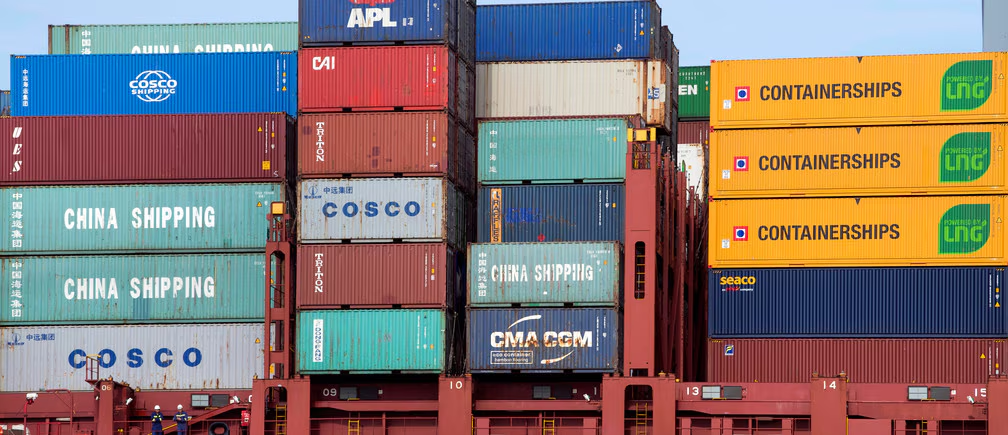
The Trump administration has moved to impose new tariffs on Brazil and more than 60 other countries after a court setback threatened its trade agenda, reviving fears that rising import costs could weigh on business investment, hiring and consumer prices.
U.S. trade officials have proposed tariffs of up to 25% on Brazil, launched a new Vietnam trade investigation and outlined additional duties that could affect goods from more than 60 countries. The push comes as the administration races to rebuild its tariff programme after a Supreme Court ruling disrupted one of Trump's central economic policies.
For companies already navigating higher borrowing costs, cautious consumer spending and slower global growth, the latest developments threaten to reopen questions many believed were beginning to fade.
Tariffs increase the cost of imported goods, and while businesses absorb some of that burden, much of it often works its way through supply chains, production costs and eventually consumer prices. Many manufacturers spent much of last year assuming trade policy was becoming more predictable. That assumption is now being tested again.
The problem for businesses is that unpredictability has a habit of becoming self-reinforcing. When companies cannot gauge where future import costs might land, expansion plans are often delayed, hiring decisions become more cautious and investment projects are pushed further down the road. Importers may scale back orders, manufacturers may rethink capital spending and retailers may become more defensive about inventory levels while they wait for a clearer picture.
The challenge for the administration is that it is trying to pursue aggressive trade measures while also managing concerns about affordability ahead of November's midterm elections. Officials have already signalled awareness of that tension by reducing tariffs on certain farm and industrial equipment even as they pursue new duties elsewhere. The balancing act reflects a broader reality confronting policymakers: efforts to protect domestic industries can also create additional cost burdens across the wider economy.
Investors are increasingly focused on whether the latest tariff push will translate into slower spending and weaker corporate expansion plans. Trade disputes rarely remain confined to ports and customs offices. Executives weighing a factory expansion, a new warehouse or a hiring drive now face another variable they cannot fully account for. Some projects will move ahead regardless, but others may be delayed while companies wait to see where tariff rates eventually settle.
Foreign governments are also trying to gauge how far the administration is prepared to go. While many trading partners expect existing tariff arrangements to remain broadly intact, there are growing fears that Washington could ultimately impose higher duties than anticipated. That prospect is causing exporters, manufacturers and multinational firms to think more carefully about investment decisions that depend on stable trading relationships over the coming years.
The timing is awkward for an economy that has spent much of the past two years absorbing inflation shocks, elevated interest rates and periodic concerns about slowing growth. Many businesses had hoped to move into a more predictable operating environment. Instead, the prospect of another prolonged tariff battle risks complicating corporate planning, supply chains and investment decisions at a moment when confidence remains fragile.
For companies that spent the past year trying to rebuild momentum after a period of higher costs and economic strain, the return of trade friction arrives at a difficult moment. The question is no longer whether tariff tensions are returning, but how many hiring plans, expansion projects and spending decisions will be put on hold while the next phase of the trade battle unfolds.