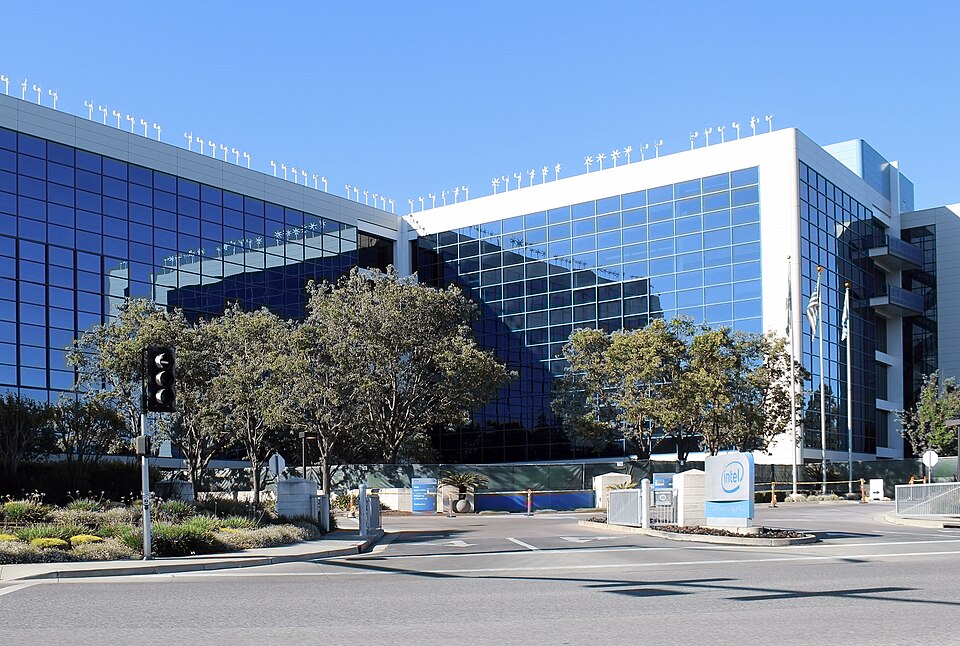
Intel’s shares jumped about 20% after the company beat first-quarter forecasts and issued stronger-than-expected guidance. The numbers were good. The bigger question is what the rally says about the market around it. When one strong AI-linked quarter can produce that kind of reaction, it starts to look a lot like the sort of pricing behaviour the Bank of England has just warned about.
Intel gave investors plenty to like. Revenue came in at $13.58bn, ahead of expectations, while adjusted earnings per share were $0.29 against forecasts that had been close to flat. Its Data Center and AI unit generated roughly $5.1bn of revenue, also ahead of estimates, and second-quarter guidance of $13.8bn to $14.8bn came in well above what the market had been looking for. This was not a case of investors inventing a recovery out of thin air. Intel produced a quarter that looked materially better than expected.
That is only half the story. Sarah Breeden, the Bank of England’s deputy governor for financial stability, said this week that stock markets are too high and likely to fall because prices are not reflecting the full range of risks facing the global economy. She pointed directly to AI and other risky valuations as one area that could reset sharply if several shocks hit together. Intel’s rally does not prove that warning right. It does show why it cannot be dismissed. A market already eager to reward anything connected to AI needed very little encouragement to push one of the sector’s older names sharply higher.
That is where the financial angle becomes more interesting than the earnings beat on its own. There is the Intel story: a chipmaker trying to show that enterprise demand, AI inference and advanced packaging can give it a more credible role in the next stage of the hardware cycle. Then there is the market story: investors are so keen to find proof that huge AI spending is producing real winners that a strong quarter from one company quickly becomes support for much richer valuations across the sector. Intel’s numbers may justify a better rating. They do not automatically justify the wider mood that now surrounds AI-linked stocks.
The US government’s stake adds another layer. The Trump administration agreed last August to take roughly a 10% stake in Intel by converting grants into equity, an unusual move that tied Washington directly to the company’s recovery. With Intel’s stock sharply higher than it was then, that holding has become much more valuable. So this is not just a chipmaker posting better results. It is a strategic manufacturer with government backing, an improved quarter and a more believable AI case. That mix can draw in even more buyers in a market already willing to stretch for the next AI winner.
Breeden’s warning was broader than one stock. She was talking about a market that looks too calm about several risks arriving at once: a macro shock, trouble in private credit and a repricing of AI-linked assets. Intel’s rally fits neatly into that setting. Inflation and energy risks have not gone away, private credit remains a growing point of concern, and yet US equities keep climbing as investors seize on each new result that helps keep the AI story intact. Intel’s move does not create that mood. It is a good example of it.
There is also a company-specific reason to stay cautious. Intel still needs a great deal to go right at once. Demand for enterprise AI hardware needs to hold up. Manufacturing plans need to stay on track. Packaging and foundry ambitions need to turn into durable revenue. Its place in the AI stack needs to remain valuable even if spending cools or shifts. A strong quarter improves the case. It does not settle it. Markets often treat early signs of recovery as if they remove most of the uncertainty. Usually they do not.
Investors can read Intel’s quarter in two ways. The first is straightforward: the business has improved, the AI-related divisions are doing better and the stock deserved a sharp upward move. The second is less comfortable: Intel has become another stock helping the market defend the idea that AI spending is already producing enough winners to support very high valuations more widely. The first view explains the rally. The second explains why central bankers are uneasy.
Intel may yet prove to be one of the sturdier names in the next phase of the AI build-out. Its quarter was stronger, its outlook improved and its role in AI-driven data-centre demand looks more credible than it did not long ago. But the speed of the reaction says something larger than “Intel is back.” It says investors are still quick to use every good result as support for the amount of money already chasing AI. That is very close to the sort of market mood the Bank of England is talking about: one in which good news does not just lift a stock, but helps keep a much bigger valuation story alive.
More from Finance Monthly: Warner Shareholders Backed Paramount’s Deal. That Tells You Who Now Owns Hollywood
Rishi Sunak Says AI Is Flattening Hiring. Britain Still Has No Tax Plan
Anthropic Amazon Compute Deal: What the $100 Billion Commitment Says About AI Infrastructure Power