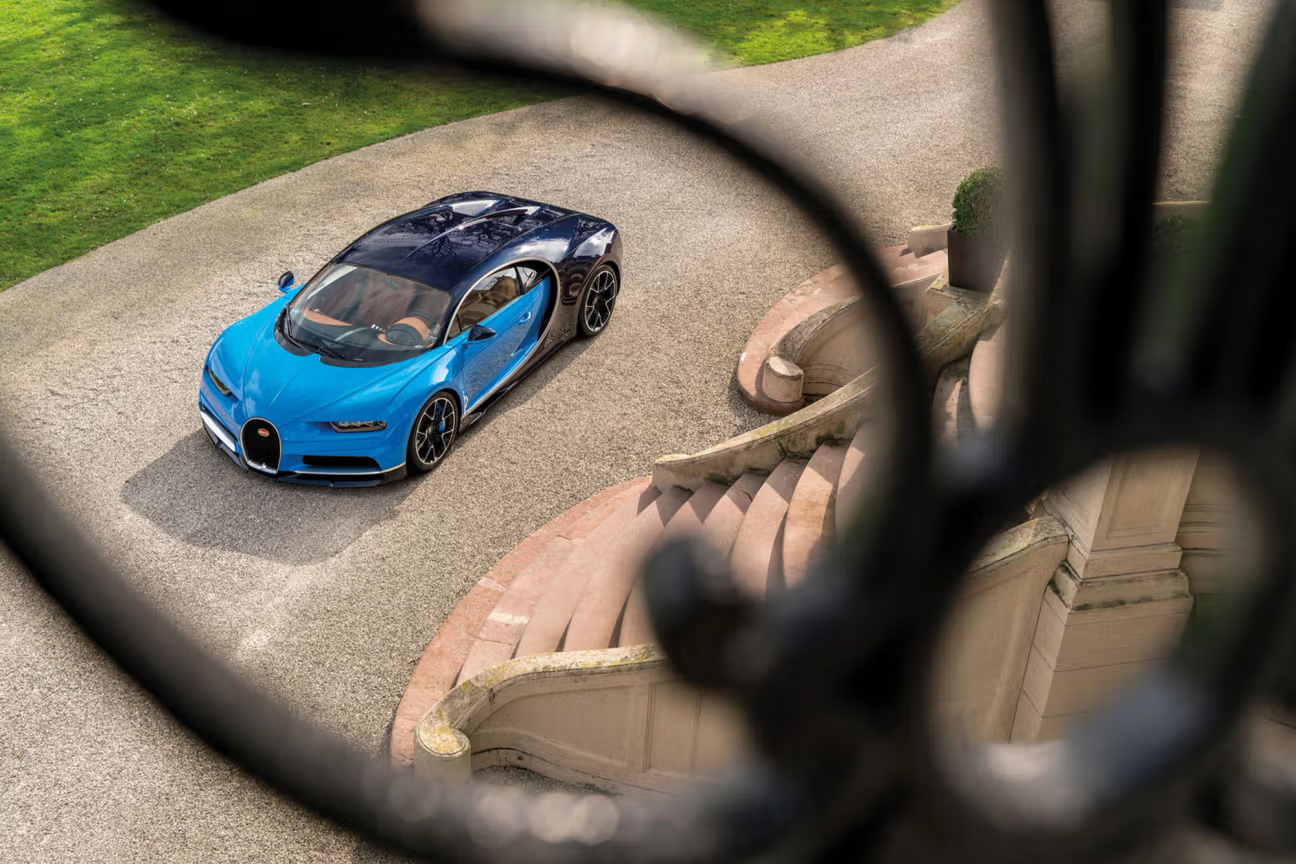
Porsche is selling its stakes in Bugatti Rimac and Rimac Group at a time when the main business is under much more strain than the brand would like to suggest. On paper, this is a disposal. In practice, it looks like a company deciding that capital has to stay closer to the core. Porsche said it will sell its 45% stake in Bugatti Rimac and its 20.6% stake in Rimac Group to a consortium led by HOF Capital, with completion expected before the end of 2026 if regulators approve.
The timing is the key. Porsche says it wants to focus on its core business. In calmer conditions, that would sound like standard boardroom language. It sounds different when margins have come under heavy pressure, China has become a far tougher market and management is already under pressure to cut costs more aggressively. Porsche’s operating margin has fallen sharply, and the company has been grappling with weaker demand in China and the effect of tariffs in the US. In that setting, even attractive minority holdings start to look like capital that could be better used elsewhere.
That is what makes the sale more revealing than it first appears. Bugatti is one of the most prestigious names in performance motoring. Mate Rimac has built a reputation as one of the most closely watched figures in electric performance technology. Porsche is not walking away from something second-rate. It is walking away from something impressive because impressive is no longer enough on its own. The question inside the company is unlikely to have been whether these assets were exciting. It was whether they were useful enough to justify the capital tied up in them while the core franchise faces a rougher market.
China sits behind much of that pressure. Porsche has been hit hard there as local manufacturers push further into the premium market with stronger software, faster model cycles and far more aggressive pricing. That shift matters because China was not just another market. It was one of the places where premium German brands could still rely on image, engineering and pricing power to do a lot of the work. Once that starts to weaken, management becomes more selective very quickly about what counts as essential and what does not.
The buyer side tells its own story. Porsche is not simply leaving Mate Rimac to take over with existing partners. It is selling to a consortium led by HOF Capital, with BlueFive Capital as the largest investor and other institutional backers from the US and Europe. Porsche says HOF Capital will become the largest shareholder in Rimac Group alongside Mate Rimac, while Rimac Group is set to take control of Bugatti Rimac. One side is tightening its perimeter. The other is buying long-term upside in a set of assets that still carry scarcity, technology value and a rare level of prestige.
That split is hard to miss. A specialist investment group can afford to look at Bugatti and Rimac as a growth position with time on its side. Porsche does not have that luxury. It has to measure everything against the demands of the main business, and the main business has become harder to defend than it was a few years ago. Once that happens, the appeal of side positions fades quickly, even when they are high quality.
Porsche is not alone in this. BMW and Mercedes have also been dealing with weaker Chinese demand and a premium-car market that has become more crowded and less predictable. The broader pattern is now clear enough: German premium manufacturers still have strong brands, but they are no longer operating in a market that automatically protects their pricing power. That leaves less room for prestige investments that sit outside the centre of the business.
There is a wider point here as well. Specialist technology assets and prestige car brands can still attract serious money. Increasingly, though, that money may come more naturally from dedicated investment firms than from listed manufacturers trying to protect margins and simplify strategy. In other words, the assets remain desirable. It is the priorities of the industrial owner that have changed.
That is the clearest way to read Porsche’s move. This is not a verdict against Bugatti or Rimac. It is a verdict on Porsche’s own circumstances. The company has become stricter about where capital belongs. Investors should take the message as it comes: when pressure builds at the centre, even very good assets at the edge become easier to sell.
More from Finance Monthly: Porsche's EV Rollout Delay Sends Shares Tumbling