Oil markets and global shipping routes are hanging on fragile US-Iran negotiations after the Trump administration signaled that Tehran may agree to give up highly enriched uranium in exchange for sanctions relief and the reopening of the Strait of Hormuz.
The talks have eased fears of an immediate supply shock, but they are also exposing how vulnerable the global economy has become to another geopolitical disruption at a time when companies were already slowing hiring, consumers were already cutting spending and growth was losing momentum in several major economies.
Iran Deal Could Reopen Key Oil Route
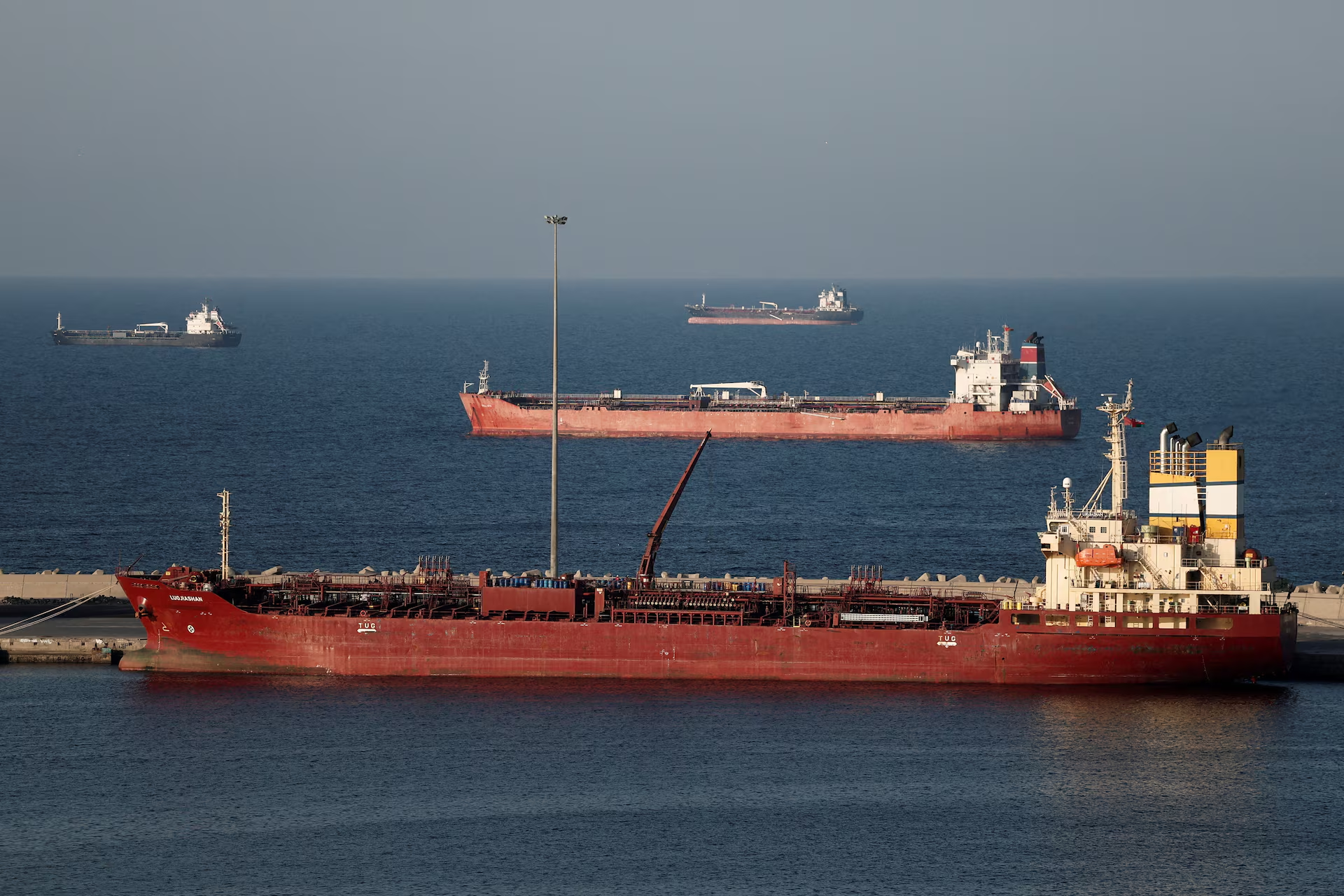
A senior Trump administration official said American negotiators believe Iranian Supreme Leader Mojtaba Khamenei has approved the “broad template” of an agreement that would see Iran agree “in principle” to dispose of its highly enriched uranium. The arrangement would also reopen the Strait of Hormuz after months of conflict disrupted one of the world’s most important energy corridors.
The negotiations remain highly sensitive. Officials acknowledged that disputes are still unresolved over how the uranium stockpile would be removed, who would monitor the process and how future enrichment would be restricted. Sanctions relief would reportedly stay tied to compliance, with one administration official describing the position as “no dust, no dollars.”
For energy markets, the stakes extend well beyond diplomacy. The Strait of Hormuz handles a huge share of global oil shipments, and even the possibility of prolonged disruption had already started feeding into freight costs, fuel prices and broader inflation concerns over recent months. Airlines, shipping groups and manufacturers were watching the region closely as fears grew that another sustained energy shock could hit an already weakened global economy.
The wider economy was already slowing before the Iran conflict pushed oil markets back into crisis territory. Borrowing costs remain elevated in many countries, household savings have been squeezed by years of inflation pressure and businesses have become far more defensive about expansion plans after repeated economic shocks since the pandemic.
The talks may calm markets temporarily, but companies have now seen how quickly trade routes, sanctions and energy supplies can become bargaining chips during geopolitical conflict. Businesses that spent years rebuilding supply chains after the pandemic are once again reassessing political risk, shipping exposure and how rapidly costs can rise if another crisis disrupts major trade routes.
Consumers and Markets Remain on Edge Over Oil Prices
Consumers have little appetite for another jump in fuel and food costs after several years of inflation pressure. Another sustained rise in oil prices would likely spill into transport, grocery and household bills at a moment when many families are already reducing discretionary spending, delaying large purchases and becoming more cautious about debt.
Traders are reacting faster to geopolitical shocks now because confidence across large parts of the economy already feels thin. Slower hiring, weaker manufacturing activity and mounting debt concerns have left markets unusually sensitive to anything that could disrupt growth expectations or reignite inflation pressure.
Republicans in Washington and officials inside Israel are already pushing back against parts of the proposed framework, particularly concerns that Iran could eventually use the Strait of Hormuz as leverage again or fail to fully surrender its uranium stockpile.
Iranian President Masoud Pezeshkian has meanwhile insisted the country is not seeking nuclear weapons while also warning that Iran’s negotiating team would not compromise the country’s “dignity and sovereignty.”
Even if the agreement ultimately survives, the past few months have already altered how governments, investors and businesses think about economic stability. Energy routes once treated as dependable now look exposed again, and another layer of financial strain is arriving at a time when companies were already pulling back expansion plans, households were already becoming more defensive with spending and the sense of economic security that existed a few years ago no longer feels as reliable.