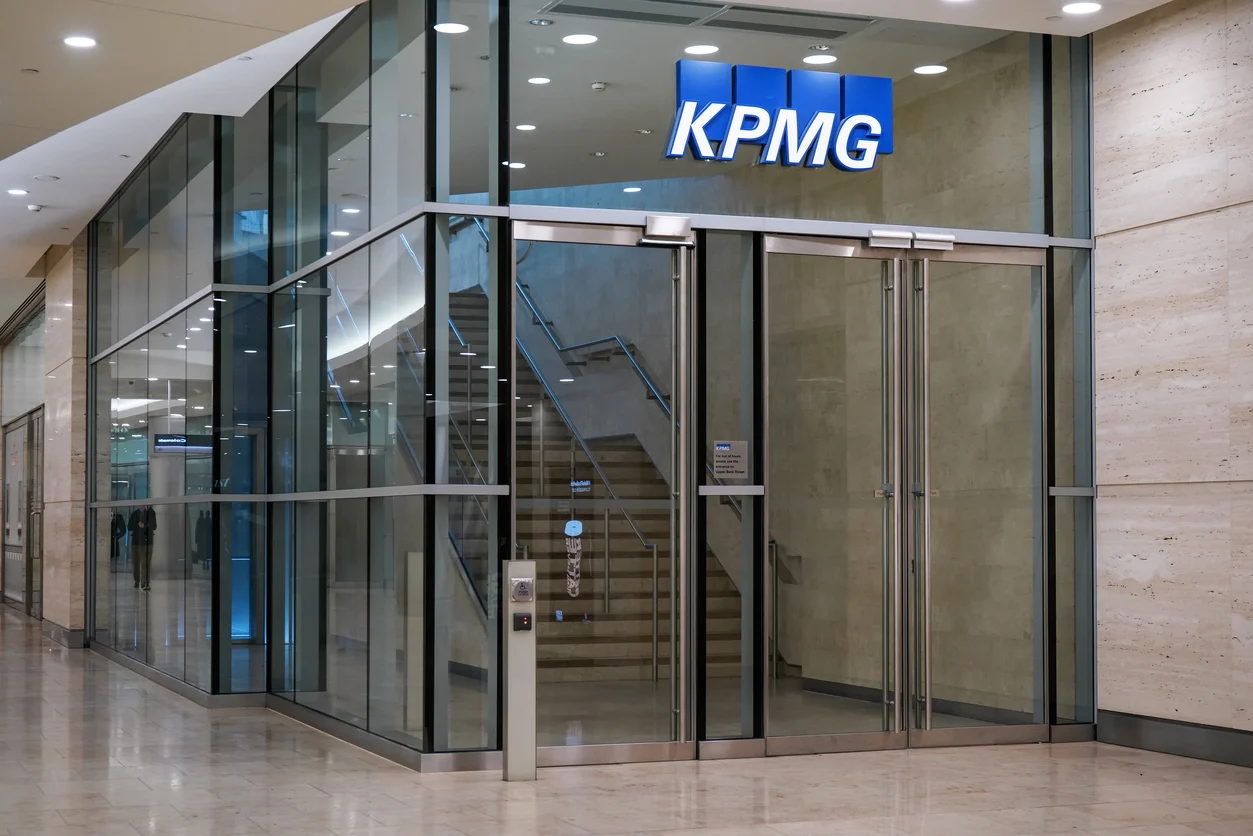
KPMG has withdrawn a major report on artificial intelligence adoption after an investigation found it contained fabricated case studies attributed to UBS, NHS Greater Manchester, Transport for London and Swiss Federal Railways — errors identified as AI hallucinations by research group GPTZero and subsequently verified by the Financial Times.
The October report, titled "Redefining excellence in the age of agentic AI", claimed that UBS integrates AI agents across investment advisory, risk management and compliance monitoring via a platform co-developed with Microsoft. A spokesperson for the Swiss bank told the FT the assertions were factually incorrect.
The report made similarly false claims about Swiss Federal Railways, stating that the transit group uses AI agents to plan and optimise passenger journeys — a characterisation the railway confirmed was not accurate. Transport for London said a claim that it uses AI agents to predict and manage congestion was misleading, while NHS Greater Manchester said assertions about AI-driven patient triage and hospital readmission prediction did not align with the press release the footnotes indicated as their source.
KPMG International has since removed the report from its websites while it investigates the circumstances surrounding its publication. A spokesman said the firm expects all staff to follow guidelines on responsible AI use, including human oversight to validate content and verify independent sources.
The episode is not isolated. EY retracted a study last month after GPTZero identified fake footnotes and other errors, and Sullivan & Cromwell admitted in April that a bankruptcy court filing contained AI-generated inaccuracies including misreadings of the US bankruptcy code.
GPTZero, the AI detection research group that identified the errors and whose findings were verified by the Financial Times, has documented a growing pattern of hallucinated content across professional services publications. The credibility attached to firms such as KPMG and EY means fabricated findings circulate widely before corrections are issued — the KPMG report had already been referenced by multiple industry publications and a major Czech newspaper before its withdrawal, amplifying the governance risk for any organisation that acted on its findings.
For CFOs and finance directors who have relied on Big Four thought leadership to benchmark AI adoption or develop internal governance frameworks, the implications are immediate. The research underpinning strategic technology decisions at board level is demonstrably fallible when produced at volume without adequate human review.
Firms that have cited KPMG's findings in their own AI strategy documents face the task of revalidating those references. More broadly, the episode reinforces the case for finance leaders to demand primary source verification before acting on externally produced AI research — regardless of the reputation of the firm that produced it.