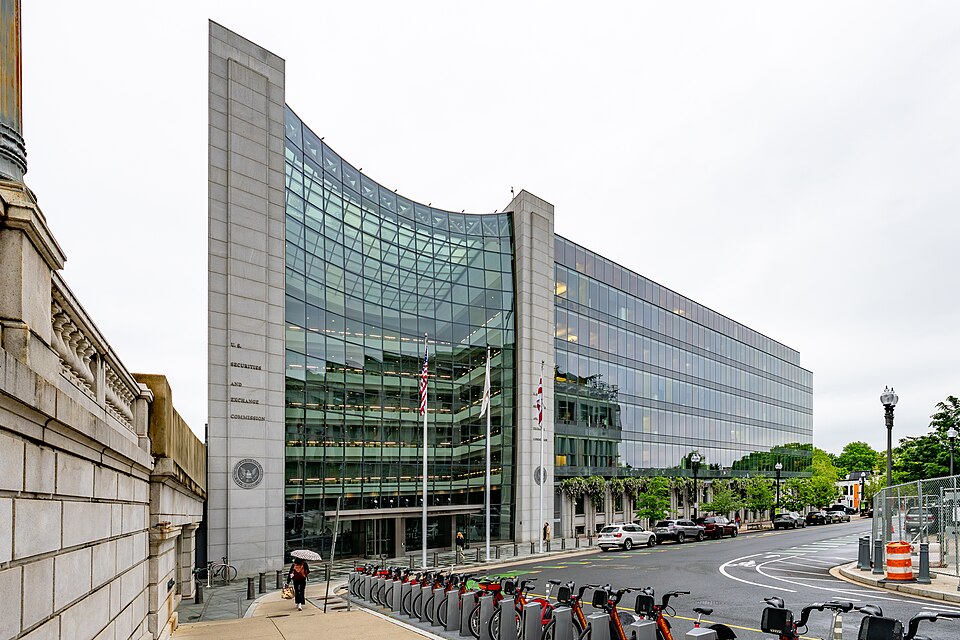
The Securities and Exchange Commission and the Commodity Futures Trading Commission have issued a joint request for public comment on updating, clarifying and harmonizing the definitions that govern derivatives products, in a rare coordinated effort to resolve long-standing ambiguities in how the two regulators divide oversight of the market. Announced on 18 June 2026, the consultation seeks input on whether current definitions, interpretations and jurisdictional frameworks still reflect the way derivatives are structured and traded, and the comment period will run for 60 days after publication in the Federal Register.
The two agencies have framed the exercise as overdue. SEC Chairman Paul Atkins said clarification of the definitional issues under Title VII of the Dodd-Frank Act, including the treatment of event-based products, was long overdue, and argued that cooperation between the regulators could create a level playing field allowing established firms and new entrants to compete regardless of which agency they are registered with. CFTC Chairman Michael Selig said the joint request addressed long-standing ambiguities within Title VII that have constrained fair competition and responsible innovation, and welcomed the partnership between the two agencies in clarifying jurisdictional lines. The dual framing reflects a deliberate effort to present the initiative as genuinely collaborative rather than a turf negotiation.
The substance of the consultation goes to the heart of how derivatives are policed. It seeks comment on the definitions of swaps and security-based swaps — the boundary that determines which regulator has authority — including the scope of certain exclusions from the swap definition, the treatment of mixed swaps, and how novel or emerging products should be categorised. It also asks about jurisdictional and interpretive questions, areas needing greater clarity on definitional lines, and potential routes to alternative compliance. The split of oversight between the SEC, which regulates securities-based instruments, and the CFTC, which oversees commodity and most other derivatives, has produced overlapping and sometimes contested boundaries since Dodd-Frank was enacted in response to the financial crisis.
The timing is significant given live disputes over exactly these boundaries. The question of how to classify new instruments has become pressing as crypto-linked and event-based products reach US markets — most prominently in the recent clash over perpetual futures, where CME Group has moved to challenge the CFTC's approval of such contracts on the grounds that they should be treated as swaps under Dodd-Frank rather than as futures. That dispute turns precisely on the definitional lines this consultation seeks to clarify, and a coordinated SEC-CFTC framework could reduce the scope for firms to exploit, or litigate over, the gaps between the two regimes.
The proposals carry direct consequences for how derivatives businesses are structured and supervised. The classification of a product as a swap, a security-based swap or a future determines its clearing, reporting, margin and venue obligations, and the registration a firm must hold — so any harmonisation would reshape compliance requirements across trading desks, exchanges, clearing houses and the growing population of crypto-derivatives platforms. Greater certainty over jurisdictional lines would lower the legal risk of launching novel products, while the prospect of alternative compliance routes points to a lighter, more flexible regime than the fragmented status quo.
How the two agencies act on the responses will determine whether this becomes a genuine simplification or another layer of consultation in a process that has run since Dodd-Frank's passage. The collaborative tone between Atkins and Selig, and the explicit focus on emerging products, point to a regime trying to catch up with markets that have evolved faster than the rules defining them. Whether the SEC and CFTC can translate a joint request for comment into harmonised, durable definitions — rather than preserving the overlapping boundaries that have generated litigation and uncertainty — is the test that firms across the derivatives market will now be watching.
More From Finance Monthly: SEC Proposes Scrapping Regulation NMS Trade-Through Rule in Biggest US Market-Structure Overhaul Since 2005