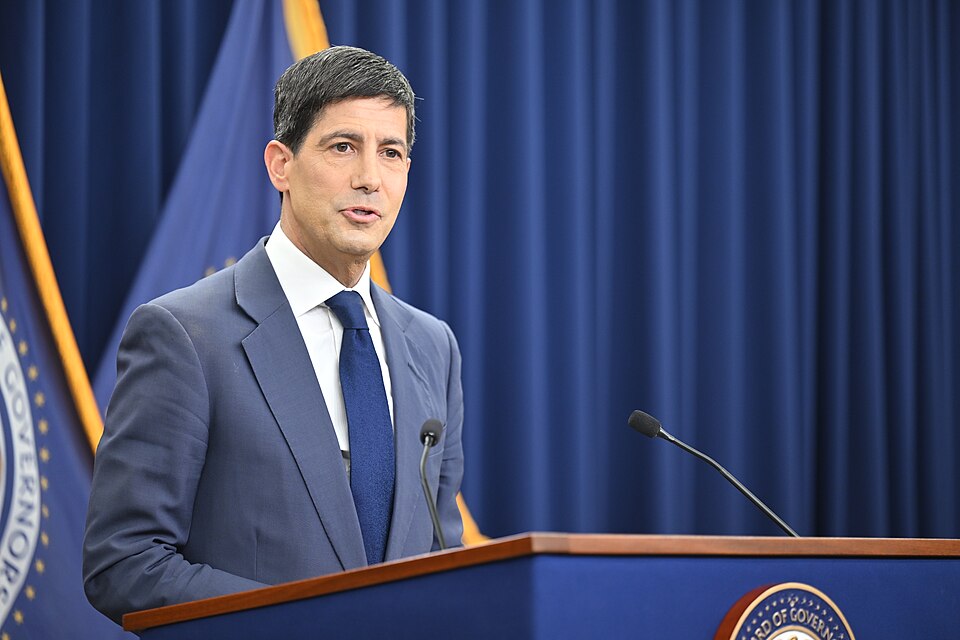
Federal Reserve policymakers have raised the target range for the federal funds rate by 0.25 percentage point to 3.75%–4.00%, delivering the first U.S. rate increase since 2023 as persistent inflation pushes monetary policy back towards tightening.
The Federal Open Market Committee approved the increase unanimously at its meeting ending on 16 September. The FOMC said economic activity was expanding at a solid pace, domestic spending remained resilient and capital investment was robust, while inflation remained elevated. Its statement said the move was intended to support a more timely return to the Fed’s 2% inflation objective.
The decision marks a significant change from the easing cycle that began in 2024. Before this meeting, the target range had stood at 3.50%–3.75% following rate reductions during 2024 and 2025. The September increase returns the target range to the 3.75%–4.00% level last seen from late October to December 2025, signalling that policymakers are prepared to tighten again when inflation pressures outweigh the case for maintaining lower rates.
Federal Reserve Chair Kevin Warsh now faces a market focused as much on the potential path beyond September as on the increase itself. The Fed’s latest economic projections show a median federal funds rate of 4.1% at the end of 2026, up from 3.8% in the June projections. Twelve of the 18 participants projected an end-2026 midpoint of 4.125%, while four projected 4.375% and only two projected 3.875%. That distribution indicates that most policymakers consider at least one additional increase appropriate this year.
The inflation projections help explain the change. FOMC participants now expect median PCE inflation of 3.7% in 2026, compared with 3.6% in June, while core PCE inflation is projected at 3.4%. At the same time, the median projection for 2026 GDP growth has increased to 2.3% from 2.2%, and the expected unemployment rate has fallen to 4.1% from 4.3%. The combination of stronger growth, lower unemployment and inflation remaining above target gives policymakers less reason to tolerate price pressures through easier monetary policy.
The revised projections have also shifted the rate outlook materially. Sixteen of the 18 FOMC participants now expect at least one further quarter-point increase by the end of 2026, while only two project the current midpoint being maintained through year-end. The median projected federal funds rate has risen to 4.1% from 3.8% in June.
For CFOs and finance directors, the shift changes assumptions that had been built around progressively cheaper U.S. financing. Companies considering dollar borrowing, refinancing or floating-rate debt may need to test funding plans against a higher policy path, while treasury teams face renewed uncertainty over bond yields, currency hedging and the timing of capital-market transactions.
The Fed’s next scheduled decision comes at its 27–28 October meeting. Until then, inflation, employment and activity data will determine whether September becomes a single corrective move or the beginning of a broader tightening phase. The September projections have already raised the policy-rate path substantially from June, giving finance teams a stronger reason to avoid assuming that U.S. borrowing costs have peaked.