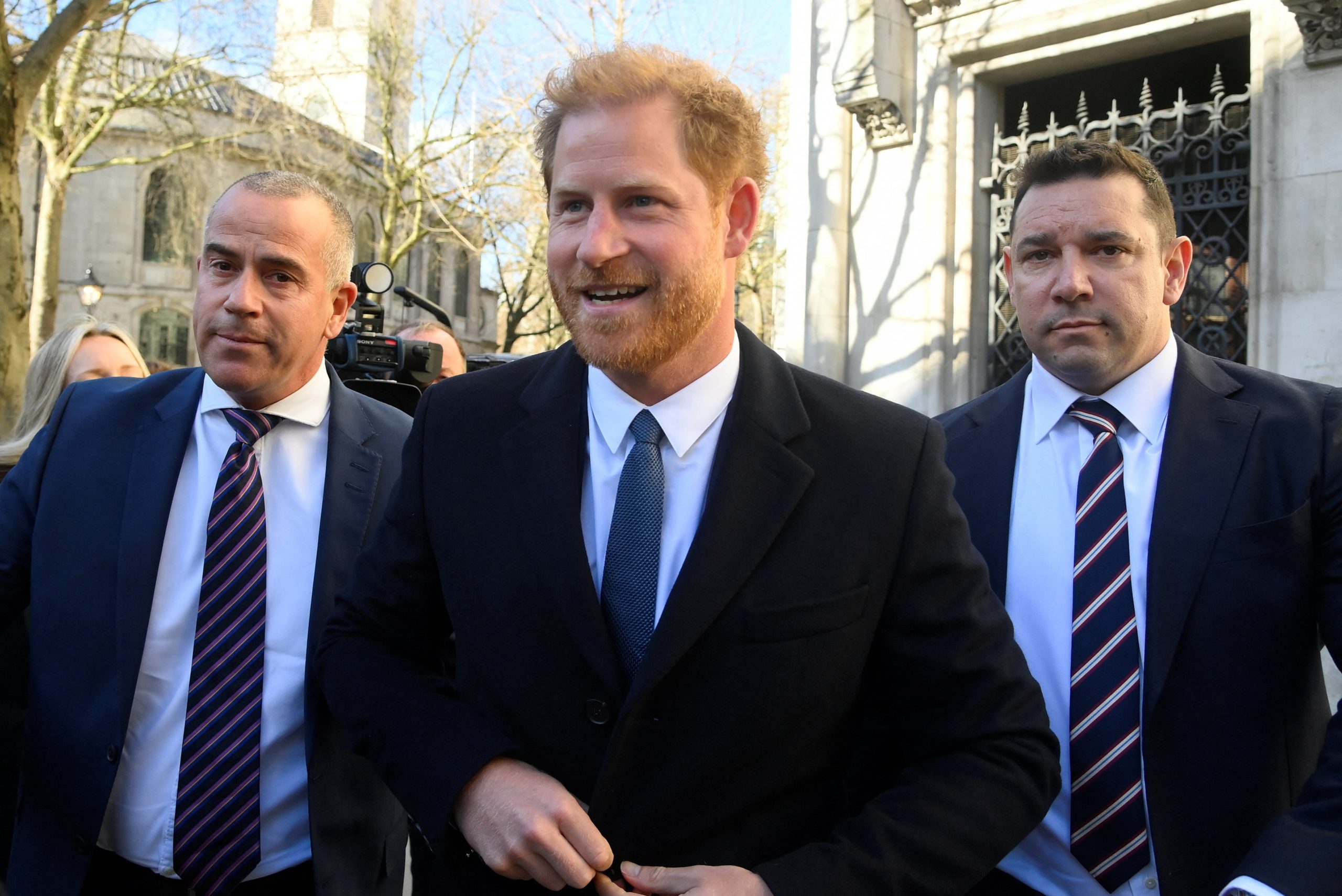
For a moment, it feels like history repeating itself. Prince Harry is back in a London courtroom, once again accusing a major British newspaper group of using unlawful methods to pry into his private life. The familiar beats are all there: senior lawyers squared off, fierce denials from publishers, and the long shadow of Britain’s ugliest press scandals hanging over the proceedings.
But this is not simply another episode of Harry versus the tabloids.
The reason this story matters now — and why it has returned to the top of the news agenda — is that a fresh High Court trial, which quietly began this week, could determine whether Prince Harry’s decade-long war with the British press finally reaches its end. It also forces a broader reckoning: how much has this fight already cost him, what has he actually won, and why does this case feel different from every one that came before it?
Look closer, and this legal battle appears to be the possible final act of a personal crusade that has defined much of Harry’s adult life — a crusade that has extracted a far greater price than money alone.
When the civil case against Associated Newspapers Limited (ANL), publisher of the Daily Mail and Mail on Sunday, opened at London’s High Court on January 19, 2026, Prince Harry joined a formidable group of co-claimants: Sir Elton John, David Furnish, Elizabeth Hurley, Sadie Frost, Baroness Doreen Lawrence and former Liberal Democrat minister Sir Simon Hughes.
Together, they allege that journalists and private investigators working for ANL used unlawful techniques — including phone hacking, blagging, covert surveillance and illegal information gathering — to obtain private information stretching from as early as 1993 through to 2011 and beyond.
ANL has forcefully rejected the claims, describing them as “preposterous” and an “affront” to responsible journalism. The publisher insists no unlawful activity took place and is preparing a full, combative defence.
Yet the wider context surrounding Prince Harry could not be more different from his previous courtroom appearances.
A Prince in Court — But Not at War With the World
In 2023, Harry’s partial victory against Mirror Group Newspapers (MGN) came at the height of a confrontational phase in his public life. That year also saw the release of his memoir Spare and the Netflix documentary series with Meghan Markle — both of which laid bare his grievances with the Royal Family and his deep resentment toward the British press.
When Harry took the witness stand during the Mirror trial, he appeared strikingly isolated. There was no royal support in court, no sense of reconciliation, and little effort to soften the public fallout. The case became historic — the most senior royal to testify in a phone-hacking trial — but it also cemented an image of a prince locked in open conflict with institutions he believed had failed him.
This time, the tone is noticeably different.
Harry is still fighting — but he is no longer fighting everyone.

Prince Harry and Stephen Colbert lean into full holiday cheesiness during their Christmas sketch — a moment meant to be playful, but one that only highlighted the awkward energy and misfiring jokes that defined the Duke’s surprise Late Show appearance.
From Rage to Repair: Why Harry’s Tone Has Changed
In a BBC interview in May 2025, Harry adopted language rarely heard from him in recent years. “There’s no point continuing to fight any more,” he said. “Life is precious.”
Four months later, in September 2025, he met his father, King Charles III, for their first face-to-face conversation in 19 months. The meeting was brief, carefully managed and low-key — but symbolically significant. It was widely interpreted as a tentative step toward thawing relations after years of estrangement.
There has also been renewed discussion around Harry’s UK security arrangements, long a major barrier to his visits. And in 2027, the Invictus Games — Harry’s most enduring personal legacy — will return to the UK in Birmingham, marking his most prominent planned appearance on home soil since stepping back from royal duties in 2020.
Behind the scenes, sources suggest there is an unspoken understanding: if Harry genuinely wants reconciliation with his family, avoiding fresh public explosions is essential.
That context explains why, despite the scale of the allegations in this case, Harry has avoided interviews, media campaigns or dramatic public statements. He is expected to testify around Thursday, January 22, 2026, during what is anticipated to be a nine-week trial — but he is doing so quietly, without dragging royal relatives into the legal spotlight.
How Many Times Has Prince Harry Taken the Press to Court?
Few public figures in modern Britain have pursued as many high-profile legal actions against the media as Prince Harry. His cases form a timeline not just of litigation, but of a sustained attempt to force accountability on an industry he believes caused lasting damage to his family and his own mental health.
Mirror Group Newspapers (MGN)
Harry’s most significant courtroom victory came in December 2023, when the High Court ruled that journalists at the Daily Mirror, Sunday Mirror and The People had engaged in “widespread and habitual” phone hacking and other unlawful information-gathering practices.
The judge found in Harry’s favour on 15 of 33 representative articles and awarded him £140,600 in damages — making him the first senior royal to win a phone-hacking claim at trial.
In February 2024, the remaining elements of his claim were settled out of court. Mirror Group Newspapers agreed to pay a “substantial” additional sum in damages — widely reported to bring the total to more than £440,000 — and to cover the majority of Harry’s legal costs. Historically, MGN has paid well over £100 million to phone-hacking claimants, underscoring the scale of misconduct uncovered during that era.
News Group Newspapers (NGN — The Sun and News of the World)
Harry’s case against News Group Newspapers, publisher of The Sun and the now-defunct News of the World, settled in January 2025 before reaching trial.
While the financial terms were confidential, the settlement included a rare public apology acknowledging unlawful activity by private investigators and admitting intrusion into the life of Princess Diana. Multiple reports put the overall settlement value at more than £10 million, covering a combination of damages and legal costs.
The agreement spared Harry another public courtroom confrontation — but it also represented one of the clearest acknowledgements of wrongdoing ever extracted from a major British publisher.
Associated Newspapers (Daily Mail & Mail on Sunday)
The current ANL case, which began in January 2026, is the most legally complex — and potentially the hardest to win.
Unlike MGN and NGN, Associated Newspapers was never formally implicated in the original phone-hacking scandal. Claimants must prove specific instances of unlawful conduct, often dating back decades, while overcoming strict limitation periods and the absence of clear documentary evidence such as voicemail interception records.
Crucially, the judge has already ruled that broad claims of “widespread or habitual” unlawful behaviour cannot proceed. Each allegation must be proved individually. Legal costs across all parties have been estimated in the tens of millions of pounds, with damages — if awarded — expected to be lower than in Harry’s earlier victories.
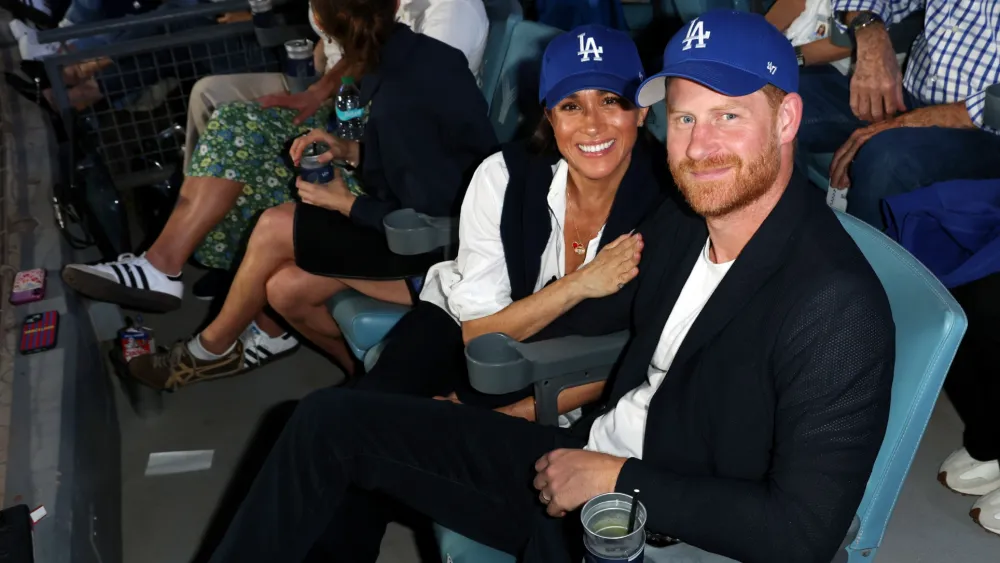
Meghan Markle stuns in a $20,000 designer ensemble as she enjoys a World Series game, showing off her signature polished style.
Harry vs the Press: How Much He’s Won — and What It’s Really Cost Him
By conservative estimates, Prince Harry has secured well over £10.5 million in combined settlements, damages and cost recoveries from media organisations over the past decade.
From Mirror Group Newspapers alone, he recovered more than £440,000 in damages, alongside the bulk of his legal costs. The News Group Newspapers settlement is believed to account for the overwhelming majority of the total, with figures widely reported in eight-figure territory.
There have also been smaller, earlier libel and privacy wins — including a 2020 victory against Associated Newspapers — which added undisclosed sums.
But lawyers close to the cases stress that the true cost of Harry’s campaign cannot be measured in financial terms alone.
The legal fees involved in running multiple High Court actions over several years are vast. While settlements and cost orders have offset much of the expense, Harry’s net outlay is still believed to run into the millions.
There is also the emotional toll. Each case has required him to revisit some of the most intrusive and painful coverage of his life, including relentless press attention following the death of his mother in 1997.
Perhaps most significantly, the lawsuits have placed repeated strain on his relationship with the Royal Family. Senior royals have consistently sought to distance the institution from confrontations with the press — leaving Harry to fight largely alone.
“This is about accountability,” Harry told the court during the Mirror trial. “This is about truth.”
Why the Daily Mail Case Is Harry’s Toughest Legal Test Yet
This trial presents challenges unlike those Harry has previously faced.
Key evidence is contested, including conflicting accounts from private investigators. Some alleged misconduct dates back more than 30 years. There are arguments over when claimants could reasonably have known they had grounds to sue, and whether key documents no longer exist.
Without the admissions and paper trails that defined earlier phone-hacking cases, the court will be forced to assess credibility, probability and competing narratives.
Legal observers note that a misstep — a weak witness, an overreliance on inference — could damage not only the case itself, but Harry’s broader credibility as a campaigner against press misconduct.
As one commentator has put it, this may represent “Harry’s final tilt at the national newspapers he believes did the most harm.”
The End of the Legal Road?
Sources close to the Duke of Sussex suggest that once this case concludes, no further major media lawsuits are planned. His focus, they say, is shifting decisively toward charitable work, veterans’ support and the 2027 Invictus Games in Birmingham.
If that proves accurate, this trial will close a chapter that has shaped Prince Harry’s public identity as profoundly as any royal title.
He enters this phase not as the angry prince of Spare, but as a man attempting to find peace — with his family, with his past, and perhaps even with a press he may never fully trust.
Whether the court ultimately rules in his favour or not, one thing is already clear.
This time, the fight really is different.
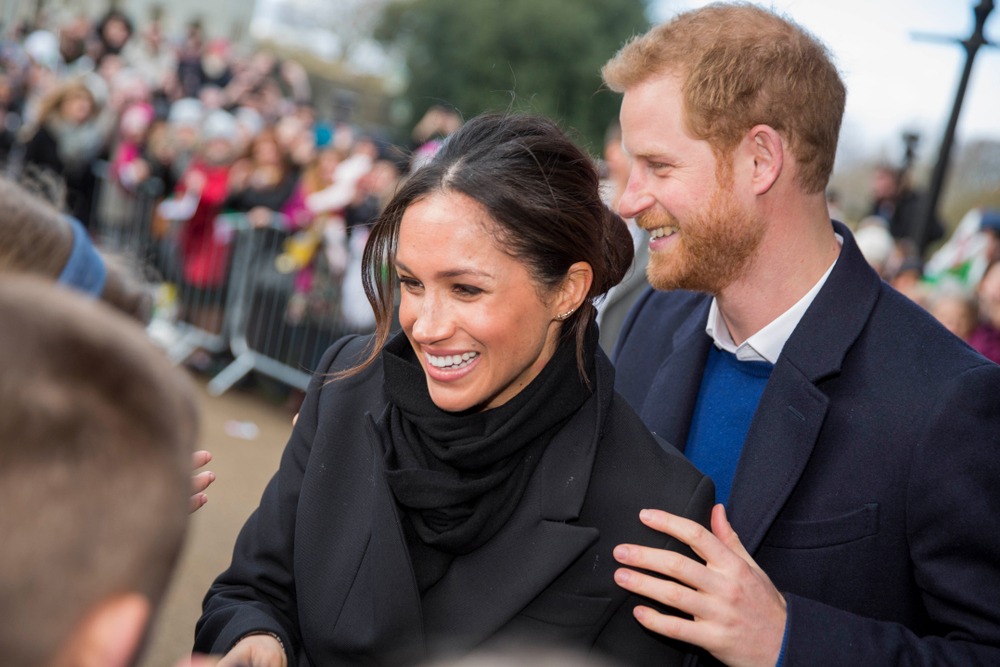
Prince Harry and Meghan, Duchess of Sussex, greet well-wishers in Cardiff — a reminder of the public-facing role that once defined Harry’s life before years of legal battles with the British press.
What Readers Are Asking About Prince Harry’s Press War
Is Prince Harry likely to win his case against the Daily Mail?
This case is widely seen as the most difficult of Prince Harry’s legal battles to date. Unlike previous lawsuits against the Mirror titles or The Sun, there is no body of admitted wrongdoing or documentary evidence from the original phone-hacking scandal to rely on. Each allegation must be proved individually, often decades after the alleged events occurred.
Legal analysts suggest the outcome may hinge less on dramatic revelations and more on credibility, consistency and whether the court accepts that claimants could not reasonably have brought their cases earlier. Even a partial win would be significant, but a complete victory is far from guaranteed — and that uncertainty is precisely why this trial carries such high personal and reputational stakes for Harry.
Why has Prince Harry spent so much time and money suing the press?
For Harry, these cases have never been framed as financial ventures. Those close to him consistently describe the lawsuits as an attempt to expose what he sees as systemic abuse of power by sections of the British press — particularly practices he believes contributed to the breakdown of his family life and to his distrust of institutions meant to protect him.
The emotional driver is inseparable from the legal one. Harry has repeatedly linked his press battles to the trauma surrounding his mother’s death and the belief that intrusive journalism went unchecked for years. That motivation helps explain why, despite the stress, cost and public backlash, he has continued pursuing claims long after most public figures would have settled or walked away.
Could this trial affect Prince Harry’s future relationship with the Royal Family?
Indirectly, yes. While the Royal Household is not involved in the case, senior royals have traditionally sought to maintain a careful distance from confrontations with the press. Any testimony that drags royal figures, staff or historical grievances into open court could complicate the fragile steps toward reconciliation Harry has recently taken.
That risk may explain his notably restrained approach this time — avoiding interviews, limiting public commentary and allowing the legal process to unfold without spectacle. A low-drama outcome, regardless of the verdict, is likely to be seen as more conducive to rebuilding trust than another explosive media showdown.