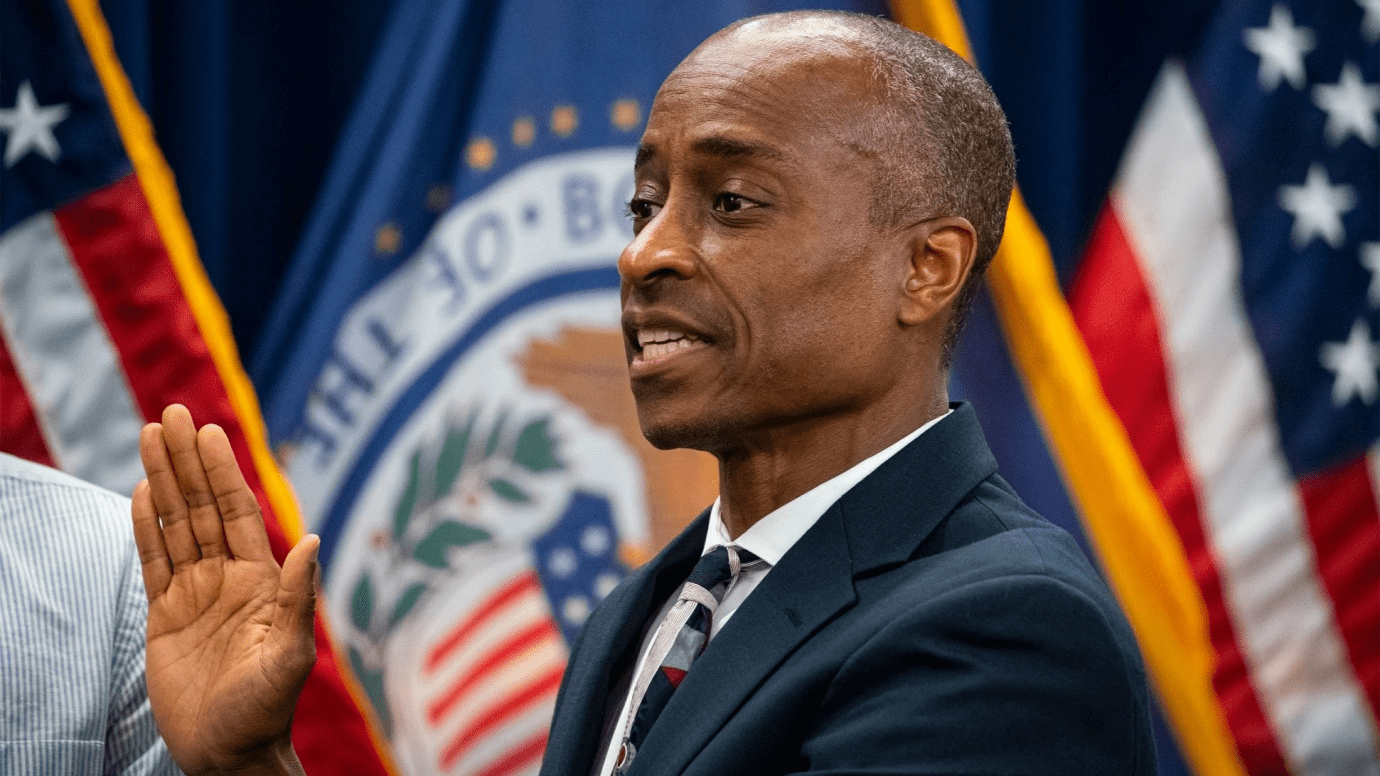
Americans hoping for lower borrowing costs may have to wait longer after Federal Reserve Vice Chair Philip Jefferson signaled inflation remains the central bank’s overriding concern despite rising fuel prices and growing strain on household budgets.
Speaking in Tokyo on Thursday, Jefferson said the U.S. labour market has stayed “very resilient” even as the economy absorbs the impact of a new energy shock. As long as hiring continues holding up, Fed officials appear willing to keep interest rates elevated while they try to push inflation back toward their 2% target.
For families already juggling expensive groceries, higher gasoline prices and stubborn credit-card balances, that message carries real weight. The cost of money is still high, and the Fed is not sounding ready to ease off yet.
Businesses and consumers are now stuck in an increasingly awkward stretch of the economy. Mortgage rates remain elevated, business borrowing is expensive and many households have become more selective about discretionary spending, even though the broader economy has avoided the kind of slowdown many analysts expected earlier this year.
Earlier in 2026, markets had started betting more confidently that rate cuts could arrive later in the year. Jefferson’s remarks pushed against some of that optimism and reinforced the possibility that expensive credit may remain a feature of daily economic life for longer than many borrowers hoped.
The challenge for the Fed is becoming more uneven. Higher energy costs are beginning to drag on parts of the economy, while the explosion in AI investment continues pouring money into technology infrastructure, hiring and corporate spending.
Jefferson said policymakers still face major uncertainty over how long the energy shock may last and how deeply it could feed into broader inflation. Officials are watching carefully for signs that rising fuel and transportation costs start spreading further into wages, services and business pricing.
Gasoline prices tend to hit differently because people see them constantly — during commutes, school runs and weekly shopping trips. That visibility can quickly shape public sentiment about inflation, even when other parts of the economy remain stable.
Fed officials are clearly not treating the current economy like an emergency. But they also do not sound convinced inflation has cooled enough to justify cheaper borrowing conditions yet.
For many households, the effect is already visible in monthly budgets. Auto financing remains expensive, mortgage payments are still elevated and routine spending decisions are starting to feel more deliberate as paychecks stretch less comfortably across the month.
Jefferson’s comments were his first since Kevin Warsh was sworn in last week as the Fed’s new chair ahead of the central bank’s June 16–17 policy meeting. While Jefferson stressed he had not prejudged the outcome of that meeting, the broader tone from policymakers still points toward caution rather than fast relief.
For Americans waiting for borrowing costs to finally start falling, the latest message from the Fed suggested that moment may still be some distance away.